 WHOO HOO! One of the best ways to create and maintain an Environment of Emotional Safety is to celebrate and commemorate milestones, holidays, and special events in the classroom. Celebration builds self-esteem, relaxation, enthusiasm, and a sense of community. Celebrations are wonderful ways to gain knowledge and build strengths. Children who are actively involved in celebrating rituals and events are actively involved in learning in an atmosphere of emotional safety.
Celebrations may be seasonal, faith-based or family based, personal events and milestones, historical events, or simply ways to introduce facts and concepts and practice skills in an interesting, novel, relevant, and enjoyable way. They may arise spontaneously or may need to be created by teachers. Create experiences and commemorate events that will be meaningful and interesting to the children, and design Experience Plans (lesson plans) around these celebrations showing the Strength Expectations (educational objectives) it is hoped the children will gain by the celebration.
By assigning each member of the community responsibility in the planning and carrying out of these experiences, celebrations create learning opportunities in every Learning Domain (Body, Mind, and Spirit). Celebrations and commemorations are not just parties with cupcakes and favors. They are reasons to create learning experiences that are relevant, personal, or historical, and a way of sharing learning within the community of learners.
Happy Birthday, but More – There are thousands of ways to party at the preschool, but when I say ‘celebrate’ I mean commemorate in a purposeful way. The trick in celebrating is to make sure it is a learning experience. Cut down on the individual birthday celebrations – or celebrate them with a special food at snack or lunch or a song or by awarding the birthday child a coveted classroom job for the day. Make it special, but not overwhelming, and by all means watch the junk food. The following ideas are some appropriate celebrations that are meaningful and relevant to the development of program objectives.
One way to make sure you’re using celebration correctly is to add the educational element of MULTICULTURALISM. What?!?!?!
AGH!!!! NOT ‘ME’! – To some people, “multicultural education” (ME) has come to mean FORCED POLITICAL CORRECTNESS – WHICH IT IS NOT. So to help us understand and accept it more easily, let’s change the term to Authentic Education (AE). Adding an element of authenticity means incorporating non-judgmental facts and concepts of real life as it exists today, into the experiences, activities, themes, lesson plans, materials, equipment, and classroom décor. AE is right because we must ‘teach’ facts, and like Multiculturalism, AE is about inclusion and respect because inclusion and respect build both self-esteem and community.
AE is NOT just about ethnicities and cultures, Not about forcing a sense of diversity, NOT the espousal of one religion, faith, or belief over another, NOT about political correctness, NOT about creating units of study based on visits to foreign lands with stereotypical party favors and costumes, and it is NOT an annual celebration of Cinco de Mayo, Kwanzaa, or Chinese New Year (especially if those holidays have no relevancy to any child in your class.
AE IS talking about and celebrating the uniqueness of each child in your class and helping your children build intelligence, empathy and community by respecting that uniqueness.
It is the daily depiction of real life and the incorporation of that life into the learning community. It is the presentation of diversity for the purpose of building skills of Body, Mind, and Spirit. The emphasis in AE is on real life from existing cultures. It is offering a realistic, non-stereotypical view of the world in which humans live so that young children may learn facts and increase respect for all persons.
When AE is done well, it leads to the accomplishment of the mission we all must agree on – that of optimal brain development. It increases the amount of information offered and broadens the knowledge children have about the world. More information means increased intelligence. AE prepares children for the world as it currently and realistically exists and prepares them to deal with that world in an intelligent, realistic, and meaningful way. It encourages scaffolding of new learning built on existing knowledge and moves the children to a higher plateau of intelligence.
When each child is seen and treated as an important part of the community of learners, respected for simply existing, not in spite of, but because of the uniqueness of his race, ethnicity, culture, faith, gender, social or financial place, physical ability, age, appearance, mental capacity, family history or life circumstance, both individual and group learning and behavior improve. When AE is incorporated into your program using developmentally appropriate, experience-based, active learning methods it gives teachers the opportunity to evaluate their methods and helps teachers determine if they unintentionally have different expectations for children based on their race, ethnicity, social or financial standing, gender, ability, or their family value.
AE CONCEPTS – Non-political truths that young children can understand through AE are listed below. THESE ARE NOT THEME TITLES. THEY ARE IDEAS AND CONCEPTS CHILDREN MAY UNDERSTAND AND TALK ABOUT WITHIN A THEME, OR WHEN A QUESTION OR CHALLENGE ARISES.
- Everyone is equal, deserves respect, is worthy and lovable, is important, and has feelings
- Some people look, sound, talk, and move like me and some people do not
- People are alike and people are different
- Some physical attributes stay the same and some change
- It is important to listen to everyone
- It is important to be curious and interested in other people
- We can learn about the daily lives of people we know and those we don’t know
- People come from many different kinds of families
- There are people who live near us and many who live far away
- People can do many different kinds of work and people can work together
- Some things are real and some things are not
- Some things seem fair and some seem unfair
- Different does not mean bad
None of these truths are either preferential or threatening to any faith or culture, but are simply facts of life. Dive In!
Next Blog: A Few Ways to Celebrate
 And Just a Couple More:
 Or “Toddler, we’re going to change your diaper in two minutes”, or “Hey, Three, your pants are wet. Help me pick out some dry ones from your cubby”. Some children are nervous about their bodies and have a heightened sense of privacy – respect that – and let them be more responsible for their bodies and functions.
 give them time and opportunities for practice in this area.
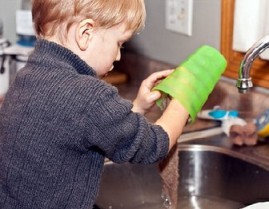

 Long, long, long, really long years ago, when television was newer, there was a character on “The Many Loves of Dobie Gillis” (about teenagers in the 50-60’s) called Maynard G. Krebs. He was a beatnik – later called hippies, now slackers – who never had a job. Every time another character said the word, “work”, Maynard would do an exaggerated repulsed shudder and yell, “WORK?!?!” It was funny in 1960.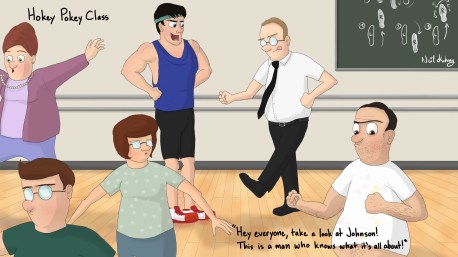

 teachers need to use warmth and humor, acceptance and respect (not just tolerance) and must protect the rights of each child to make decisions, express himself, make and use mistakes, and to have ownership of some personal rights. These personal rights are


 Teach 'Em the Way They Learn