Try These On For Size
One Year Old Bites Teacher. Teacher looks into One’s face with a stern or injured expression and says, “NO, ONE. You wanted me to look at you, but YOU MAY NOT BITE! Touch me like this (teacher gently caresses One’s face). If you bite, I will not hold you.” Follow through with consequence and when One behaves appropriately, give positive attention by communicating, holding, or interacting.
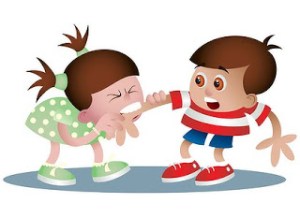 Two Year Old Bites Friend. Teacher goes to bitten child FIRST & assures he is alright, gives attention and expresses empathy. Teacher goes to biter, gets on his eye level, makes eye contact, and says, “NO, TWO. You wanted him to get away from you, but YOU MAY NOT BITE! Here are some words to say: ‘No’! ‘Get Away’! If you bite your friends again, you may not play for three minutes”. Follow Through. When the three minutes is up, remind Two of the appropriate behavior and give him positive attention by word, gesture, or hug when he plays nicely.
Three Year Old Throws Heavy Blocks in the Air. Teacher goes to Three, gets on eye level, makes eye contact, and says, “NO, THREE. You wanted to see how high the block would go, but YOU MAY NOT THROW THINGS! That block might hurt someone. We use our blocks for building. If you throw again, no more blocks for you today. Follow Through. Later in the day, give Three some paper towels or tissues or pieces of cloth to throw so he can learn about the properties of ‘light’ and ‘heavy’ and have some positive attention for appropriate behavior.
Four Year Old Runs From Classroom Unattended. Teacher catches him and says, “NO, FOUR! You wanted to go to the playground, but YOU MAY NOT GO ANYWHERE ALONE. That is not safe. How else could you have told me you wanted to play on the swings? If you run away from the room again, you will miss some playground time”. Follow Through. When Four walks with the class safely to the playground, give him a thumb’s up or high five. Give him the job of Line Leader or Door Closer to let him know he is trusted.
Five Year Old Ruins Classmate’s Work. Teacher attends to needs of “victim” first, assuring him time to start his work over if he wants to do so and empathizing with his loss. Teacher turns to Five, gets on eye level, makes eye contact and says, “NO, FIVE. You were upset because she finished her work first, but YOU MAY NOT TEAR UP OTHER PEOPLE’S WORK! You need to tell her you are sorry. Do you want to talk to her or write her a note? If you ruin someone else’s work again, you will sit by yourself and think about things while we play in the water table.” Follow Through. When Five apologizes, thank him. If Five tries to atone by repairing the damage he has done or being particularly kind at a later time, give him positive attention and verbally express your appreciation.
Sounds Good on Paper, but Will This Work? – Not every time, no. Let’s be honest, if we had the answers for 100% elimination of ugly behaviors in our classrooms, WE WOULDN’T BE TRYING TO PAY OUR BILLS WITH PRESCHOOL TEACHER SALARIES, WOULD WE? There are no systems of behavior management with magical ways of solving the natural but often unattractive behaviors of young children, but next blog let’s talk about some elements of discipline that do make it easier to earn those big paychecks.
Next Blog: Keeping Reactions Realistic and Reasonable
 Teach 'Em the Way They Learn