Protection of Rights – Expression

We’re talking about creating emotional safety by guaranteeing the rights of freedom of choice, freedom of expression, freedom to make and use mistakes, and some personal and special rights.      Let’s look at Expression and Mistakes         

kid-with-micExpress Yourself!Expression is not merely talking, it is demonstrating learning and using gesture, sound, words, movement, sensory exploration, manipulation, construction, role play, and the arts to show all the aspects of self in body, mind, and spirit. Expression is a skill that includes articulation of personal need (Baby is hungry, so Baby cries); imitation of adults, others, nature, and media; use of words; conversations with others; the arts; and finally use of written words.

Each and every child must feel good about how and what he thinks, what he says and how he says it, what he can (and cannot) do, how he moves, and how he feels, For the teacher, there are two components to assuring this freedom – provision of the opportunity to express and acceptance of that expression.

Every day every child must have an opportunity to express himself by showing interest in and taking part in the experiences offered to him, and then talking, dancing, singing, drawing, writing, or recreating the learning he gained from the experience.

There must be opportunities for expression physically through dance, role play, music, song, and movement (on and off the playground). There must be opportunities for expression intellectually through the sharing of words, thoughts, plans, opinions, and appropriate humor. There must be opportunities for expression emotionally through group and cooperative play and by being given responsibilities for maintaining the learning environment. Expression through art is vital on a daily basis as art is physical, intellectual, and emotional expression.

But That’s Only the Beginning – Not only must those opportunities for expression be offered on a daily basis, but there must be full acceptance and respect for the expression and attempted expressions of each child. Acceptance of expression is not as easy as it sounds. Often we are so focused on “right” answers that when a child expresses himself in a way that doesn’t seem to fit those answers (he colors outside the lines, figuratively and literally, or “thinks outside the box”) we miss the value of his learning or fail to recognize it as learning at all.

Recognizing Learning – We need to very carefully and expectantly listen to and observe our children in the personal and individualized expressions of their comprehension. When we get ourselves stuck in that narrow place that only recognizes learning as successful when it meets our written standards or when we do not accept and respect the ‘offbeat’ expressions, we often miss the fact that successful learning has occurred.

Collins and Glover (authors of a number of books and articles from Heinemann Press) say that children’s expressions and attempts at expression and skills must be “Noticed, Named, and Honored”. I love this way of stressing the importance of seeing REAL learning, giving it a name or explaining to the child what he has accomplished, and then giving that learning recognition as REAL and of importance.

Children who express themselves “differently” from the standard expectations are sometimes not geniusgiven credit for having learned when in reality they have REALLY, REALLY gained knowledge and are even moving that learning to a new level. Pay attention to the “odd” ways some children have of expressing their knowledge or out of the box ways some have of doing things.

I had a Two who said, “I not ready to go outside. I only have on one cloe.” It took me a minute to realize that she had grasped the rule of English grammar that says adding an “s” to most words make them plural and she was telling me that she didn’t have enough clothes on to go to the cool playground. This was not just ‘cute’ and not ‘wrong’, but a very real learned concept to be recognized as a high level language skill!

Next blog:  The Right to Make and Use Mistakes

More Choices – Decisions, Decisions, Decisions

Participation – (NOTE: Not IF to work, but WHERE and HOW to work). Every day every child must be given opportunities to choose what he wishes to work with within the limited choices you make available to him. The ability to select, act, reflect, and apply his learning (SARA) through the process is vital to cognitive development. Plan, Do Review, Vygotsky!

More rigid conformity to an academic routine determined only by the teacher or the curriculum comes later along the developmental journey to kindergarten and there are many ways a creative teacher can encourage a child to try new experiences or to expand his interests and take part in a variety of experiences.

 There’s Always a Herbie Blockbuilder – If a child chooses the same activity daily for weeks at a time, the teacher needs to alter the presentation of the experience to “squeeze” appropriate learning from it. This is the method of meeting need by using strength and creating relevant child-centered or personal–interest learning while still meeting the standards or objectives of your curriculum. Change the work by block-boy-2encouraging him to count, stack, arrange and sort the blocks to build math skills, use letter blocks to make words for literacy, build an igloo for social studies, paint them for art, and make some blocks from other materials for science. If a child only chooses to play in the Dress up Center, make sure there are non-structured* props for creative role play that can be used in a variety of ways suited to concept-building themes matching the strength expectations.
*When I say “non-structured” I mean raw, creative, open-ended materials, not Disney Princess dresses and plastic Kim Kardashian pumps!

Three Examples of Choices That Are Sometimes Hard to Grant:

Separation System – You respectfully suggest, but he and Mom choose

Behavior Bartering – “You need to get off that table NOW! Can you get down by yourself, or shall I help you?”

Authentic Art – Art projects must be completely child created or they are not art.  Nokid art teacher should ever alter a child’s original art in any way make any decision about how the creation looks. HANDS OFF!

Offering Choices, Developmentally Speaking    

Infant, Baby or Young Toddler – verbalize both your offer and his choice so you’re developing both cognitive and language skills. “Look, Baby. Here’s a teddy bear and a rattle.” When baby makes his choice, reaches, and grasps, “You picked the soft teddy bear.”

Older Toddlers – verbalize your offer and his choice and encourage him to point at his choice, repeat your words, or ask him to say words of his own. “Toddler, show me what you want to play with.” When he points, “You want the truck. Can you say, ‘truck’?”

Twos – verbalize your offer and his choice and more firmly ask for words. “Two, do you want to play in the water table or build with blocks?” If he points to the water table say, “.” This lets you asses his skills in both receptive language, in which a child shows the understanding of what is said, and expressive language, in which a child repeats or originates words or phrases. Receptive – “Do you want the truck or the puppet?” When child points to truck, say, “You want the truck?” and the child nods affirmatively. Expressive – “What do you want to play with?” When child says, “Truck”, say “Good talking. You wanted the truck.” Help Twos recall their choices later in the day to build skills of memory and expression. “Remember this morning when we were playing with those things with the wheels, those. . .” and hopefully Two says, “Trucks!”

Threes – verbalize a more general offer and gently insist on words. “Three, tell me what you want to do first today.” Threes need to give verbal answers rather than merely point or gesture, but respect the gesture and note the need (do some assessment) to verbalize so expressive skills can be worked on. Later in the day, ask Threes to verbally recall (reflection) what they worked with. Take dictation of their reflection and post it or save it in the child’s portfolio.

Fours and Fives – verbalize your offer and firmly insist on a verbal expression of choice. “Four, tell me which Center you are going to work in first and what are you going to do (make, play with) there?” When Four answers verbally, make a positive comment on his choice (“Sounds like a neat idea.”) or ask a question that encourages further learning (“How many blocks do you think that will take?”). Later in the day, Fours and Fives should be asked to verbally or representationally (through journaling or drawing) recall their actions and reflect on any learning that took place.

Next blogs: Protection of Rights – Expression


Protection of Rights – Choices and SARA

More on Emotional Safety – For the emotional environment to be safe and the learning process to be as proficient as possible, each child must be guaranteed certain rights, These freedoms are choice, expression, the freedom to make and use mistakes, and some special rights that may not occur to us so easily. Let’s start with Freedom of Choice.fish-freedom

Freedom of Choice – The empowerment of free choice improves self-esteem, increases intelligence, and develops the ability to solve problems, work both cooperatively and independently, and to feel good about school. It takes both child development knowledge and patience to allow and wait for children to make their own decisions choices, but it is one of the most important techniques a teacher employs.

A Little SARA – I like a curriculum that mandates that the day be full of learning experiences arranged in a system I call SARA, for Selection, Action, Reflection, and Application, which calls for each child to select his area of work or the tools for work, to take action in the experience, to be given time to reflect on the work that took place, and then to apply the knowledge or skill to new use.

Yes, this is similar to High Scope’s “Plan, Do, and Review”, but it adds the element of Application of learned skills to new learning or practical use that Lev Vygotsky (google him) taught. So SARA is like a continuing joyous conga line of “Plan, Do, Review, Vygotsky! Plan, Do, Review, Vygotsky!”

conga-lineThe act of selection involves skills in all areas of development. For an infant to reach for a toy, he must see or hear it (fitness); determine interest (reason, logic, and self-awareness) by either showing curiosity (intelligence) or by recalling (cognition/memory) how he felt when he last played with it. He may be influenced by its color (art), texture or taste (science), size or shape or how it fit in his hand or mouth (math). He has to figure out how to grasp it (problem-solving) and he has to reach, grasp, lift, hold, and manipulate it (skills of fitness/gross motor/strength and fine motor/hand-eye coordination). Whew! In a matter of seconds, his brain has created millions of connections. Connections mean learning, so choosing means learning.

Set Some Limits – Teachers must limit available choices to meet developmentally appropriate stages as far as safety, health, level of frustration, and sometimes, time constraints. A child may choose activities, equipment, materials, and experiences from an appropriately limited number of options. He can play on the monkey bars, the swings, or in the sandbox, but he may not choose to leave the playground. She may paint on the easel or the paper, but not on the wall. He may build a farm, a house, a building, or a bridge with the blocks, but he may not throw them. She may put her jacket on by herself or with help, but she may not choose to go outside without it. He may have his diaper changed now or in two minutes, but his diaper will be changed. Here are some areas where children can and should make choices:

Eating and Sleeping – Children can be encouraged, invited, persuaded, lulled, even bribed and tempted to eat and sleep, but cannot and should not be forced to do so. Offer an option to sleeping like resting on the mat with a book or music of choice on a headset. If there are enough staffers, when the sleepers are asleep, take the non-sleepers for a walk.

baby-eatNEVER force feed any child. Offer only nutritious foods. Encourage parents to send in nutritious food, but do not make value judgments by insisting children eat ‘your’ way or the ‘right’ way. Juice sometimes fills tummies, so serve food first, then add juice or water when some food has been eaten. Do not serve “reward desserts”. Do not insist that children eat their food in a particular order. Allow and encourage choices to be made and use meal times as learning experiences. Say, “Do you want two carrots or three?” Use “I” messages and role modeling such as, “I LOVE butter beans! How many do you have on your plate? You are three years old. Can you eat three butter beans?” Encourage parents to allow children to make choices about the food they bring to school (from only nutritious items) so the children have more ownership of their preferences and may even eat all they have chosen.
 Diapers and Potty – Encourage but never force bathroom issues. Unless there is a diaper or underpants emergency of an extreme nature, give the baby or toddler some verbal warning before scooping him up for a change. Five more minutes of concentrated attention span-building play is much more important than diapers changed at exactly ten o’clock. Give older children verbal warnings as well – “Three, almost your turn in the potty. Do you want to go now or in five minutes? Your choice, Pal.”

Self-help Skills – Allow children to choose whether they will try to dress, button, zip, tie, wash hands, etc, with or without your help and only assist if they become frustrated. Yes, this is time-consuming and sometimes tedious, but it is VERY important for self-esteem, skill building, independence and empowerment.

Next Blog: More Choices


Acceptance and Respect 2 – Behaviorism

To Create Emotional Safety with Acceptance and Respect, We Must:

  • Understand developmental nature and ‘typical’ behaviors so that a child’s actions are also understood and accepted as natural rather than “bad”                    
  • Have realistic expectations so you don’t overtly express disappointment or compare child to child when a difference in development occurs                      
  • Accept each child for who he is right here and now, and not what you wish or think he “should be” or “should be doing by now”                                      
  • Place no conditions on acceptance of each and every child, no matter who he is, what he does, what he looks like, or what and how he speaks            
  • Show disapproval of unsafe behaviors, but never of a child himself. It’s, “NO BITE”,baby-biter not, “BAD BOY!”              
  • Allow freedom of expression, and the freedom to make errors without reprimand, critique, or judgment. All humans learn by making and correcting mistakes.  
  • Accept a child’s answers, attempts, and successes without judgment or immediate correction – “Almost. Good try. Think again. You did it!”              
  • Respect each child’s decisions and choices unless they are harmful – even if he chooses only to play with the blocks every day every day for six weeks. (Change the blocks, not the kid.)        
  • Practice active listening with each child every day by getting down on his physical level and making eye contact, giving undivided attention when a child speaks or attempts to communicate, restating what the child says, asking questions, and creating a personal learning connection.

hiddenBehaviorism – The Hidden Prejudice

It is extremely rare that good teachers are openly bigoted or racist, but even in classrooms led by great teachers, who are human beings effected by stress, fatigue, frustration, and their desire to keep their community of learners safe and the learning process successful, there is a form of discrimination I call “Behaviorism”. It is the prejudice teachers have for children who exhibit inappropriate, annoying, and sometimes harmful behaviors on a regular basis or children about whom a teacher might have preconceived ideas and feelings about based on past experience with the child or members of his family.

Be honest – there is always a child (or two or three) in the community who exhibit very unattractive behaviors on a daily basis – the child whom a teacher secretly wishes might catch a mild case of the sniffles once in a while, but who has a perfect attendance record – the child whose name immediately comes to mind when there is a loud crash of noise or a cry from another student – the child whose parent is difficult to deal with – the child whose sibling was a difficult student in the past.

Without realizing it, teachers may express a bias against a misbehaving child as if the behaviors were as integral a part of the child’s identity as his race, gender, faith, or family rather than judging the behaviors as indicators of either normal developmental stages or symptoms of need for attention or correction. Teachers may even unwittingly express their behaviorism in terms and actions that are just as damaging to the child’s self-esteem as are racial or religious biases.

Some of the more subtle self-esteem crushers teachers might use are facial expressions, eye rolling, frowning, grimacing, and body postures such as turning away from a child, hands on hips, arms folded across the chest that say to the child, “AGH! You again! What is WRONG with you? Why can’t you behave?” Children are not stupid. They feel this rejection from the earliest ages and their sensitivity and vulnerability to emotional damage is intense and must be taken into consideration at every turn.

Some less obvious expressions of behaviorism are automatically calling a child’s name in a harsh manner, blaming him for causing incidents before investigating the facts, constantly “over watching” him to make sure he is not misbehaving, and sharing negative feelings about him in unprofessional ways with colleagues.

Some actions even effect educational methods a teacher may use, like ignoring a child’s needs, comments, questions, and attempts at learning; constantly harping on him, pressuring him or over correcting him; and having unrealistic expectations – either too high or too low – for the child’s skill attainment based on his behavior rather than his actual, factual intelligence or fitness.

To reduce behaviorism in your community of learners:

  • Know what behaviors are natural and normal stages of development and which ones are a shout out for attention or symptoms of a serious need
  • Use a developmentally appropriate behavior management system that will reduce truly harmful behaviors
  • Learn to relax about behaviors that are merely unattractive and silly
  • Never label a child by his behaviors
  • Never let a child feel you are giving up on him, even if his behaviors are very difficult
  • Understand that reluctance to fully and immediately embrace differences is human, but agree that discrimination and prejudice are simply wrong
  • Be aware of any personal negative feelings and actions you may unwittingly express
  • Create an environment of emotional safety for each and every child and create a community of earners for all of them
  • Remember that zero tolerance is for the behavior the child exhibits, not for the child himself

Next Blog:  Protection of Rights – Choice and SARA (SARA???)

Acceptance and Respect 1 – MORE Than Tolerance

snottyTalking About Emotional Safety Here – Let’s face it! Every class has a sticky-faced, green-nasaled child who bullies and hits, talks too much, never listens, seldom follows directions, and pesters his classmates incessantly; and every class has a beautifully dressed and coifed well-behaved little lady who brings us joy and peace on a daily basis and whose parents give us great end-of-year gift baskets of chocolate and wine.lovely

What is best for both of these children is to learn to feel good about themselves and okay about each other, and we do this by showing our unconditional respect for each child and by finding each child’s strengths so we can help him use them to meet his needs (weaknesses).

MORE – Acceptance and respect mean more than “tolerance”. The word, “tolerance” gives me the impression of one person being superior to another and allowing the other to be in his presence (like a queen granting a person of lesser nobility the right to come into her court). Acceptance means agreeing that differences are not good, bad, better, or best, but merely different. Respect means accepting those differences in a positive and open manner and honoring each child with the esteem he or she deserves. Our children deserve more than mere tolerance.

This may seem like an easy task for teachers whose nature, most often, is to be kind, loving, and protective, but granting this right does not come naturally or automatically when the desire to TEACH FACTS comes ahead of the desire to PROMOTE AND SUPPORT LEARNING or when a teacher feels the need to INSTILL HER OWN VALUES in place of the values of the child and his family. Real learning comes from within the child, and positive values are not “taught”, but offered by example.

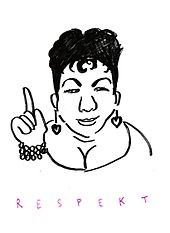
Aretha Sings it Best – R-E-S-P-E-C-T, genuine regard for another individual is a great gift. For a teacher to unconditionally respect a child, she must fully understand child development and its facts about natural behaviors and skills appearing in patterns of growth while also accepting the fact that there are many influences on that development that make each child an individual capable of growth only at his own speed. It is human but unprofessional to compare one child to another or any child to a set of standards without this understanding and it is disrespectful to expect more or less of a child because of his race, ethnicity, or family situation.aretha

It Happens – Over the years I have listened to well-meaning seemingly intelligent teachers make statements like, “I had his brother two years ago. I don’t think he’ll make it to kindergarten” or “You know his dad’s in trouble with the law. I don’t expect him to do very well,”, or even “THOSE PEOPLE just don’t have good values.” Give each child the respect and acceptance he deserves simply because he exists.

Next Blog: Acceptance and Respect 2 – More on More than Tolerance


Humor – Second Best Feeling in the World

ha-ha-faceThere is little that is more important than the creation of a warm, welcoming, and positive atmosphere for learning by laughing, smiling, and relaxing, and encouraging this in the children. Appropriate laughter feels good, causes the body to relax, and the brain to work more smoothly.
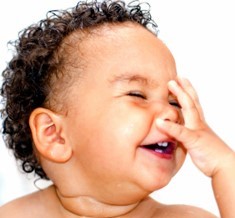
Humor – The use of humor as a method of creating the emotional environment of safety is important because appropriate laughter makes learning occur more quickly and with higher quality than rote memory methods of learning in an atmosphere of pressure and boredom. Development of a sense of humor is an important cognitive strength expectation. The understanding, appreciation, and creation of humor is a builder of intelligence, so teaching with and modelling humor assist in accomplishing the mission of the curriculum. Human beings with good appropriate senses of humor are more intelligent, well-rounded, and successful.

Read the works of Dr. Paul McGhee, author of many books on humor and its place in learning in children and adults. (Google him for giggles). He said, “Humor first appears when children acquire a solid enough understanding of basic features of their world to know that distortions or incongruous presentations of those features are “wrong” or, in older preschoolers, “impossible.” Believe the words of Ameila J. Kline, in Children’s Humor: A Cognitive-Developmental Perspective. L. Katz (Ed.), Current Topics in Early Childhood Education, Vol. VII who said:

“Humor is a form of play and is a natural medium through which young children can expand their understanding of the world.
Humor is highly pleasurable and is associated with cognitive mastery.
Humor provides children with problems to solve. In a joke, riddle, funny story, or cartoon, children must resolve incongruity in order to establish the joke.
Humor promotes divergent thinking, a characteristic of creativity; in order to establish a joking relationship, the child must discover or create unique associations among ideas.
Humor provides the child with an opportunity to learn rules. Humor has a basic structure that children discover when “playing jokes” on others (humor based on the element of surprise) or telling riddles (a punch line logically related to the body of the joke).”

laugher with handGiggles is Good – Funny things happen in the community of little learners. Children say and do things every day that make us laugh. The ‘trick’ on humor and laughter is to make sure the fun is good-natured and positive and is never aimed at humiliating a child or disrespecting his family.

Some things that I have seen even in the best of programs that are NOT funny, are:

Teasing, imitating children’s speech patterns or accents, overstimulation by physical tickling, unkind nicknames, talking aloud about a child’s appearance, clothes, food choices, table manners, hygiene, family situation, abilities, and mistakes.

If your children are not laughing and smiling during their time with you and if you are not appropriately laughing and smiling during your time with them, then take a close look at the environment you have created – the stage you have set – and make the changes needed to create emotional safety for every child through warmth and humor.

“What we learn with pleasure, we never forget.”                 Alfred Mercier

Next Blog: Acceptance


Emotional Safety – Warmth

Optimal Learning – The best learning happens when children feel comfortable and can use the methods of Movement, Sensory Exploration, Active Manipulation of Real Objects, Construction, Role Play, and Expression in an atmosphere of warmth and security.

This atmosphere must assure that each and every child is comfortable physically and emotionally, that each becomes familiar with the classroom and persons in it, and has his family name, ethnicity, and customs treated with dignity and respect.comfortable kids

Learning is inhibited by: discomfort, fear, disrespect, pressure to perform, boredom, chaos, and the use of methods incompatible with developmental expectations, so it is of extreme importance that every adult make every attempt to assure that this environment is created and maintained at all times.

Warmth – A child who feels safe and secure when his teacher smiles at him and greets him warmly (and forgivingly, if need be) by his correctly pronounced name upon arrival at school is a child who can learn more easily and behave more appropriately.

 Teachers must use their knowledge of child development to create appropriate schedules and have appropriate developmental expectations. We have to understand and appreciate the need for organized chaos, not chaotic organization. We must separate program work from personal worries, must practice relaxation techniques, communicate clearly and respectfully with each other on a regular basis, and most importantly, smile and laugh appropriately

More specifically, every teacher must:                                              

  • Learn to truly know each child in her carecheers
  • Greet each child daily by correctly pronounced name, eye contact and a smile                            
  • Affirm peaceful behaviors and encourage appropriate laughter
  • Ignore, redirect, or discourage laughter at another’s misfortune
  • Encourage and participate in appropriate humor                                             
  • Play with the children, not just watch the children play
  • Communicate clearly, warmly, respectfully with family members
  • Dismiss each child daily with a warm affirming (and forgiving)  farewell

Like “Cheers” – Make your classroom a place where “everybody knows your name.”

Next Blog: Humor – Second Best Feeling in the World


NO Trophies Here!

Realistic Self-Esteem – What we want for each child is to develop a REALISTIC view of himself and the world around him. We encourage this by creating an environment of Emotional Safety.  

proudMe and We – Emotional Safety is created by understanding the aspects of self-esteem (Me) and community (We). The affirmation of individual realistic self-esteem and the development of a ‘Whole Child’ is done by the provision of warmth and humor, acceptance and respect, protection of rights, assignment of responsibilities, celebration of events and milestones and strong connections with families. Community is the creation of a close-knit ‘family’ of learners in who have a common mission of learning success that takes place in comfort, peace, cooperation, wonder, and joy.

Let’s Talk About Me – Positive self-esteem is the foundation of high-quality intelligence. Children who feel comfortable with their bodies, feel loved, and are treated with kindness and respect, simply learn better than children who are disrespected, belittled, pressured, and either over or under stimulated. This is true for students of any age. It is of extreme importance for children from birth to eight years of age, it is important for students who have any special need physically, mentally, emotionally, or socially, and it is important for students at particularly sensitive ages and stages of development (Gesell says 18 mos, 3.5 yrs, and 5 years).

Keeping it Real – Realistic self-esteem is built through honesty and the offering of positive feedback through gesture or hug, not the awarding of trophies, stickers, candy, and toys. Praising and over-praising everything a child accomplishes is not honest. On the other hand, pressure to perform, nagging, and only noticing a child when he misbehaves is extremely detrimental, so there must be a happy medium.

We want to assist in the development of a whole child, healthy and strong in body, mind, and spirit. Development of a healthy spirit involves the ability to see ourselves as good and able, but human, each with his own ethnicity, appearance, gender, abilities, strengths and weaknesses – none of these labeled good or bad, but merely different.

Today (2017) everybody talks about awarding of prizes for simply being there, opposed to celebrating those who make the highest scores, run the fastest race, or look the cutest in the baby beauty contest. Try hard to convince yourself and your parents that there is no need for high pressure contests in early education.trophyI do not care for a lot of competition among under eights. I do not love preschool graduation ceremonies and prefer not to take part in award ceremonies in which there is a certificate or trophy for every child, with teachers trying to find a ‘winning title’ for every child like Niftiest Napper and Best Breather. On the other side of the coin, if nifty napping and good breathing is the ONLY thing you can find to compliment a child on, please do let him know you’re proud of him. I have complimented children on their bottom-wiping and their sneeze-covering if I felt they needed a boost of self-esteem, but overpraising and over-rewarding sets up troubles.

Young children should not be judged. They are not emotionally capable of handling overt recognition of success or failure. They aren’t stupid – they always know whom, among their friends, is the ‘smartest’, the ‘prettiest’, the most ‘popular’, the best ‘reader’, and they sometimes know when you pronounce them best ‘line leader’ that you are just trying to make them feel good. It’s great to send each child home feeling good about something, but don’t overdo it.

The way to make everyone feel good is by being honest. If a child cries because he comes in last in a foot race around the playground, you say, “Yes, you’re upset. Usain is a fast runner.” There is no need to compare the kids’ abilities or make a big moral lesson about practicing more, eating better, or trying harder UNLESS you can give him some ownership of his learning (“What can you do if you want to run faster?”) or of his feelings, (“You are sad about that. What can you do to make yourself feel better?”)

Creating emotional safety is the way to build self-esteem. It begins with Warmth and Humor.

Next Blog: Warmth – Best Feeling in the World


From 40 Years in the Trenches IV

Some Medium Stuff (Not Too Bad, but Still Unwanted Behaviors)

child cursingQuestionable Word Choice – This is using unacceptable language or calling private body parts by name. Many twos and threes practice “echolalia” – repeating what another child says over and over, and four-year olds are well-known for their use of ugly language, so expect these behaviors. If a child uses curse words that are generally offensive and may be overheard, repeated, and taken home by others, go to the speaker privately and say, “Speaker, I do not like that word and I do not want to hear it at school. If you say it again, you will have to work by yourself.” Call parents to non-judgmentally discuss the use of appropriate language at school. If a child uses silly but offensive language (like “poopy head”) you can tell him that kind of talk is “bathroom talk” and if he needs to say it, he can go in the bathroom by himself and talk. If a child uses a racial epithet or uses any language that demeans another child (“stupid, fat, ugly, dirty”) immediately treat it as you would a harmful behavior, because words DO hurt.

“Real” Words – Some children are taught to use anatomically correct words for private body parts while some have less adult words. When a child says those words, and other children are interested in them and repeat them, let your parents know that new language is contagious and that their child might come home from preschool with a vocabulary that is different from the one at home. Try not to overreact to these words. Your reaction determines their interest in repeating them. Parents will appreciate the warning so when the three-year old says vagina at the Thanksgiving dinner table with Grandma, they will not be overly surprised. A wonderful two-year-old I loved was Rebecca, who looked at a little boy coming out of the bathroom doing that two-year old pants-around-the-ankles shuffle, pointed to his penis and said, “Hey! My brother has one of those!” It was a good spontaneous lesson on the differences in our bodies – no need for scolding or shushing, just a confirmation of “Yep. Boys and girls are different.”

Playing Doctor – All young children are curious about their bodies and about bodily functions. This is normal and rarely of a sexual nature. Children touching their own or the private parts of others, peeking under skirts and into pants, and even curiosity about teachers’ bodies are all normal occurrences. If sex is simulated or if sexual language is used, however, teachers need to deal with this in a quiet, private, and matter-of-fact way – NO HYSTERICS, NO PREACHING, NO CONDEMNATION. Say, “We do not touch the private parts of bodies here”. Most young children do not have the capacity to place value judgments on sexual behaviors unless they have been taught by intentional or accidental exposure to real experiences or visual media. When young children simulate sex, ask their parents about preteen or teenage babysitters, older siblings, and of course, television, video game, and media exposure.

And Now for the Small Stuff – Don’t Sweat the Small Stuff!! You will drive yourself and your learning community crazy. Enjoy the small stuff. Laugh at the small stuff. Make learning experiences out of the small stuff.kids laughing

Now that all of our discipline and behavior issues have been cleared up, and the physical environment in your learning community is perfect, let’s move on to creating and maintaining the safe emotional environment.

Next Blog: Emotional Safety – Great Self-Esteem but NO TROPHIES!

From 40 Years in the Trenches III

Talked about the Big Stuff – Now for Some Not So Big Stuff

rude-childSassiness – Sometimes called ‘talking back’. Treat this by saying sadly, calmly, and matter-of-factly, “Oh Childname. I am so sorry to hear you speak to me that way. It makes me sad (or hurts my ears, or hurts my feelings, or hurts my heart). I will not listen to you when you talk that way. Say what you want to say nicely and I will listen to you.” Then the trick – AND THIS IS THE TRICK ON ALL BEHAVIORS – turn physically away from the child until he speaks in a respectful way, then give full active attention and thank him for speaking correctly when he does.

PassinessThis sometimes works with whining and talking through a pacifier, too. Be kind by saying, “Oh, Childname. I cannot understand what you’re saying. When you canpacifier-stache say it so I can understand you, I will be able to listen.” Then attend quickly when the whine or the pacifier is gone. (Be developmental on that pacifier!! Parents and dentists make that decision – not you.)


Harassiness – It also works with the constant interrupter who is either so excited about what he has to express or is not used to sharing the teacher’s attention with others. Try this: “I hear you, Childname, and I want to listen, but it is not your turn to talk. Please draw a picture of what you want to say and when it is your turn to talk, I will remember to listen carefully.” (In Circle Times I have seen teachers have the children pass a theme-related object around so each child can speak only when he is holding it).

Nervous Habits – Things like hair twisting or chewing, nail-biting, and stammering may be caused either by developmental stage (18 months, 3.5 and 5 years) or by emotional distress and they may be temporary. Talk to parents about what might be going on at home. If the hair twisting makes a bald spot, if the nails are bleeding, or the child cannot communicate most of the time, confer with parents on a plan to find the cause and eliminate the habit. Often, the more we call attention to these habits, the more they will increase, so give BIG TIME positive attention to the child when he is not doing these things. “Wow, Hairchewer. I love to listen to you when your hair is out of your mouth. I can hear every word you say.” Stammering is a natural developmental issue most of the time. Try patting rhythmically on a child’s arm or shoulder until his words match the rhythm and he’s able to speak.

Unattractive Habits – This is stuff like nose picking, bottom scratching, belching, etc. Some of these things are unhealthy, some merely distracting, but deal with them privately because they should be privately practiced. Take the child aside and suggest that it is not (healthy, attractive, polite) to do these things in front of others but that he should save them for a private time and place. If you talk about these things aloud with the whole community, the attention the topic receives will increase the behaviors rather than reduce them. Four year olds, in particular, seem to practice these things with great relish. If you have an epidemic of belching, either ignore it until it stops for lack of attention from you, or STOP the action FIRMLY and have a full community discussion about the time and place for these sorts of things.

Table Manners – Not gonna’ happen, but I’m talking about etiquette. Young children are not known for their gentility at the dining table. Ease up on the manners and concentrate on carrying on intelligent and pleasant mealtime conversation and opportunities for learning. Model good manners, give attention and use active listening skills with the children who are eating nicely. Increase attention span and dining time (staying at the table) by making meal times relaxed but purposeful. Have correct expectations for eating habits. Food fights are out, but food counting, book reading, color naming, and talking about shape, size, texture, personal food preferences, and nutritional value, and using meal times to review the work of the day are IN.messy-face

Increase sitting down time by use of these pleasant conversations and by having everything the children need to open packages, eat and drink and even pour by themselves. Most important rule on dining – SIT DOWN AND EAT WITH THE CHILDREN rather than hover and serve. A smart Pre-K teacher I know, Miss Christy, reminded me that older fours and fives need to learn cafeteria independence before leaving her class, so she does less teacher-led things at the table and encourages more quiet conversation among the children as the year gets closer to ending.

Next Blog: 40 Years in the Trenches IV