From 40 Years in the Trenches II

bullyBULLIES!

You Know Who I’m Talking About – There is always a child (or two) whose behaviors are hard to deal with and whose name is called out almost automatically when trouble occurs and who is NEVER ABSENT! This child deserves to think of himself as good and to know he is welcome to school every day in spite of his previous ‘sins’. Sometimes he is the bully or the pest who bugs the other kids or the most physically active climber-runner-pouncer on whom you feel you must keep the most constant supervision. Use the behavior management system for his actions, but forgive him and move on. It will be healthier for child, the teacher, and the relationship between the two.

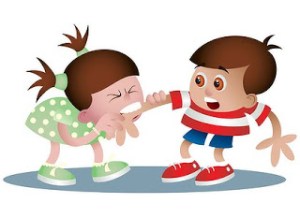
There is always some type of bullying behavior – being physically or emotionally cruel to others – but try not to label an overly aggressive child “the bully”. Deal with the behavior by realizing that this child may be bullied at home, may be testing his strength and power, jockeying for position in the community pecking order, and that both boys AND girls demonstrate bullying behaviors. Sometimes a child who bullies is a just a bigger than average size child who isn’t aware of his physical strength.

If any child hurts someone, deal with this as you would any other instance of harmful behavior, going to the victim first with empathy and concern. If there is a child who becomes known as the class bully and the other children are talking about him, afraid of him, excluding him, or telling their parents about him, take time and care to help him develop some social skills. Talk to his/her parents about behavior management, and find a way to keep the children safe while building the aggressor’s self-esteem.

Bullying has been going on since Goliath tried to bash David in the Bible. I have seen teachers tell their little Davids to hit those Goliaths back, but this is totally inappropriate. Encourage the Davids to be brave and strong, to use their words to try to make friends, or to ignore the Goliaths if they can. Give your Davids both protection and words to use to stand their ground, but never encourage physical retribution.david and lamb

Goliaths who bully others usually like jobs, so put them in charge of class morale – the Happy Helper who makes sure others are safe and happy – or assign them tasks that give them a sense of responsibility like Pet/Plant Protector or Kid Counter so they can practice building their leadership qualities without using mean hands, mean feet, or mean words.Teachers should not be blamed for this “new phenomenon”, bullying. We try hard to keep every child safe physically, emotionally, and educationally but we cannot work the children like marionettes, pulling their strings and controlling all of the 5, 10, 15, or 20 little individuals in our care, each with his or her own personality, home situation, and developmental level. We are great and wonderful, but we are not miracle workers.

Young children will be aggressive on occasions no matter how careful and concerned with safety we are; no matter how terrific our classrooms and playgrounds are designed; and no matter the excellence of our curriculum and educational expertise.

Make sure you get to know which child shows aggressive tendencies and whether there is a pattern to these behaviors (does he hit/bite when he’s tired, bored, overstimulated, hungry, feeling ‘crowded’, missing home, afraid of noises, has to use the potty, is there a specific victim each time, etc). ‘Immunize’ by assuring that these things are taken into consideration, he is kept busy and challenged, and sometimes apart from his usual victims.

Next Blog: From 40 Years in the Trenches III
 

From 40 Years in the Trenches I

old-teacher-wordpressBehavior Management – Advice from Me (Mrs. B.)
NO – Say “NO! forcefully, firmly, and purposefully for safety issues. Say “Absolutely Not”, for questions and infractions against Program Values. Say “Yes, When” or “Yes, If” or even “Maybe. Let’s talk about it”, whenever you can. “Yes, we can go to the playground when all the toys are put away” or “Yes, you may have the truck when he is through with it” or “Maybe we can put the doll in the water table if we can figure out how to dry her out later. What do you think?”

The Truth about Consequences – Consequences (penalties, if you must) must be totally nonviolent, age appropriate, behavior appropriate, relevant and meaningful to the child, and not harmful to the self-esteem. Whenever possible, match the consequence to the offense (biting to get attention=loss of attention; throwing toy=loss of toy; hitting others=loss of privilege of playing with others). Let the punishment fit the crime.

Time Out – Time Out or the system of removing a child who has done something harmful to a place where he can think about his infraction, really needs to be called Time Without because it is time without your attention that will be the most effective consequence. If your classroom is filled with wonderful things to do and see and taste and experience, time without participating in that will be even more of a motivator for peaceful and safe behaviors (and a deterrent to ugly behaviors). Do not confuse a Time Out area with a Quiet Space, which is a comfortable classroom space for a child to go when he is homesick, upset, or not feeling tip-top.

If a time out system is used, make sure it is age appropriate in time – one or two minutes per year of age. Explain to the child why he’s being ‘banished’ and see that he stays in the designated area for the right amount of time. Don’t forget the child sitting in the time out area. Remember to return to him, remind him why he was “benched”, and move on with your day.kids in time out

Use It, Don’t Abuse It – Time Out, Time Without, Thinking Time, or whatever you call it, can be very overused, misused, and can totally lose its effectiveness. Removal from the action is a consequence that should be saved for harmful behaviors only. Yes, there are occasions when a child’s behaviors need to be addressed by his removal – even from the classroom – and even for more than a few minutes. If a child has continuing harmful behaviors and his removal keeps other children safe, do not hesitate to remove him, but make sure parents are made aware of the serious nature of his behaviors and take an active role in making a plan for eliminating the behaviors. Remember, it is zero tolerance for the behavior, not the child.

Privacy – Remember that a child needs the most love when he is acting the most unlovable. Do not scold, chastise, or punish a child in an open forum as a lesson to others or to shame him. The point of discipline is to teach self-regulation, not to dishonor a child among his peers or scare him into being “good”. Give him ownership of his behavior. Allow the personal burden of the responsibility of that ownership and give him the consequence of the unwanted behavior, but don’t damage his self-esteem.

Apologies – Many teachers have ‘offenders’ verbally apologize or hug it out after hurting someone. This level of remorse is not a typical emotional skill for a preschooler, but you can ask him to do this to help build ownership and the beginnings of empathy. A better way to instill empathy is for the teacher to model it by making sure the victim of the behavior is given attention first and foremost. I’m not really big on apologies, because I think there should be a firm appropriate but negative consequence for causing harm, not just a quick, Sorry. My bad”.

Forgive and Move On – We need to forgive children for their mistakes and ugly behaviors. It’s important to move beyond unfortunate incidents and not get bogged down in the negativity of the moment and carry it into the rest of the day) or week, month, or year). Inability to do this sometimes results in a child becoming know as ‘the bad kid’, and this is a very damaging label.

Next blog: From the Trenches II – Bullying

On the Philosophy of Discipline

The Journey to Self-Regulation, My Grasshoppers (google “Kung Fu” 1972)

grasshopperThe goal of discipline is not to have control over the community of learners, but to engender self-control and self-regulation in each member of the community for the good of the continuation of the learning process. Here are some positive things to do that will reduce the number of negative behaviors in your learning community:


  • Be strong in maintaining the values of good health and nonviolence and firm in curtailing harmful behaviors. The rule may be “Use Your Gentle Hands”, but it means “No Hitting, No Kicking, No Biting, No Spitting!”
  • Model behaviors that epitomize and clearly represent the program values. Behave Yourself!
  • Have developmentally appropriate expectations for behaviors. Know Your Kids!
    Spend more time affirming positive safe behaviors than looking for and correcting negative ones. Let it Go, Let it Go!
  • Use positively stated rules for behavior. Tell them what TO do, not just what NOT to do.
  • React quickly, firmly, and with the strongest consequences for breaking rules about unsafe and harmful behaviors. NO!
  • Use sensible consequences that have relevancy for the children. Throw toy =loss of toy.
  • Use intangible feedback rather than prizes for appropriate behaviors.
  • Encourage independence, no matter how messy, and give them ownership of their behaviors.
  • Encourage children to work out differences and solve problems. Offer words and make suggestions, but let them figure it out.
  • Allow harmless but meaningful natural consequences to occur without saying, “I told you so”.
  • ALLOW NO PERSON TO DEMEAN OR BELITTLE A CHILD FOR HIS APPEARANCE, ABILITY, EMOTIONS, LEVEL OF MATURITY OR ANY CULTURAL ASPECT OF HIS LIFE
  • Make continuous connections with parents to compare home and school behaviors

Want more specifics? Next blog: From 40 Years in the Trenches, Part One

Reacting to Unwanted Behaviors 2 Developmental Guidelines

We need to deal with each child’s behaviors by understanding these developmental guidelines:

white infant feetInfants – Children under one year of age have no behaviors that can be described as annoying or distracting except for excessive crying, and this is not a negative behavior, but an expression of hunger, pain, discomfort, illness, or need for attention. These expressions should be dealt with by the teacher simply meeting the infant’s need. “Bending” or “breaking” the infant’s will, or insisting he conform to a more convenient schedule or pattern before he is ready to do so is bad teaching. The smooth brain waves created by the repeated back-and-forth dance of need and met need make infants calmer and (dare I say it?) smarter.
Babies – Babies can have personally unsafe behaviors like putting stuff in their mouthsbrown baby or reaching for unsafe objects. This is handled by creation of a physically safe environment and by redirection that may be accompanied by a verbal “warning” like, “No, Baby. Yuck. No Dirt.” Babies do occasionally bite each other out of curiosity and frustration or out of a need to communicate. This can be a harmful behavior, but is very natural and not a “bad” behavior. There are no ‘bad’ babies. Baby biting needs to be handled by the teacher assuring that there is adequate space for all babies and adequate numbers of toys so that space is not ‘invaded’ and possessions are not taken.

Melissa Two Years Old (2)Toddlers – Children from one to two may have separation anxiety and tantrums that can be described as annoying and those can escalate to being quite distracting and contagious. If crying over separation anxiety or a tantrum increases to excessive screaming, kicking, flailing, or trying to run from the room, or is an obvious disturbance for the other children, the child may need to be removed from the environment to calm down. Don’t impose consequences for a toddler’s emotional outbursts as they are not purposefully harmful.

Twos – Children of this age run the gamut of negative behaviors, most of them natural, but needing to be handled more strongly than those of toddlers. Personally unsafe and harmful behaviors in twos need to be handled by stating the rule and giving a warning on the first offense and Imposing a promised and pre-determined consequence on the second.

The annoying behavior of refusal to comply (the NO!!’s) begin now, because the two is trying to assert his independence. This two year old’s refusals to follow simple requests can sometimes be handled by a particular way of redirecting with a warning called allowing a natural consequence to occur. (Example: at cleanup time if a Two says NO to helping, a teacher might say, “Oh, too bad. You won’t be able to go to the playground with us until you put your truck away”).

Two Tantrums*&^!@! – There are three methods of dealing with tantrums. The first one is to use redirection, the second is to ignore it and let it run its course, and the third is to ‘control’ the child who is out of control. Redirection works if there are some entertaining distractions and the child hasn’t crossed that threshold of being out of control. Ignoring works unless it becomes so distracting to other children that the learning process is interrupted and contagious behavior begins.tantrum white kid

If staffing allows, the tantrum child may need to be removed from the classroom until he has gained control. A good teacher will know which method to use. After the tantrum has passed, the teacher needs to forgive and forget. It’s exhausting for everyone.

Words of Wisdom – My favorite tantrum tale is that of Niki, who cried daily until he vomited. After three weeks of this, his classmate, Rebecca, told him, “Nitty! If you want to flow up, Flow Up at Home!” I find this a very acceptable motto to live by.

Threes, Fours, and Fives – Children over two need to understand the consequences of negative behavior and take ownership of them. Annoying behaviors need to be boycotted (ignored or given no positive attention) and personally unsafe and harmful behaviors need to be handled with the system of natural consequence, stating the rule and warning for first offense, and imposing of the pre-determined consequence for second offense.white four year old

Next Blog: A Final Thought on the Philosophy of Discipline

Reacting to Unwanted Behaviors 1

I’ve been talking about the Big “D” – Discipline. When dealing with annoying distracting, and harmful behaviors we should always follow specific guidelines concerning our overall principles and philosophy about children, how we feel about behaviors (tolerance and zero tolerance) and as always, the basic nature of child development.

Start with Your Principles & Philosophy – The best programs for young children share a philosophy that includes the basic facts that each child is good simply by the act of existing and as such, deserves the opportunity to grow, develop, and reach his and her optimal natural strength potential in an environment of safety; and every family deserves to be treated with dignity and respect and with great regard for its integral role in each child’s education.

baby-sleepingTake it Nice and NAEYC* – Follow the NAEYC Code of Ethics, which asks us to:

  • Appreciate childhood as a unique and valuable stage of the human life cycle
  • Base our work on knowledge of how children develop and learn
  • Appreciate and support the bond between the child and family
  • Recognize that children are best understood and supported in the context of family, culture, community, and society
  • Respect the dignity, worth, and uniqueness of each individual (child, family member, and colleague)
  • Respect diversity in children, families, and colleagues
  • Recognize that children and adults achieve their full potential in the context of relationships that are based on trust and respect

Adopting this philosophy and this set of ethics should guide us in determining how to react to unwanted behaviors.

*National Association for the Education of Young Children

http://www.naeyc.org/about/mission

old-teacherZero Tolerance – At the installation of Loretta Lynch as US Attorney General, President Obama said, it is not just being tough on crime, but being smart about crime, that matters”. Teachers need to be smart about discipline by using a behavior management system that motivates each child to behave well, not out of fear, but out of a desire to do what is right for himself and his community.

The most important part of the process of dealing with disruptive or damaging behavior is to remember that the object of the process of behavior management is to eliminate the behavior from the child, not the child from the classroom.

While there is zero tolerance for the behaviors, there is never zero tolerance for any child.

Child Development – We need to match our reactions to behaviors to the age/developmental level of the child and always treat children individually but consistently. The ‘rules’ apply to everyone, but the reactions to breaking the rules may not always be identical. This sounds, according to every five year old at some point in time, NOT FAIR!” but as I say to those fives, “I’m sorry it seems that way to you, but that’s the way it is.”

Next Blog: Reacting to Unwanted Behaviors 2 – Developmental Guidelines


Examples of Reacting to Behaviors

Try These On For Size

One Year Old Bites Teacher. Teacher looks into One’s face with a stern or injured expression and says, “NO, ONE. You wanted me to look at you, but YOU MAY NOT BITE! Touch me like this (teacher gently caresses One’s face). If you bite, I will not hold you.” Follow through with consequence and when One behaves appropriately, give positive attention by communicating, holding, or interacting.

biting arm cratoonTwo Year Old Bites Friend. Teacher goes to bitten child FIRST & assures he is alright, gives attention and expresses empathy. Teacher goes to biter, gets on his eye level, makes eye contact, and says, “NO, TWO. You wanted him to get away from you, but YOU MAY NOT BITE! Here are some words to say: ‘No’! ‘Get Away’! If you bite your friends again, you may not play for three minutes”. Follow Through. When the three minutes is up, remind Two of the appropriate behavior and give him positive attention by word, gesture, or hug when he plays nicely.

Three Year Old Throws Heavy Blocks in the Air. Teacher goes to Three, gets on eye level, makes eye contact, and says, “NO, THREE. You wanted to see how high the block would go, but YOU MAY NOT THROW THINGS! That block might hurt someone. We use our blocks for building. If you throw again, no more blocks for you today. Follow Through. Later in the day, give Three some paper towels or tissues or pieces of cloth to throw so he can learn about the properties of ‘light’ and ‘heavy’ and have some positive attention for appropriate behavior.

Four Year Old Runs From Classroom Unattended. Teacher catches him and says, “NO, FOUR! You wanted to go to the playground, but YOU MAY NOT GO ANYWHERE ALONE. That is not safe. How else could you have told me you wanted to play on the swings? If you run away from the room again, you will miss some playground time”. Follow Through. When Four walks with the class safely to the playground, give him a thumb’s up or high five. Give him the job of Line Leader or Door Closer to let him know he is trusted.

Five Year Old Ruins Classmate’s Work. Teacher attends to needs of “victim” first, assuring him time to start his work over if he wants to do so and empathizing with his loss. Teacher turns to Five, gets on eye level, makes eye contact and says, “NO, FIVE. You were upset because she finished her work first, but YOU MAY NOT TEAR UP OTHER PEOPLE’S WORK! You need to tell her you are sorry. Do you want to talk to her or write her a note? If you ruin someone else’s work again, you will sit by yourself and think about things while we play in the water table.” Follow Through. When Five apologizes, thank him. If Five tries to atone by repairing the damage he has done or being particularly kind at a later time, give him positive attention and verbally express your appreciation.teacher money

Sounds Good on Paper, but Will This Work? – Not every time, no. Let’s be honest, if we had the answers for 100% elimination of ugly behaviors in our classrooms, WE WOULDN’T BE TRYING TO PAY OUR BILLS WITH PRESCHOOL TEACHER SALARIES, WOULD WE? There are no systems of behavior management with magical ways of solving the natural but often unattractive behaviors of young children, but next blog let’s talk about some elements of discipline that do make it easier to earn those big paychecks.

Next Blog: Keeping Reactions Realistic and Reasonable

More Than Nose-Picking

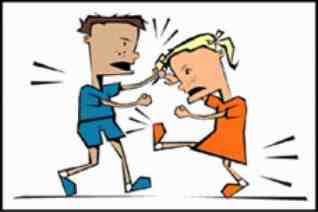
kid hitting kidWhat About the Big Stuff? – When reacting to behaviors that are harmful or threatening to a child himself, another child or children, another person, materials and equipment, or the learning process itself, you will want to use a different method because you want to eliminate the behavior on a permanent (or at least safe) level.

Try this for harmful behaviors:

Confront – Go to the child or children. Do not communicate long distance from across the room or playground. If there is a ‘victim’ of the behavior, tend to his needs first. Show empathy and concern for him, apologizing for his being hurt, physically or emotionally. Establish responsibility (as this is SO important to young children who have a strong need for “fairness). When responsibility is established, remove the perp or perps from other children so you can speak without embarrassing anyone. Turn to the child or children, get on his/their physical level, make eye contact and speak clearly and firmly in a voice that matches the message. The message is “NO. THAT WAS NOT ACCEPTABLE!” so a firm NO or YOU MAY NOT ______ is a good way to start.

Verbalize – Express yourself with empathy, not sympathy. There’s no need to ask him why he did what he did. Tell him why. Asking ‘why’ usually produces the answer, “I don’t know” or a shrug of the shoulders or a complaint about the child who has been hurt. Say, “You wanted to get the ball that went over the fence so you climbed over” or “You saw your mom’s car so you ran into the parking lot” or “You wanted to taste the scissors so you put them in your mouth”. If the behavior was harmful to another child, say, “You wanted his truck” or “You were really mad at him” or “You didn’t want her to play with your best friend”. This helps the child understand that you understand he had A REASON, BUT NOT AN EXCUSE, for his action. It gives him the opportunity to retain a bit of self-esteem.

State – Firmly state the rule or limit on behavior prefaced by the word BUT in a firm strong voice with physical stance, tone, volume, and demeanor matching the message. “BUT YOU MAY NOT climb the fence, run into the parking lot, put the scissors in your mouth, take his truck, spit on him, or call her a big fat potty head!”

Promise – State the consequence for breaking the rule and assure the consequence will occur if the behavior continues or happens again.

Teach – Offer some optional appropriate behaviors the child should have used to get the result he wanted or ask him to think of some himself. “Next time, use your words” or “What else could you have done?”

follow through baseballFollow Through – Impose a negative consequence as promised if the behavior continues or recurs, and give active positive attention when behavior is appropriate. Positive and negative consequences resulting from acceptable and unacceptable behaviors build security, reinforce rules, and make a child feel safe as he knows what is expected of him.

The most meaningful consequence is the awarding or removal of your attention.

Next Blog: Some Fine Examples

So, What Do We Do Already?!?!

nose-pickerYIKES! – With these next blogs I want to help with reactions to unwanted classroom behaviors. Let’s start with recognition of the behaviors that need a reaction. Not everything a child does needs a disciplinary reaction – or even any attention at all. You will drive yourself nuts reacting to things that make no difference to the learning process at all. Do what we talked about earlier (Data About Discipline #1) and what they did on MASH and all the other TV doctor shows – TRIAGE. Save your energy for Harmful Behaviors – those that hurt or threaten to hurt a child, any child, any adult, the equipment and materials needed for learning, and the learning process itself. (Belching and nose picking do not deserve attention).

Here are Triage Systems for Annoying, Distracting, Personally Unsafe, and Harmful Behaviors From Infants Through Five Years

new-behavior-triage-0-2

new-behavior-triage-2-5

Reactions – Remember that these are natural behaviors for each age group, so when we react to them we do so with the understanding that this is what young children do to express themselves as they maneuver through life. Expect these things to happen – in times of hunger, overfullness, fear, stress, boredom, frustration, fatigue, or just for the heck of it to attract your attention.

There are a number of ways to react to behaviors that can help to reduce or eliminate them. Keeping a common sense triage system in mind and learning to distinguish between behaviors that are ‘worthy’ of a great deal of time and effort and those that are more easily handled is the best way to determine reaction. For annoying and distracting behaviors, try these:

Ignoring – Ignoring means boycotting or giving no active attention to a child exhibiting an irritating behavior until that behavior changes to an appropriate one. Ignoring is only done with behaviors that are annoying but do not cause any interruption of the learning process. Boycotting has worked since the 60’s – ask your hippie grandmothers.

Redirecting – Redirection is distracting a child from a negative behavior by calling his attention to a new toy, experience, or activity. It works best with babies and toddlers who are easily fooled distracted. It works best if there are lots of interesting things to redirect a child’s attention to, so check out your classroom for child-centered, enjoyable, action-based experiences.

Natural Consequence (“Tough Beans” Moments) – Allowing a natural consequence to occur means taking no action to stop the results of an annoying or distracting behavior after a warning or reminder has been given. Natural consequences can only be allowed to occur if they are not harmful. Examples might be telling a child, “If you cannot use your walking feet in our line, I will hold your hand”, and then taking his hand if he runs; or calling attention to the fact that there is no more sand in the sand box because a child threw it over the fence. This is a teaching moment, not an “I told you so” moment, so it should be done calmly and matter-of-factly to help the child understand cause and effect and can see that his negative action had a negative consequence. It’s kind of a “Them’s the Breaks” moment, but it is stated this way, “Oh, that’s too bad, isn’t it?” (nothing more).

Even though everything a child experiences is a learning experience, everything you experience with a child does not have to be a TEACHING experience. There is no need to belabor these opportunities to lecture, preach, and nag. Let the learning from these moments come naturally.

Next Blog: Reacting to More than Nose Picking


Couple More F Words

angry-toddlerFRUSTRATION means both boredom and overstimulation. Teachers need to know the children’s interests and needs and make sure the experiences and materials being offered are right for them as far as interest, expectation, ability, and challenge.

It’s not easy to determine the individual needs abilities, and interests of a large number of children who come from a variety of backgrounds and have a variety of preferences and experiences, but it is your job to do so. The first way to do it is to return to your knowledge of basic child development. Understand the your program’s general and specific Strength Expectations (objectives, standards, milestones) that answer the question, “What Should They Be Learning?”

Look and Listen – These are the next best ways to figure how to make your classroom learning experiences child-centered, appropriate, and both ‘doable’ and challenging at the same time. Stand back and watch as the children play. See what is attractive to them. Listen to their conversations and questions to see what kinds of things they show interest in. Don’t be afraid to be flexible. If you think a learning experience about the circus would be fun, but all your Twos run screaming from pictures of clowns, shut that big top down!

Very often, children who are not sufficiently challenged will exhibit ugly behaviors out of sheer boredom. If you have a three-year-old who needs experiences that are more suited to older children, raid the kindergarten teacher’s cabinets for more challenging materials. On the other hand, if there is a child who shows a delay in a particular area, head for the toddler or baby class for more basic equipment, because children who are frustrated by their inability to succeed at a task will also act out those feelings with inappropriate actions.pringles

Let’s lump into frustration the fact that young children have a seemingly ravenous appetite for your attention and will very often exhibit ugly behavior if they are not getting what they think is their fair share of it. A wonderful parenting teacher, Marge Nelson, taught me the Law of the Soggy Potato Chip”. If you are dying for a chip (or a Snickers or a glass of Chardonnay) and the Pringles are stale, the 7-11 is closed and the wine box is empty, you will eat a soggy potato chip! If a child cannot get you to pay attention to him, he will do anything to make you “Look At Me!”

FATIGUE means both tiredness and illness. Children who are tired get cranky and fussy and should not be expected to fully participate in the learning process. Teachers must always “give in” to fatigue and if a child needs to rest, there must always be a place in the classroom or on campus where he can lie down and sleep. Parents must be made fully aware of continuing or habitual fatigue and both parents and teachers should know how much sleep young children (and individual children) need. If a child is habitually tired, attendance should be limited.

SHHH – Every classroom should have a Quiet Space for tired (or sad) children where they may go to rest. This is NOT A TIME OUT or NAUGHTY SPOT for ‘bad’ behaving children! It is a place where there is a soft pillow, soft blanket, soft toys, soft music and/or books and a soft teacher to offer a lap or shoulder when she can.

Children who are physically sick or coming down with an illness (including cutting teeth, runny noses due to allergy, growth spurts, reactions to immunizations) or those going through emotionally upsetting events (divorce, moving, new baby, new school, new bed, loss of pet, and even inability to wear what they wanted to school that day) will act out their physical discomfort and emotional feelings by misbehaving. Teachers need to be watchful for these things and to adhere firmly to program regulations about child attendance when illness is a factor.

Very often a child who uncharacteristically misbehaves is doing so because of illness and you will find that he or she is absent within a day or so of the odd behavior. Duh!

Administrators MUST support teachers when they say a child is ill and needs to go home! There is nothing more frustrating to a teacher when she asks the ‘office’ to call a parent to pick up a sick child and there is reluctance to do so. Sick children must be removed from the classroom for the health of the other children, the teaching staff, and the administrators who must find subs for sick teachers.

So, Voila! Now that you have all four of those “F’s” taken care of, all the ugly behaviors will magically disappear, right? Nope. Sorry to say, Stuff Still Happens. The next blog may answer your obvious question. . .

Next Blog: So What Do We Do Already?!?!?

Couple of F Words You’ll Want to Know

no-profanityGoin’ to the Chapel – one day at our faith-based preschool as we walked into the sanctuary for Children’s Chapel Time, where the minister was ready at the altar to give his weekly mini-sermon, I asked a very loud four-year-old to “please use your inside voice” and his reply to me with all the children, teachers, parents, and the reverend pastor within ear range, was, “Aw, F— Off, Mrs. Bensinger!” It is one of my fondest memories, but that is not the F word we’re talking about here.

FOOD, FEAR, FRUSTRATION, and FATIGUEThese Four Fs are the main causes of misbehavior in children under eight years of age.Before reacting to unwanted or unsafe behaviors, try your best to immunize against them by remembering these things. Let’s talk about the first two – Food and Fear.

FOOD means hunger, overfullness, allergic reaction, or food sensitivity. Young children feel sensory stimuli very strongly (including itchy tags in clothes, carpet textures, tight shoes, extreme temperatures) and are more apt to whine, fuss, or be unfocused, hyperactive, or aggressive when they are physically uncomfortable.

water-faucetFor teachers this means assuring that children eat nutritious foods on appropriate schedules, having snacks and WATER available, using nutritionitchy-kid education in lesson plans, watching carefully for food related problems and behavior changes, and sharing food issues with parents. I stress WATER because children should be drinking it all day long. Yes, there will be more wet pants and trips to the potty, but water physically lubricates the brain and makes learning and behavior better.

FEAR means both overt fearfulness (loud noises, strangers, animals) and nervousness. There are ages at which the Gesell Institute says children are naturally more prone to nervousness and fear (18 months, 3 ½, and 5 years) and of course individual children may be naturally hesitant simply because of their personal nature or home environment.

When children are nervous, fearful, under pressure to perform, or going through normal developmental stages of stress they may show it by misbehaving or by refusing to participate.

With children who are hesitant to participate, teachers need to be warm and comforting and talk to parents about the nerves. Encourage but never overtly force participation and never apply excessive pressure to perform to any standards that are not developmentally correct. Do not label them ‘shy’ and never publicly call attention to their feelings.

I have seen sincerely well-meaning teachers do this in many classrooms. and I have even (gasp) seen adults USE a child’s personal fears to ‘motivate’ good behavior.         

Stop it! It’s Mean!

Next Blog: Couple More F Words