Cleanup Time – The purposes of Cleanup Time are to reorganize the environment after use, encourage the building of the Body skills of fine motor, the Mind skills of intelligence, literacy, and math, and the Spirit skills of caring for the environment, responsibility, and cooperation. Cleanup Time can be done with older Babies, Toddlers, and all older children. Teacher participation is a must, and each child should have a part to play. Cleanup should take about five minutes (for younger communities) and may take up to 10 minutes for 4s and 5s.
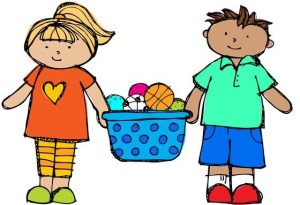 Cleanup Time is Vital! – There are many children who are not given the responsibility of cleaning up after themselves at home. Busy parents find it much easier to just do it themselves rather than go through any histrionics involved with chores or simply putting toys away. Teachers can help with this by educating parents about the benefits of ownership and responsibility.
Give every child, or small group of children, a specific job in the process. Cleanup Captain, Block Boss, Kitchen Committee, Lego Leaders, Table Sprayer (water) and Table Wiper, and my favorite, if your program can afford a hand-held vacuum for each room – Dustbuster!
Hygiene – The purposes of scheduling times for hygiene are obvious. Hand-washing and toileting are a natural and necessary part of daily life. Hand-washing is mandated by licensing agencies to take place at specific times during the day (after Arrival, after time on the Playground, before Meals and Snacks, and after an individual child uses the toilet). Obviously, as children gain more skill at self-help and hygiene skills, they become more responsible for the process and its timing.
Teachers of Infants, Babies, Toddlers, and Twos need to schedule diapering times that cause the least interference within their communities. Teachers of children in toilet training need to be flexible with schedules. Teachers of children out of diapers can relax about structuring specific times for whole group toileting.
Try not to just scoop up your diaper guys without giving them warning, unless there is an emergency of a fecal nature (fancy talk for BIG POOP). If possible, talk to them – even the Infants and Babies – so they build some language skills and some understanding of the need to be changed (cause and effect). Use the same techniques for whole-group diaper changes I suggested in the blog on Transitions – “the clock says it’s time to get new diapers on”, but try not to interrupt a child who is really engaged in learning simply because the clock says it’s time.
Some children are very private about changing, so I suggest teachers be empathetic with them rather than too firmly insistent. After all, how would you feel if a person much larger than you, swooped down on you in the middle of watching “Dancing With the Stars”, and dragged you into the bathroom for an underwear switcheroo? Be kind and respectful.
NEVER force toilet training. Talk to parents about their concerns, thoughts, and methods, but forcing this particular phase of development does have possible negative consequences on some children.
Next Blog: Routine Elements – Rest Time and Naps
 Teach 'Em the Way They Learn