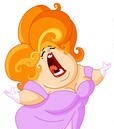
 Sing Out, Teachers! – Even if you’re not ready for American Idol or the Mormon Tabernacle Choir, I STRONGLY urge you to use your own human voice during Music as well as singing along with recorded music. The philosophy here – YOU singing and dancing WITH the children is the essence of the Human Factor – a VITAL, NECESSARY, and MANDATORY element in creating the highest quality of learning in young children.
Might Be Just Me, But – Seeing teachers offer Music and Movement experiences using only recorded media is one of my pet peeves! It not only omits the Human Factor, it puts a barrier between teacher and learner. It almost degrades the value and quality of the experience by giving an impression of, “I think Music and Dance is silly and I don’t want to be seen doing something ‘childlike’, but please, children, go right ahead.” It’s like reading a book to your children without using the right dramatic emphasis or rolling your eyes and shrugging your shoulders while watching them repeatedly build and tear down a block creation or sitting on the bench and merely observing them at Playground Time.
There are thousands of professionally sung/played pre-recorded children’s songs, chants, rhythms, and rhymes readily available to teachers, (see the NAEYC list of favorites at http://families.naeyc.org/songs) but some of the best songs are ones that teachers have written by themselves using familiar tunes called “Piggyback Songs”. The best I’ve found are by Jean Warren. A creative teacher can make up songs and chants suited specifically to the needs of her learning community. There is specialness to using your children’s’ names in songs and chants that brings humor and relevance and self -esteem into the learning process.
Children learn to spell their names much more quickly by repeating the letters in a personalized song or chant. “T-H-O-M-A-S. Thomas, Thomas, YES, YES, YES!” Or “With an M and an A and an L I K! Good morning to our friend Malik. How are you today?” I have been known to get a little carried away with using silly songs, but children like them and they make transitions easier. I had a great song for Twos to use the potty. We’d sing/chant “pee pee in the potty” as we danced in a conga line toward the bathroom.
Stuff Other Than Music: Art, Dance, Yoga, Tumbling, Soccer, Second Language – Many programs offer Enrichment classes that are separate from the traditional curriculum. Enrichment refers to any additional specialized classes a program might offer like music, movement, gymnastics, sports, art, language, faith-based experiences, or technology. These classes may be offered by a teacher within the program who has specific talent or ability in the areas mentioned, by specialized teachers on permanent staff, or by outside “vendors”.
In any instance, Enrichment classes must be offered with the same conditions as regular classes in terms of developmental appropriateness and regular teachers should accompany the children and participate with them in the activities offered. In Enrichment there may be fewer opportunities for children to make choices about their work, but Enrichment teachers must make every effort to be knowledgeable about child development levels with special attention to attention spans, abilities to listen and follow directions, and outside ‘vendors’ must be carefully vetted to assure their teaching techniques match the developmental levels of your children.
Next Blog: Curricular Elements – Group Times
 Teach 'Em the Way They Learn