 Small Group Time – There should be opportunities for Small Group work experiences, Individual work experiences, and what I call Strength Time, during which a teacher works directly with an individual child or a group of two or three children on a specific skill building exercise needed to encourage the building of a particular task. These may be moments for assessment of progress and need or moments of opportunity for one-on-one teaching (helping a child who hasn’t yet gained an important strength or skill) or they may simply be more convenient and practical ways to work with a small group on an art, math, cooking, or science project that the whole class will take part in ‘shifts’.
Pre-K and VPK teachers often use Strength Time opportunities during Center Time to assist individual children to work on pre-academic skills, but I hope most of this is done WITHOUT DITTOS AND WORKSHEETS, or is done with age appropriate worksheets that call for ACTIVE, SENSORY, MANIPULATIVE, HANDS-ON LEARNING TECHNIQUES USING ACTUAL REAL 3-DIMENSIONAL OBJECTS – NOT JUST PAPER AND PENCIL!!!!!
Children need opportunities for working with smaller groups of classmates or with just one other child for purposes of building skills of communication, cooperation, and partnership. Teacher-led experiences offered to half of the community or a small group of children at a time are usually arranged this way because of space limitations.
During Center Time, Babies and some Toddlers and Twos prefer ‘parallel play’ rather than group play, but older children most often naturally play in small groups or partnerships. Some children simply prefer working alone.
Individual Play – Some children prefer to play by themselves because of discomfort with the over stimulation of group play, a delay in social skills, or simply a personal preference for concentrating on the work of play without distraction.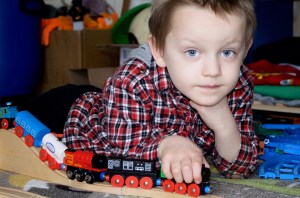
Unless there is a strong overt or physical reaction from a child, a complete ‘meltdown’ when asked to take part in cooperative play, or other signs of delay in social skills, or difference (diagnosed or not) in sensory assimilation with symptoms such as aggression, there is no need to force this issue. Cooperative play is an important skill, but personal preferences should be honored unless they interfere with development.
Next Blog: Home Connection
 Teach 'Em the Way They Learn