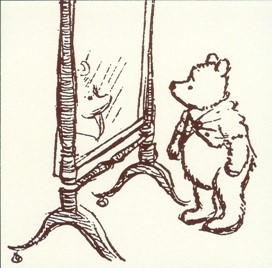
 Reflection refers to the experience of review. At some point during the day there must be a time for each child to recall his work. It can be a formal whole group or an individual experience. It can be done through simple conversation or by asking each child to draw, write, or describe what he did during the day. It may seem inconsequential, but reflection is very important to the learning process as it reinforces and organizes the learning.
Reflection is done by teachers for Infants, Babies and nonverbal Toddlers and Twos. It can be done during or immediately following any experience or activity. Teachers simply verbalize what is happening or has happened. “Oh, look, Infant. You smiled at me!” or “Bye-bye, Baby. We had a good day. You pulled up in your crib today!” or “Remember when you worked in the sandbox today, Toddler?” or “Wow, Two, you used the potty today!” There is no overt praise or judgment made in these statements, just a factual statement helping the child to recall his work.
Non-verbal Reflection – for children in the beginning stages of verbal expression, or for those who may not feel completely comfortable verbally, a teacher can request a gesture or sign of . “Can you point to where you played today?”
Verbal Reflection – for children who can express themselves with words teachers might ask, “What did you work with today?’ or “Who did you play with today?” or “Tell me what you did/made/sang/said today.”
Representational Reflection – for a child capable of drawing a representational picture, yu could say, “Can you draw a picture of what you did/made today?”
Dictational Reflection – works well with verbal children: “Tell me where you worked today and I will write the words for you to post on the wall (or take home to family).”
Journaling/Written Reflection – for a child who can express his thoughts in written word: “Please write a word or some letters of a word about what you did today.”
Active Reflection – I like the use of Home Connection assignments in which parents and child take part in an activity that reinforces unit concepts and encourages parents to take part in active experiences that help the child recall, reflect, and reinforce learning.
Reflection helps the child by practicing recall and brain organization, and helps the teacher with further assessment of child need and of the value of the experiences offered.
Never skip any opportunity to let your children review, recall, and reflect on their learning.
THIS IS BIG, TEACHERS – VERY BIG!
Next Blog: Application and SARA Summary
 Teach 'Em the Way They Learn