Curricular Events – Music, Music, Music!

jazz musicianMusic MUST be Mandatory, Man – There is A TON of research affirming the connection between music – listening to music, participating in song, chant, and rhythm, playing musical instruments, & creating original music – and learning.

In “The Value of Music in Early Education”, (by C. Seefeldt and B.A. Wasik — Pearson Allyn Bacon Prentice Hall Updated on Jul 20, 2010 and found at http://www.education.com/reference/article/value-music-early-education/): Research and theory prove the following:

  • Music has intrinsic and instrumental value in and of itself.
  • Music is critical to human development and to creative thought.
  • Music can also be used to present ideas and build concepts, teach or persuade, entertain, design, plan, beautify, and create (Consortium of National Arts Education Associations [CNAEA], 1994).
  • Music plays a valued role in creating cultures and building civilizations. Music awakens children to folk arts and their influence on their own lives and the lives of others (CNAEA, 1994).
  • Music is a social activity. Listening to music and singing or dancing together unites children. Individuals come to feel a part of the community when singing together.
  • Music is another way of knowing, another symbolic mode of thought and expression. From the enactive and iconic mode of knowing and learning about the world through action, perception, and imagery, music grows to become a symbolic mode of learning.
  • Music gives children unique opportunities to create and be fluent in their thinking. They can respond in unique ways to listening or moving to music and create new songs and rhymes.
  • Music gives children the opportunity to express their feelings and ideas freely as they dance in the light of a sunbeam, pound a drum, or sing a song of joy.
  • Music is mathematical. The rhythmic quality of music fosters children’s ability to keep time and count sequences.
  • Music is physical. Children sway, clap, dance, or stomp to music, gaining control over their bodies. Even singing is a physical activity that requires the ability to control muscles, vocal cords, and breathing.
  • Music benefits children with special needs. Because music is a pleasurable, nonthreatening experience, it can be used to help a child with special needs feel more comfortable within the group (Humpal, 2003).
  • Music develops the skills necessary for learning to read and write (Andress, 1995).

Music experiences can involve all of the Learning Methods used by children from birth to eight – Movement, Sensory Exploration, Manipulation (of instruments), Construction (of sounds, notes, and chords), Role Play, and obviously, Expression.

Why the Big Song and Dance?Music is a great memory jogger. I can pretty much guarantee that even Alfred Einstein sang the ABC song while filing his paperwork on the Theory of Relativity.

A few years ago there was a fad popular with teachers and parents sometimes called the ‘Mozart” effect. It was thought that listening to classical music gave babies and toddlers a head start in brain development.  It wasn’t exactly correct.

Although listening to music is WONDERFUL even for the pre-born, it is the listening plus the closeness with a listening partner, the movement, sensory stimulation, manipulation, construction, role play, and the CREATION of music that seems to have a connection with some skills of intelligence (math, in particular – see http://www.thegreatcourses.com/courses/how-music-and-mathematics-relate.html and the work of Dr. David Kung; and http://www.vancouversun.com/Entertainment/interesting+connection+between+math+music/1473881/story.html, an article on the Mozart Effect, by Arvind Gupta).

Music can set a mood, move you through your day, and build skills in every area of the brain.

Next Blog: Music and YOU


Curricular Elements – Gross Motor Time

strong kidIt’s Not GrossGross Motor Time (GMT) is not outdoor free play – called Playground or Recess, but the indoor or outdoor time children spend in experiences that are formally designed to develop large muscle strength and build gross motor skills. There is a difference in formal Movement and open-ended Playground and there is a need for both in any program serving children under the age of eight. Most experts agree that there should be at least 30 minutes of Playground/Recess and an age appropriate time (10 to 20 minutes) of guided GMT during a program of four-hour child attendance. GMT can be called Movement or PE (Physical Education) or Music and Movement or Enrichment.

Gross Motor Time must be given as much attention in planning and teacher participation as any other area of learning. It should be a Whole Group activity involving dance, exercise, and movement experiences with or without props, music, or equipment, but may be combined with any of these things. GMT may be as simple as 20 minutes of song and dance, a whole group game of Duck, Duck, Goose or Freeze Tag, or even laps around the parking lot and is very effective if it can be connected to a unit of study. GMT should be noted on your Experience (lesson) plan as a planned and purposeful learning experience.

Many teachers call GMT, Music and Movement and some programs are fortunate enough to have on-staff or outside vendors provide daily Gross Motor Time in the form of Enrichment Classes in dance, tumbling, or age appropriate soccer lessons.

Taking it Outside – Young children must MOVE to LEARN and LEARN to MOVE and they must be allowed and encouraged to move as they learn both indoors and outside. Young children should be outdoors every day, weather permitting, and the outdoors must be used for relaxation, child-chosen gross motor play, and as a learning center.  Your playground must be equipped with developmentally appropriate, well-maintained apparatus. Teachers must supervise for safety and must move with the children on the playground.

Take a Stand – One of my pet peeves is the idea that Playground is teacher rest time. It is lovely to have picnic tables and benches for dining al fresco, reading books, and having teacher-child conversations, but the playground must be treated as an active learning center in which teachers interact with the children pulling language, science, math, and social studies skills out of running, skipping, climbing, swinging, and sliding. Playgrounds and outdoor areas do NOT have to look like pictures from a school supply catalogue. Many Reggio Emilia and Walden schools have amazing outdoor centers with kitchens equipment, mud, water, tires, and NATURE! Some programs have adopted the idea of children spending much of the day outside the classroom. They are called “Forest Schools” and here are some wonderful examples:kids in the woods

Next Blog: Curricular Elements – Music, Music, Music!

Literacy Events 4 – Books in EVERY Center

This is one of the strongest suggestions I make in my advice  on building skills of intelligence and literacy!!!!!!!

Teachers must have books and reading material available in every formal Learning Center, and every informal area on your campus where children may be present – including on the playground.

I advise teachers to use literacy devices in Enrichment classes such as second language, technology, dance, music, art, or movement and that books be made available to children in any areas where they may need to wait for events to occur. (Car Circle, Arrival/Dismissal Area, Napping Room, Outdoor Art or Science Centers). Children must have access to the written word in every facet of their learning in order to make the print to language or print to meaning or print to action connection and in order to have ready written resources and references to their purposeful play.

explosionThe advantage to learning from having access to print is EXPLOSIVELY significant!!!!!


Book ‘Em, Teachers! – I am not sure why there is any reluctance to place books and words in every area of a facility, but I do encounter this in some programs. Teachers should carry books with them during any transition outside the classroom in case there is a wait for the next event to begin. Some teachers say they do not want their books to go missing or to be damaged; some say books taken outdoors are sometimes left there; some programs do not have enough books to risk them; and some say, “Books must be treated too specially to be removed from the Book Nook”.

If taking books out of doors bothers you, then make letters out of sticks and pine needles; put paper towel wads and paper cups in the holes in your chain link fence to write words; write in the sand. If you have too few books, have a Book Fair, ask parents to go to the library, make a plea to your neighborhood community, and tell your Administrators to ‘massage’ the budget and find some book monies.

Books are special – too special to sit on a shelf. They must be cared for, but they must be used to be truly valued. I say, an abundance of books and reading material give the children opportunities to connect every part of their learning experience to literacy and literacy is the key to accomplishing our mission of optimal learning.

Next Blog: More Curricular Elements – Gross Motor Time 

Literacy Events 3 – Labeling and Display

Language and Literacy skills flourish in a room full of words.words

Label Your Room, but NEVER Your Kids – Labeling of furniture, equipment, and toy bins is a good way to develop literacy skills, with the idea that the young child will see a real object labeled by a written word, and begin to connect the object with its representation and then begin to understand the connection between print and language.

The children must have their attention called to these labels in both casual and formal ways. High Scope, the great David Weikart/University of Michigan, early education curriculum, calls for teachers to carefully label furniture, materials, equipment, and interest centers. I suggest labeling architectural elements (doors, windows, sink, etc.) and basic classroom furniture in both predominant and second languages and labeling equipment and materials developmentally according to the needs and levels of the learning community.– I strongly suggest labeling be done developmentally so it does not become a flash card-type teaching method in which memorization, recognition, and identification skills, which are steps toward literacy may be mistaken for actual literacy. Memorizing sight words and recognizing and naming letters is a good beginning, but a child is not truly reading until he is decoding unfamiliar words.

Labeling can be done with Infants and Babies, should be done with Toddlers and Twos, and must be done in learning communities of Threes, Fours, and Fives. Early exposure to print is essential to acquiring skills of literacy.

  • Infants (Birth to 6 Months) – Names on cubbies and personal items; Family Photo Display
  • Babies (6 – 12 Months) – Same as above, plus Word Labels on architectural elements and furniture and safe (non-removable) real items, photographs, or realistic pictures of toys and materials on appropriate shelves and bins                     
  • Toddlers (12 – 24 Months) – Same as all above
  • Twos – Same as all above with Word Labels added to shelves or bins of materials as developmental needs of the children change  
  • Threes – Same as all above in predominant and second languages
  • Fours/Fives – Word Labels in predominant and second languages

Labeling Limits – Labeling can get out of hand.  Don’t go nuts and create a fire hazard. Word labels should be placed where the CHILDREN can see them, must be readable and spelled correctly, and have to be safely applied and not edible. Use realistic pictures or photographs to label shelves and bins and know when your children are ready to move to words. Common sense is the key.

Next Blog: Literacy Events 4 – Books in EVERY Center!

Literacy Events 2 – Dictation & Journaling

I Said That! – We cannot deny that Language and Literacy skills are foundational to pencil kideducation. On a daily basis, children from the Toddler through Five Year Old classes should have their words written down and posted for view in the classroom.

Posting their words and calling attention to them gives children the opportunity to understand the connection between print and language and encourages them to feel positive about literacy and about themselves.  Writing or drawing in a journal is one of the best ways to develop skills of fine motor, language and literacy, self-esteem, and self-expression.  It is an excellent tool for reinforcement and reflection and for assessing individual progress (and giving you a ready-made item for a child’s portfolio).

Ways to Word – Word Walls created during Circle Time are one way of doing this. Others include writing and displaying children’s words on poster-size paper, or ‘quote notes’ jotted on post-it notes; giving each child an individual journal to keep/show his words and drawings; keeping individualized notes with quotes & milestones listed and displaying them for children and parents; and adding samples of these works and words to children’s assessment portfolios.

Developmentally Speaking (as usual)

  • Even Infants, Babies, and young Toddlers can be exposed to literacy when teachers listen to them, write down their words, and display those words or any developmental milestones for both children and parents to see. ROBERT WAVED BYE-BYE TODAY! 5/24/17.
  • Older Toddlers and Twos can scribble and pretend to write and should have daily opportunities to draw pictures and dictate words and ideas to teacher-scribes.
  • Threes, Fours, and Fives must have daily opportunities to draw pictures and dictate words about their work, their play, their feelings and ideas, or about a specific ‘assigned’ topic, with children who are READY TO DO SO, printing words for display or journal.
  • Dictation and Journaling need to be done with some informality and WITH NO SENSE OF PRESSURE.  Forcing children to take time out of their play to “write” or draw is not developmentally appropriate for children under four, but having a Journal Time (at a quiet moment during Center Time or afternoon Circle Time) is helpful. Teachers need to keep pen and paper at hand for writing down children’s words, ideas, and accomplishments and need to create a sense of positivity about the value of literacy rather than merely mandating daily journal entries.

WRITE RIGHT NOW? NO! – Creating the desire to dictate or journal is not always easy to do.  Some children do not yet see the importance of the connection between print and spoken language.  Use terms like these: “Oh, I really like those words, Thomas.  Let me write them down for you.”  “That’s a great mud pie, Melissa.  Let’s write the recipe up so we can make it again tomorrow.” “Where shall I write your name on this drawing, Vanessa?” “Robert, you really are happy with that machine you made.  Get your journal and I’ll help you write a story (or draw a picture) of it.”

Teachers need to be prepared for planned Dictation experiences and open to recognizing spontaneous moments for writing and displaying children’s words. 

Photographic recording is also a great tool as long as the pictures are captioned so again, the print-language connection is made.

Parents LOVE to see their children’s words and drawings posted for view and will cherish their child’s journals for a lifetime.

Next Blog: Literacy Events 3 – Labeling & Display


Curricular Elements – Literacy Events 1

happy booksThere is little more important to academic success than literacy. I ask teachers to encourage literacy skills by:

  • Reading to children at least twice daily
  • Offering opportunities for Dictation and Journaling daily
  • Labeling furniture and belongings and calling attention to those labels
  • Book/Word Placement in every Learning Center

Reading – Children should be read to individually or in group settings a minimum of two times each day.

It’s Not Just ME! – The American Academy of Pediatrics suggests that parents and caregivers begin reading to children at the age of six months.

The University of Michigan Health System states that “reading aloud to young children develops each of the steps to literacy: phonemic awareness, the development of hearing and recognizing sounds in words; phonics, the making of the mental connection between sounds and letters; vocabulary, the building of a number of understood words; reading comprehension, the understanding of meaning in words; and fluency, the achievement of oral reading”.

Read & Write It Out Loud, by K. Polette (Pearson, Allyn, Bacon, Prentice Hall, 2014) concurs that being read to offers a child enjoyment of reading; information on expression; understanding of the speech-to-print connection; a building of vocabulary; knowledge of writing styles and genre; and opportunities to increase his attention span.

Reading Really is Fundamental – Review your program’s Strength Expectations (educational objectives) to see how many of the strengths listed can be enhanced by literacy.

Teachers can read to the whole learning community during Circle Times, Whole Group Time, Snack or Meal, or at a time when quiet activities are necessary. Children can be read to individually or may choose to read and pre-read on their own during Center Time, in the Safe Space, or during quiet or transition times that call for brief waits.

dramaExpress Yourself – Read (and Dance) Like Nobody’s Watching:

  • Read with wonder and excitement and expression. Use your whole body.
  • Read with humor and pathos and empathy. When the story is sad, look sad – look very sad.
  • When an author or illustrator uses large text or a vivid picture, point this out to the children. “Look at this word RUN! Why is it written so big? Look at the little gorilla’s face. What do you think he is thinking?”
  • Read a whole book all the way through the first time it’s read, then return to it and ask questions about what is happening – why the characters did what they did, what feelings did the words and pictures relate, what would the children do if they were that character, did they ever feel the way that character did – questions that bring the story to life, bring the information and facts into thought and action, and relate to the children in your learning community

Next Blog: Literacy Events 2 – Dictation and Journaling

Center Time 2 – Organized Chaos

Organized Chaos vs. Chaotic Organization – When ‘uninitiated’ visitors come into yourkid play classroom in the middle of Center Time, they are sometimes stunned by the spectacle of ten or fifteen (or 20!) active little people engaged in so many different activities so actively! It seems to them as if no learning could possibly happen in the middle of this busyness.
Educate them. Especially educate them if they are current parents, prospective parents, or administrative persons who do not understand that action through Movement, Sensory Exploration, Manipulation of Materials, Construction (and sometimes Destruction), Role Play, and (often messy and loud) Artistic Expression is the way young children learn best.

Developmentally Speaking – For Infants and Babies, Center Time is generally Floor Time during which both teachers and students interact with the toys and materials together (with teacher offering language, conversation, alternatives to play, assistance when needed, and observation when not needed to intervene, react, or act).

For all older children, Center Time may be more structured with each child choosing an area of play and both teachers involved and participating by moving around the room to interact verbally or nonverbally; asking the right kinds of questions to encourage learning; observing and noting aspects of assessment (on paper or otherwise); and overseeing for safety.

Moving Through Centers – Creating an organized but active Center Time is important for teachers and children. There must be time and space limitations so nobody gets hurt and everyone gets to use their learning methods in each learning center if they wish.  There are many ways to move children through the Learning Centers and to limit the numbers of children in each Center.  As the children mature, the organization can become more structured.

Some teachers leave it to the children to determine when they are ready to move to another Center, some gently encourage moving on so others may have the experience they are enjoying, some use a system based strictly on time factors, and others like a more structured system using clothes pins or name tags to “assign” spots according to interest and space available. In some pre-k classes, there is a combination of these practices. What works best for your space, your time, and your children (sometimes in that order) is what will determine your choice.

Here is how Nancy Lanfersiek, a teacher/director I very much admire, handled Center Time:

The children went on a journey each day, beginning at morning Circle Time where they talked about the theme of the day and the teacher issued a challenge, posed a question, or assigned a problem for them to solve.  After a discussion, each child quickly choose what Center he would go to first, and then they were like trains stopping at depots where there were theme-related places to visit, jobs to do, and people to work with as they traveled. They went to the Physical Education Station (Playground); the Exploration Station (Science); the Manipulation Station (Math); the Construction Station (Blocks); the Imagination Station (Role Play); and the Creation Station (Expression). 

During the day they met at snack, lunch, or in general conversations to talk about their journey, draw pictures, sing songs, write in their journals or otherwise recall and reinforce the learning they gained on their trip.

To this system I would add a 2 – 5 minute afternoon Circle Time to reflect and receive a Home Connection assignment for the children to do with their families (NOT HOMEWORK – NOT A WORKSHEET, but an active enjoyable experience reinforcing the theme, like taking a family walk to the park for Fall or going out at night to look at the stars for Space).

Over the next few days, the children at Nancy’s school would continue their travel, repeating some of the experiences and participating in new ones, using and reusing, or reinforcing and applying what they learned on their journey. That was REAL LEARNING. All Aboard!kid trainNext Blog: Literacy Events

Center Time – What it Is and What it Ain’t

(Each day is divided into Routine Elements – the experiences of simply moving through the day with the children; Curricular Elements – those experiences planned by teachers to develop  specific Strength Expectations; and an element I call SARA which means opportunities for Selection, Action, Reflection, and Application). Center Time is the second Curricular Element.

center timeWhat it IsCenter Time (CT) is the portion of the day devoted to participation by children AND teachers  in work/purposeful play experiences that have been staged by the teacher and chosen by the children.

Center Time might be called the most structured unstructured time of the day.  It is the core of the formal learning process.  It is teacher-staged, but child-chosen.  It must be available for one-third of the day.  In a four hour program, that is 80 minutes, or one hour and twenty minutes.  It may be broken into 20 to 45 minute divisions, but this one-third of the day formula is the length of  time the children must be given for this type of learning based on purposeful play.

Center Time MUST include Selection, Action, and Application (3 of the 4 elements of SARA).  All play must be purposeful and the stage is set with purposeful activities most often related to the current unit, and always related to the program’s strength expectations.

What It Ain’t – Although there is freedom of choice and children may be working without direct adult interaction at times during CT, it is not the same thing as “Free Play”.  Free Play IS a time of learning, and Free Play can and should take place during the day (as recess, as a relaxing break during a stressful morning, during a ‘down’ moment between other activities, or during Extended Day hours) but Center Time is the meat in the sandwich of your day.

CT is not paperwork and coffee time.  Teachers must be active participants. The teacher’s responsibilities during Center Time are to allow each child to make work/play decisions and to respect those decisions; to actively interact, moving from child to child, offering language and facts; to ask both closed and open questions; to encourage scaffolding (applying learned skills to new skills); to assist the child in strengthening his learning by writing words he says or encouraging him to write them; to help a child “research” more information in the books in each Learning Center; and to informally and formally (by observing and taking notes) assess progress and need. 

You Gotta’ do the Hokey-Pokey – Teachers have to learn when to put their whole self in and interact and when to put their whole self out and merely observe and let the learning happen. Both observation and documentation by quick note, photograph, or remembering and documenting later, help the teacher assess strength and need. Knowing when to interact and when to step back encourages independence and builds self-esteem in children.

Giving each child the opportunity make choices creates ownership of the learning.  Respecting those choices increases self-esteem.  Active, warm participation by teachers with each child increases the quality of both the learning and the sense of community.  Offering language and facts is necessary fundamental ‘teaching’.  Writing his words down and showing him how to use books increases language and literacy skills.  Asking open-ended questions increases intelligence skills.  Asking closed questions is a method of assessment. Encouraging scaffolding of new learning on old and seeing it happen is your mission accomplished!

All play in Center Time must be child-chosen and meaningful.  Teachers must move from center to center to facilitate each child’s chosen play and to create “lessons” or build strengths from that play, rather than only taking part in teacher-led activities designed to build academic strengths.  Both teacher-led and child-chosen experiences happen during Center Time.

Next Blog: Center Time 2 – Organized Chaos vs. Chaotic Organization


Circle Time 7 – Behaviors and Mistakes

mrs. beePersonal Thoughts on Circle Time – Call Circle time anything that suits your community (Morning/Afternoon Meeting, Group Time, Community Time, Team Time, Gathering, or use your community’s name –Tiger Talk or Mouse Meeting or the Bee Buzz.

Teachers, you set the stage and guide the conversation so there is continuity, common sense, and organization of thought.  You set the parameters of the expression.  Accept and respect their input, but keep it within the bounds of good taste and assist them in keeping on target.  Although it is REALLY IMPORTANT to let the children take the lead in the discussions, try to limit the far-fetchedness that young children (especially 4s) can sometimes go to

In every instance of allowing children the freedom to choose, select, or make their own decisions, the teacher must limit the choices to ONLY developmentally appropriate things.

A second Circle Time at the end of the day is a lovely way to review and reinforce the learning (Reflection) and to close the learning community’s time together with an optimistic and positive tone.  A community goodbye song or a team huddle with a hands-in-“BEES!” sends everyone home feeling good.

For Circle Time to Work Well – Teachers need to have an ample comfortable space for the whole group in which each child can sit comfortably and be able to see the teacher, her presentation props, and each other. 

Sitting mats with names or symbols on them or assigned seating on a rug with symbols works well, but is not mandatory.  Space and comfort are the main concerns. 

Whenever possible, both teachers should participate in Circle Time, rather than one (often the Assistant) disappearing to the office, setting up snacks, or running errands.  ALL members of the community should participate.  Props needed for Circle Time depend on the unit being introduced, but I suggest they include large chart paper or wipe-off board and markers for creating Word Walls and some type of media for the catalyst that can be seen, heard, touched, smelled, or tasted.

It does not matter how the children sit as long as they are comfortable and not encroaching on each other’s personal space without mutual approval!!!!!

Our Biggest Circle Time Errors are:

  • Dragging things out until the children have totally lost interest.  Know your ‘audience’ and know when to STOP. 
  • Taking over Circle Time ourselves and not allowing the children to talk and interact.  We are not the stars of the show, but merely the stage setters.  The children MUST be the central figures in the learning process.
  • Forcing children to sit ‘criss cross applesauce’ or ‘straight and tall’ when they must be seated comfortably; so all can see props; and so they can wiggle when they must.
  • Forcing or continuously admonishing children to “LISTEN”. If you are asking them over and over to listen, you have ‘circled’ past their attention span!
  • Starting a presentation before assuring that all children can see you as you read or show them something.           
  • Trying to get too much information into a short period of time.  You can talk more about the topic during Center Time as you move from child to child interacting with them, at the meal or snack table, on the playground, while you’re washing hands or changing diapers, and especially during any waiting times (which we hope are very brief).
  • Omitting any of the Circle Time Components:circle kids

Greeting Ritual
Relaxation Technique
Catalyst
Challenge
Brainstorm
Word Wall
Selection

Next Blog: Center Time 1 – What it is and What it Ain’t

Circle Time 6 – Samples of Circle Times

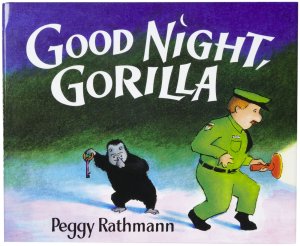
  • goodnight gorillaUnit:  Zoo Animals       
  • Greeting Ritual: “Hello Song” by Ella Jenkins
  • Relaxation Technique: “Bend and Stretch, Reach for the Stars” (Romper Room, 1958)
  • CatalystGoodnight, Gorilla by Peggy Rathmann, Word Wall materials
  • Challenge/Brainstorm/Word Wall:

Teacher:  How did the zookeeper and his wife take care of all those animals? I will write your words and ideas on the Word Wall.

Children:  There are cages!  They had keys.  The gorilla got out. I got out of my bed at night one time.  It was dark.  It was nighttime in the book.  Gorillas have hands.  I have two hands.  One time I saw the moon at night.  I would get a light to carry to feed the animals and I would lock them up.  I would hide the keys.  I would give them bananas!

Selection:

Teacher:  I’m writing your words on the Word Wall.  In the Centers are some things about the zoo.  In Blocks, there are paper tubes, popsicle sticks, and tape to make cages.  In Science, there are flashlights. In Math, there are keys and locks to match up. In Art, there are some animal stencils, play dough, and animal print material. In Role Play, there is some play fruit and pretend animals.  All over the room I have hidden some bananas.  See if you can find one with your name on it.  When I point to you, tell me where you want to work.

  • Unit: February Holidays
  • Greeting Ritual: Class Cheer – (Good Morning Tigers! Give a Roar!)
  • Relaxation Technique: Back Rubs – each in the circle child rubs a friend’s back
  • Catalyst: Box of Valentine cards and a calendar
  • Challenge/Brainstorm/Word Wall:heart wordpress

Teacher:  I just looked at this calendar and noticed that Valentine’s Day is coming next week. Here’s a box of cards I got last year. (Passes cards around for all to see). What should we do to celebrate Valentine’s Day with some people we love?

Children:  Let’s make hearts.  Let’s get red paper and streamers.  I love my grandma.  I think we need red and pink paint. A party! I can make my name on my Valentines.

Selection: Teacher:  I have your words written down.  In the Centers are all the things you need.  There’s red jello in the water table, red and pink paint and dough in Art, and you can get whatever you need from the shelves to make decorations and cards. Paper and markers are in Fine Motor for invitations and all the other Centers are open for you to work. If you want to work with Mrs. Washington on making Valentine cookies, sign up on the waiting list.

And a couple more:

Sample of Circle Time 1

Circle Time Sample Two

Next Blog: Circle Time 7 – Behaviors and Mistakes