I’ve been trying to devise new ways for teachers to meet administrative mandates to show written documentation of their plans for children’s learning. Here are my thoughts:
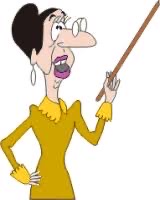
- Let’s drop the word ‘lesson’ and call our document a Learning Plan. We are not bonnet-wearing, yardstick-wielding school marms from “Little House on the Prairie”. We are educators in the 21st century who offer experiences that engender high quality learning and build independence, skills, intelligence, and the ability to apply those things to greater learning.
2. Unfortunately, the priority in public school has come to be the equating of quality learning with high scores on standardized tests, use of inappropriate learning objectives, and strict, often unreasonable regulations for teacher accountability. I understand the need for accountability through documentation, but the emphasis in early education MUST be on the value of play, the need for child-centered experiences with child-ownership of the learning, and the use of DAP (Developmentally Appropriate Practice). This emphasis calls for planning that is Flexible.
3. What information does a learning plan need to document? I think what’s important to know about what’s happening in a classroom is that the teacher knows her children’s developmental levels and a program’s learning objectives and is providing experiences that match them using DAP. It is also helpful to know how the experience went or what the children learned from it. I think it is NOT IMPORTANT where (what center) the learning takes place, or the time it is happening, or the materials needed to make it happen.
4. I think it is important to list the Strengths to be gained from the learning, the Methods children use for high quality learning (Movement, Manipulation/Creation, Sensory Operations, Role Play, & Expression) rather than ‘subject areas’, a brief description of the Planned Experiences, and finally, an Assessment – a word or two about what was learned. The Assessment portion can be completed with the children as they reflect on what they learned, adding an element of reinforcement, ownership, and child-centeredness.
5. Teachers who plan strictly according to child-interest or project/inquiry-based learning rather than using traditional units can use the same template but will ask the children to help complete both the Planned Experiences and the Assessment. The template may be printed on an erasable write-on/wipe-off surface so it can be spontaneously altered as needed.
6. Learning Plans can be completed in either weekly or monthly formats depending on teacher or program preference.
7. So here is LEARNING PLAN that is FLEXIBLE and documents STRENGTHS & METHODS, PLANNED EXPERIENCES, and an ASSESSMENT of the learning that can be done in a weekly or monthly format. Included here are a blank template and a sample completed Lakemont Learning Plan:
https://www.dropbox.com/s/foqg2pg2kux5288/NEW%20LEARNING%20PLAN%20PROTOTYPE.pages?dl=0
https://www.dropbox.com/s/x8nhgjvvefy21fv/SAMPLE%20PROTOTYPE%20PLAN.pages?dl=0



 Teach 'Em the Way They Learn