Community 2 – Coach, Players, & Fans

Each member has a role to play.

Teacher – Team teaching and staff communication are vital. Lead teachers should agree that a “Teacher’s Aide is Not a Maid”, but a partner in all facets of the learning. maidTeachers must:

  • Understand and agree on the definition of the mission and its developmental nature
  • Make parents aware of the mission through orientation, education, continuing communication, and involvement                                                                       
  • Assure children that their membership in the community is important by encouraging them to participate, by actively listening to them and factually observing them, and by positively noticing their team input                                   
  • Use community-building methods and techniques including modeling of cooperative, communicative, and positive attitudes and actions                                                 
  • Offer daily experiences in small group and full group work and play                                                                       
  • Offer daily experiences in group problem-solving                                                                                                     
  • Encourage and give attention to cooperative behaviors while maintaining clear limits on harmful behaviors – We DO NOT Hurt Our Friends!                                                                                                                                                       
  • Use “we” language, use meal times as “family style” dine-and-learn opportunities, and be creative in giving your community of learners a name

Parents It makes the children feel (and learn) better to know that teacher and parents are in agreement and are making a coordinated effort.  Parents must:

  • parent teacherTake an active role in their child’s early education experience                                            
  • Visit the community, volunteer time and talents to the community’s work
  • Communicate openly and continuously about the progress of the mission
  • Read and react to communication from the teacher
  • Talk about the mission and its progress at home and encourage child participation
  • Assure his/her child that there is a partnership between teacher and parent

Children – Obviously, there is a developmental limit to the process of assuring that the children know their roles in the process, but even older toddlers and twos can take part in teamwork activities like learning projects, clean up and ‘helper’ jobs, and when encouraged, give input on decisions about the work of the community.  Children must:

  • Take part in learning experiences to the best of his/her ability                                                                
  • Make efforts to developmentally acquire skills in cooperation, empathy, and respect for others in the community and for the purpose of the mission

Next Blog: Community 3 – A “How To”

Community 1 – Teamwork

Emotional Safety is created by making your classroom a Community of Learners.

dancingkidsCommunity  is a sense of teamwork, kinship, or unity that refers to a cooperative spirit among a group of persons with something in common and in this sense it is a group of people with the common mission of optimal learning who work together cooperatively and positively to accomplish that mission. 

I use the term Community of Learners to refer to the teachers, parents, and children in an assigned class. It‘s up to the teachers to create a sense of community but up to the whole community to maintain it.

Community is important because there is a positive nature to being a respected working member of a team with a common goal and because young children learn more easily within a positive atmosphere.  Community is vital for building skills in all three areas of development – Body, Mind, and Spirit.  A sense of community simply makes the “work” of learning easier for all members involved.

Community, cooperation and peace provide a sense of warmth and comfort while giving each child a sense of individual ownership and group responsibility.  Although infants and babies do not engage in very much cooperative play, they need to be treated as if they are important individuals within the community of learners.  Community is built by encouraging children to learn about and respect their classmates, by offering group experiences and problem-solving projects, by modeling listening and discussion techniques without judgment or derision, and by maintaining firm limits on harmful behaviors.

Creating a community of learners is another way to achieve the mission of optimal learning.  It’s one of those” tricks of the trade” that make things enjoyable while working toward accomplishing that mission. 

Community is built by a total understanding and agreement with the definition of the mission itself. (I think we can all agree that the mission is optimal learning and natural development and growth for each child in the community). Community is built by clear, honest, and ongoing communication on both the methods that will be used to accomplish the mission and on the progress along the way to accomplishment (assessment, behaviors, milestones, and needs.

Next Blog: The Whole Team – Coach, Players, & Fans!


Parent Stuff Ain’t Easy

board membersBoards – Parents must be an integral part of making decisions about procedures and curriculum. If possible, they should be included on governing boards and education committees. Head Start does a good job with this, mandating parent involvement at every level. The more ownership of your program your parents have, the more support they will offer in return.

Problems – There are few things more unfortunate for parents when they receive a “bad” note from their child’s teacher, but it is critical to keep parents informed of accidents, ugly or harmful behaviors (both the hitter and the hittee – but no names, please) illnesses, or administrative things like overdue tuition, fines for continuous late pick-up, etc. As a parent, I have been on the receiving end of these notes (“Mrs. B., your son put his algebra teacher’s chair outside the window on the third floor ledge”; “Mrs. B., your daughter bit one of her classmates on the belly button today”). I’ve also been on the sending side (“Dr. Daddy, your three-year-old told his teacher to “F–k Off” today”; “Mrs. Mommy,  your child has ringworm, head lice, pinworms, etc.”) These are not positive parenting or teaching moments, but facts of life.

Always document and notify parents of issues involving health and safety, but always offer assistance and education about these things.

Progress – Keep your parents informed of their child’s progress and need, withcheck list PROGRESS coming first. Let them know when their child reaches a milestone or does something wonderful and also let them know if you see a need that is causing a delay in progress. Have a referral list for parents needing information or diagnosis (NEVER MAKE OR SUGGEST A DIAGNOSIS YOURSELF!) Parents must be involved in assessment and planning for their child’s educational progress and need. At least two parent-teacher conferences should be held each year.

As I’ve Said, Remember the Words of the Great Aretha Franklin – R-E-S-P-E-C-T your parents and families and show that respect at all times – especially in front of their children. Know your neighborhood and the community surrounding your school. Invite community members to visit, be on boards and committees, and make connections with the community by being represented at neighborhood events. If your program is a faith-based one, be present (and help advertise) church, temple, or mosque events and share their calendars with parents. If you are at a private program, share your events with other private education programs (other day care centers or preschools). If your program’s participants need transportation, provide it. If your program does parent training, invite community members and participants in other programs.

Be a unifying force for parents of young children. Working-at-home and working-outside-the-home parents; rich and poor parents; single and married and divorced parents; parents of all faiths, genders, abilities, economic situations – even parents of all political persuasions – have the same needs, questions, concerns, and ideas and solutions.

Next blog: Emotional Safety – Creating a Community of Learners

Strong Connections With Families

family-2We Are Family – Google “research on family connections and learning” and you will find hundreds of references to the connection between quality early learning and teacher-parent partnerships. It is an obvious and proven fact that good relationships between parents (and families) and teachers make the early education experience more positive and the learning of greater value.

Teachers must make every effort to create positive and continuous connections with the families of the children and to assure that parents are treated as respected members of the community of learners.  

Right From the Start – Making these connections and using them in your work with the children, throughout the learning process includes sharing the Evidence of child development; setting the learning goals and Expectations; creating and maintaining the Environment of Safety physically, emotionally, and educationally; designing the Experiences and determining how they will be Executed; and especially in total involvement in the Evaluation or assessment of each child’s strengths and needs, and planning for further progress makes the work easier, efficient, and excellent.

Teachers must connect with families by:

  • Communicating and informing openly on a regular and ongoing basis
  • Giving parents open access to classrooms
  • Including parents in program-wide decision-making
  • Notifying parents in a timely way of problems/situations that may affect their children
  • Including parents in all aspects of work with their children including ongoing progress – no surprises!
  • Including parents in formal planning during the Evaluation or assessment process
  • Including families in individual, classroom, and program projects
  • Displaying photos of families and dictated stories about families representing each child
  • Keeping parent and family information in complete confidence

So Much Stuff! – I know how difficult it can be to assure these connections are made. But with the ease of technological communication these days, there is little excuse for parents to be uninformed. I am finding these days that there is a fine line between too little and too much communication. Some parents tell me their programs send out so many emails, tweets, newsletters, calendars, reminders, Facebook, Shutterfly, and Instagram notifications, that they get turned off and ignore it.  Know your parent and family “audience”, and measure the need.

Orientation – From the beginning of each term or school year, hold a LIVE and IN PERSON ALL PARENT Orientation Meeting so that parents can meet each other as well as visit classrooms and teachers. Ask them what type of communication they prefer (and how much and how often).

Some directors really hate a mandatory all-parent meeting, but it is a great way to start the year with all forms signed, all info given, and it sometimes makes for a “no excuses” statement later on, when a parent says, “I didn’t know that” or “I never heard that”.  If you have a signed statement about your most important issues – safety, health, nutrition, and discipline – you can show it to a parent when problems with these issues arrive.

 Directors! if you aren’t comfortable speaking to a large group, get another staff person to conduct this meeting. Yes, it’s a lot of trouble and yes, they don’t or can’t all come, but this is why you get paid the big bucks and, as we say when all the reds are gone on popsicle day, “I’m sorry. Life is not always easy, is it?”

Parents in the Room –Parents should have access to their children at all times even if it causes a problem. Very often children (and teachers!!) behave differently when a parent is present. If a particular parent’s presence disrupts the learning process for the community of learners, talk privately with that parent and see if arrangements can be made him/her to view his/her child without the disruption. There are many reasons parents ‘over visit’. Most often the parent “misses” the child or is having separation anxiety and being a little “helicopterish”.  Some parents are very frightened of their child being bullied, sometimes a parent knows his/her child may exhibit some ugly behaviors and wants to make sure he is not hurting others, and sometimes a parent may have had a bad experience in another program and wants to make sure it does not recur.  Most parents want to be there so they can be an integral part of the early ed experience and there is nothing wrong with this at all! Use that Parent Orientation meeting to talk to parents about classroom visits. Redirect parents who hang out too much to see if they will volunteer their time to office work, subbing in another class, or working on some of your teacher ‘busy’work at home.hiding behind tree

Take My Word – I’ve had mommies park in the school parking lot for hours watching for their child to come to the playground; grandmas who stayed all day with children helping them eat or use the potty; and parents who were at their offices, but sent their secretaries over to check on children. On the other hand, I have had parents who NEVER set foot in the classroom or on the campus except on enrollment day; daddies who had to be given GPS navigational locations to find the school when their children needed to be picked up; and a mom who said, “This is my fourth kid here, so I’m good with whatever you do – and I don’t need any more stuff on my refrigerator door!” (“stuff’ being my word, not hers). There is a happy medium on parent communication and visitation – find it.

Next Blog: Parent Involvement


Adding ME/AE to Your Community

looking glassCheck Your Space – Look first at your physical environment.  Use non-stereotypical pictures, posters, books, puzzles, dolls, toys and materials that show a variety of cultures as they appear today.  Avoid things like Native Americans in feathered headdresses, Dutch children in wooden shoes, and similar items.  Appropriate materials include artwork and articles from existing cultures like fabrics, wall hangings, picture collages, musical instruments, paintings, post cards, photographs, and current travel posters. 

Make sure there is great variety in materials and equipment. I insist that ALL learning centers have pertinent and relevant books in them. If possible, include some books written/published in countries other than the US. Put maracas, kimbas, bongos, gongs, gourds, rattles, and conch shells in the music center; terrariums, gardens, texture collages, and animal photos in the science center as well as grains, rice, beans, corn, and grits in the water table; multiethnic foods, utensils, and menus in the home or role play center as well as non-specific and non-stereotypical materials for the children to create their own costumes; (not just Disney Princess dresses)and dolls and family figures of all ethnicities and abilities in the home center and put all kinds of homes and environments in the social studies (blocks) center like desert, mountain, tropical, arctic, rural, and urban settings.

looking glassCheck Your Plans – Look at your experience plans and make sure to use themes and units that offer information that is fact-based and relevant. Avoid units entitled ‘Chinese New Year’ in which you gather chopsticks and fortune cookies as props and bring in coolie hats and kimonos. Avoid celebrating Cinco de Mayo by serving tacos for snack. These are misrepresentations of Asian and Mexican culture that is a conglomeration of stereotypical and non-factual information. It serves no purpose but to confuse the children and encourage stereotyping.  Keep your AE units broad and relevant.

Instead, use a more general unit like, “Places Far Away” in which your kids can see photos of modern children from distant places. Your children can compare games, make and eat food, see and recreate artwork, read stories from chosen countries and even “write” letters to children in the places around the world.  Not every theme in a ME/AE curriculum is based on teaching about “foreign countries”.  The point of is to let the children have a factual picture of the real world around them and to begin to lessen the fear of “difference”. I kind of flip-flopped on my blog order here – check out the concepts and suggested themes in the earlier blog!

looking glassCheck Yourself – Look at your personal feelings about teaching, sharing, communicating, and creating a classroom environment of peace and safety and look at your methods to ensure they are conducive to accepting and respecting each and every child.

Speaking From My Heart – I had a daddy in my Presbyterian preschool program who was a member of a more fundamental faith. He became angry when books and materials at school depicted families of various ethnicities and compositions different from his own. He wrote letters to my Board demanding a change and insisting that he had chosen our program because of his interpretation of our faith-based philosophy and he did not want his children exposed to “foreign” influences. He left the program. I did not. It is my fondest wish that we, as early educators, stand strong in the faces of those who see authentic education and inclusiveness as a political encroachment rather than a method of assisting each child in our care to reach wholeness through understanding and respect for all.

For some more information and resources on ME, look at:

  • The Early Childhood Research Institute on Culturally and Linguistically Appropriate Services identifies, evaluates, and promotes effective and appropriate early intervention practices and preschool practices that are sensitive and respectful to children and families from culturally and linguistically diverse backgrounds. http://clas.uiuc.edu
  • The National Association for Bilingual Education is devoted to representing bilingual learners and bilin­gual education professionals. http://www.nabe.org
  • The National Association for Multicultural Educa­tion fosters respect for and appreciation of cultural diversity, promotes the development of culturally responsible and responsive curricula, and facilitates the acquisition of the attitudes, skills, and knowledge to function in various cultures. http://www.nameorg.org
  • The National Task Force on Early Childhood for Hispanics endeavors to enhance educational achieve­ment and opportunities for children of Hispanic de­scent and to influence education policy decisions that most affect this population. http://www.ecehispanic.org
  • The National Black Child Development Institute aims to improve and advance the quality of life for Black children and their families through advocacy and education. http://www.nbcdi.org
  • http://www.naeyc.org/files/yc/file/200811/BTJRaceClassConversations.pdf
  • https://www.naeyc.org/files/yc/file/200511/DermanSparksBTJ1105.pd

Next Blog:  Strong Connections with Families

AE and ME – Not Scary at All!

scared-baby

AGH!! – Some faith-based programs are nervous, even fearful about adding Multicultural Education (ME), or as I call it, Authentic Education (AE) aspects to their curriculum

Here are some FAQ’s that might help dispel that hesitance.

Aren’t preschool children too young for this?  No.  Children begin to see differences in people, objects, textures, etc., before they are two years of age.  Sometimes children fear things that are new to them.  If we begin early enough to show them that “different” doesn’t mean “bad”, we can alleviate the fear and any misconceptions and increase knowledge and encourage feelings of community.

Doesn’t celebrating diversity and pointing out differences encourage prejudice rather than reduce it?  No.  Although there is a normal human fear or hesitancy to immediately accept people who appear different from them, children learn overt prejudice from the reactions, actions, and words of adults who have either ‘inherited’ their feelings from others or have had unfortunate experiences which have engendered their feelings.  Showing differences in a positive light and introducing children to persons, objects, and expressions that differ from their own life experience without judgment creates tolerance and reduces prejudice.

Won’t some parent disapprove of this?  Yes. It may happen that parents who do not have a full understanding of the benefits of ME/AE to their child’s intelligence and social development may be hesitant to accept it.  Teachers need to educate parents, be clear in communicating the need for ME/AE and must be careful to developmentally and openly present FACTS about similarities and differences.

Isn’t this a politically liberal fad in early childhood education that undermines the belief in traditional family values?  No.  ME may have begun in response to the idea that early childhood education was not as inclusive as it should be for minority children, but after many years of study by educators it has been found that an ME/AE aspect added to any already valuable program only strengthens that program and strengthens the cognitive, social, and emotional skills of its children.

Doesn’t it cost a lot in time, effort and money?  No.  If a program is already meeting all other licensing standards, all that needs to be done is to train parents and teachers, use family input in creating appropriate experiences, review materials and classroom displays to assure the creation of a natural and real life view of the world, and possibly purchase, borrow, or create appropriate materials from existing resources.

So. . .

Me Like ME! – To me, your author, ME/AE is just plain right.  It encourages the values of pride, self-respect, respect for others, community, kindness, open-mindedness, empathy, fairness, and peace. As you can see by the last blog, the emphasis in the concepts is not on ethnicity and faith, but on authenticity. I like the children I teach to be prepared for the world as it is. No surprises!

Next Blog: How to Add ME/AE to your Learning Community


A Few Ways to Celebrate and Learn

dancingkids

Some Suggested AE Units – Remember, AE stands for Authentic Education – Keeping it 100. Notice the units not strictly cultural, but very open-ended so children can build the concepts listed in the previous blog.

Our Favorite Veggies, Using Big Muscles, Dental Health Week, Using Small Muscles, Field Day/Mini Olympics, Fine Motor Relay Day, Community Helpers, 100th Day of School, Things We Can Count, Let’s Build Shelters, If I Was President, Using Our Words

Or:

Let’s Learn Another Language (English, French, Spanish, Arabic, or Sign)

Local Event Celebrations (fairs, parades, community anniversaries)

Birthdays! (children in the class, teachers, & staff members) MRS. B. IS 63! soldier-home 

Personal Achievements and Milestones (first tooth, first word, crossing the monkey bars, printing your own name, new baby, new house, or Out of My Crib Day!)

Family Events (What We Do on the Weekend, Our New Apartment, Daddy’s Home!)

How About:

Transportation   Grandmas   Clothes   Everybody Dance!   Friends   Same & Different

Folk Tales   Places I’ve Been   Favorite Books   Machines   Bodies   Music I Like

Places People Live   Holidays   My Name   Heroes With Capes   Heroes With No Capes

Farms   Pets   Animal Homes   Green Food   Colors   Day & Night   Balls   People Homes

Jobs People Do   Buildings   Hats   Babies   Land and Sea   Water, Wind & Weather  

Growing   Look In the Mirror   All About ME!   Socks & Shoes   Lines   Dirt

broccoli-guyAnd Just a Couple More:

Make New Friends  –  My Family Tree  –  How I Got My Name  –  Best Jokes

Big & Little  –  Zoo Animals  –  Winter Time Fun  –  Talking

How We Move  – Care for Earth  – Happiness!  –  All Kinds of Breads

I HATE Broccoli!  –  I LOVE Broccoli!  –  Clean the Playground  –  Tools

How to Help Others  –  Around the School, Around the Block, & Around the World  

Next Blog: More About AE and ME  


!! Celebrations !!

fireworksWHOO HOO! One of the best ways to create and maintain an Environment of Emotional Safety is to celebrate and commemorate milestones, holidays, and special events in the classroom. Celebration builds self-esteem, relaxation, enthusiasm, and a sense of community.  Celebrations are wonderful ways to gain knowledge and build strengths.  Children who are actively involved in celebrating rituals and events are actively involved in learning in an atmosphere of emotional safety. 

Celebrations may be seasonal, faith-based or family based, personal events and milestones, historical events, or simply ways to introduce facts and concepts and practice skills in an interesting, novel, relevant, and enjoyable way.  They may arise spontaneously or may need to be created by teachers.   Create experiences and commemorate events that will be meaningful and interesting to the children, and design Experience Plans (lesson plans) around these celebrations showing the Strength Expectations (educational objectives) it is hoped the children will gain by the celebration.

By assigning each member of the community responsibility in the planning and carrying out of these experiences, celebrations create learning opportunities in every Learning Domain (Body, Mind, and Spirit). Celebrations and commemorations are not just parties with cupcakes and favors.  They are reasons to create learning experiences that are relevant, personal, or historical, and a way of sharing learning within the community of learners.

Happy Birthday, but More – There are thousands of ways to party at the preschool, but when I say ‘celebrate’ I mean commemorate in a purposeful way.  The trick in celebrating is to make sure it is a learning experience.  Cut down on the individual birthday celebrations – or celebrate them with a special food at snack or lunch or a song or by awarding the birthday child a coveted classroom job for the day.  Make it special, but not overwhelming, and by all means watch the junk food.  The following ideas are some appropriate celebrations that are meaningful and relevant to the development of program objectives.

One way to make sure you’re using celebration correctly is to add the educational element of MULTICULTURALISM. What?!?!?!

AGH!!!! NOT ‘ME’!To some people, “multicultural education” (ME) has come to mean FORCED POLITICAL CORRECTNESS – WHICH IT IS NOT.  So to help us understand and accept it more easily, let’s change the term to Authentic Education (AE). Adding an element of authenticity means incorporating non-judgmental facts and concepts of real life as it exists today, into the experiences, activities, themes, lesson plans, materials, equipment, and classroom décor. AE is right because we must ‘teach’ facts, and like Multiculturalism, AE is about inclusion and respect because inclusion and respect build both self-esteem and community.

AE is NOT just about ethnicities and cultures, Not about forcing a sense of diversity, NOT the espousal of one religion, faith, or belief over another, NOT about political correctness, NOT about creating units of study based on visits to foreign lands with stereotypical party favors and costumes, and it is NOT an annual celebration of Cinco de Mayo, Kwanzaa, or Chinese New Year (especially if those holidays have no relevancy to any child in your class.

AE IS talking about and celebrating the uniqueness of each child in your class and helping your children build intelligence, empathy and community by respecting that uniqueness.

It is the daily depiction of real life and the incorporation of that life into the learning community.  It is the presentation of diversity for the purpose of building skills of Body, Mind, and Spirit.   The emphasis in AE is on real life from existing cultures.  It is offering a realistic, non-stereotypical view of the world in which humans live so that young children may learn facts and increase respect for all persons. 

When AE is done well, it leads to the accomplishment of the mission we all must agree on – that of optimal brain development.  It increases the amount of information offered and broadens the knowledge children have about the world. More information means increased intelligence.  AE prepares children for the world as it currently and realistically exists and prepares them to deal with that world in an intelligent, realistic, and meaningful way.  It encourages scaffolding of new learning built on existing knowledge and moves the children to a higher plateau of intelligence.

When each child is seen and treated as an important part of the community of learners, respected for simply existing, not in spite of, but because of the uniqueness of his race, ethnicity, culture, faith, gender, social or financial place, physical ability, age, appearance, mental capacity, family history or life circumstance, both individual and group learning and behavior improve.ae-1 When AE is incorporated into your program using developmentally appropriate, experience-based, active learning methods it gives teachers the opportunity to evaluate their methods and helps teachers determine if they unintentionally have different expectations for children based on their race, ethnicity, social or financial standing, gender, ability, or their family value.

AE CONCEPTS – Non-political truths that young children can understand through AE are listed below. THESE ARE NOT THEME TITLES. THEY ARE IDEAS AND CONCEPTS CHILDREN MAY UNDERSTAND AND TALK ABOUT WITHIN A THEME, OR WHEN A QUESTION OR CHALLENGE ARISES.

  • Everyone is equal, deserves respect, is worthy and lovable, is important, and has feelings
  • Some people look, sound, talk, and move like me and some people do not
  • People are alike and people are different
  • Some physical attributes stay the same and some change
  • It is important to listen to everyone
  • It is important to be curious and interested in other people
  • We can learn about the daily lives of people we know and those we don’t know
  • People come from many different kinds of families
  • There are people who live near us and many who live far away
  • People can do many different kinds of work and people can work together
  • Some things are real and some things are not
  • Some things seem fair and some seem unfair
  • Different does not mean bad

None of these truths are either preferential or threatening to any faith or culture, but are simply facts of life. Dive In!

Next Blog: A Few Ways to Celebrate

 

BEST JOBS EVER!!

I Do it Myself! – Specific Ways to Assign Responsibility and Grant Ownership

Potty Processes – Rather than swooping in and scooping up your diapered friends only by the class schedule, wait until you hear a baby fuss (or you can tell by your other senses that someone is in need of a fresh diaper).  Say, “OK, Baby.  It sounds (or smells) like you’re asking for clean pants.” stinky-diaperOr “Toddler, we’re going to change your diaper in two minutes”, or “Hey, Three, your pants are wet.  Help me pick out some dry ones from your cubby”.  Some children are nervous about their bodies and have a heightened sense of privacy – respect that – and let them be more responsible for their bodies and functions.

Food Functions – Never force a child to eat anything he does not want to eat and never demean his family food choices.  Never use food as a punishment or reward.  Model manners at the table, include nutrition education in your curriculum, and give each child responsibility for his food choices. Use small pitchers so they can pour their own juice or water and have blunt-point scissors at the table so they can open their own packages. Let them help each other.

Dress Designs – With the exception of safety and health, always let a child’s choice of clothing be his responsibility.  Let them try to dress themselves as often as possible and franknanmary-dressupgive them time and opportunities for practice in this area.

Behavior Business – Use a system of behavior management that calls for clear rules about harmful behaviors and assure that age-appropriate consequences occur when rules are broken.  This is how children learn how to behave appropriately and take responsibility for their actions.  React immediately if anyone is being hurt, but if possible, let children work their issues out by themselves. 

Cleanup Clashes – Clean up WITH the children, not as an overseer or cleanup director. Use a visual or audible signal like turning off the lights, clapping hands, chanting, or singing to give everyone time to finish up their work and always have a ’countdown’ signal too, so there is time to prepare – “5 MINUTES TO CLEANUP, FRIENDS!” Require that ALL must help, but make individual assignments (Block Boss, Art Aide, Dressup Diva) so that everyone is interested in the activity.  Try to have an incentive for cleanup time.  “When our room is clean, we can go to the playground.” (Not, “We’re not going anywhere til we find that #%&**?!’n hamster!”)

Classroom Chores – Have a job for every child every day.  Jobs are important to the self-esteem of every child, and for creating a sense of community. They are great for meeting the attention and skills needs of individual children. Some examples – children who are nervous or insecure make great Door/Gate Closers; children who need math practice can be Head Counters; children who say mean things to others need to practice positivity as Smile Keepers (making sure everyone is happy); children who have a tendency to run need to be Crossing Guards; every child needs to be Line Leader – front, back, and middle of the line.

Every day, every child must be given a job!!!!!

Remember and Believe This:

The more children can do for themselves, the more competent they feel.

The more competent they feel, the more eager they will be to try and to participate

The more they try and the more they participate, the more they learn.

The more they learn, the smarter they become.

Mission Accomplished!

Psst! – (Two more secret side effects of ownership and responsibility are that the greater the ownership, the better and behaviors and the better you look to parents during Teacher Appreciation Week).

napkin-captain
Napkin Captain!

Best Jobs Ever! – Line Leader, Line Middle, Line Caboose, Door Opener, Door Closer, Song Chooser, Cleanup Crew, Dressup Director, Dustbuster (ask your parents or administrators for a portable hand-held vacuum for your room), Crumb Catcher, Table Sprayer (water, not bleach), Recycler, Napkin Captain, Juicebox Helper (or Straw Sticker), Chair Stacker, Floor Sweeper, Plant Waterer, Pet Feeder, Cage Cleaner, Weather Watcher, Pledge Leader, Prayer Picker, Folder Filer (makes sure folders with ‘work’, notes, notices between home and school are put in teacher’s box), Office Assistant, Kid Counter (takes attendance), Crossing Guard, Smile Maker (makes sure everyone is happy – good job for a bully), Hand Holder (good job for a runner or for assisting a hesitant or special rights child), Wheelchair Pusher, Shoe Tier, Monkey Bar Monitor, Center Checker, Bathroom Boss, Block Boss, Art Arranger, Science Supervisor, Swing Sargent (gives each child a push for each year of age), and many, many, more.

Next Blog:  Emotional Safety – Celebrations!

More Work! (Developmentally Speaking)

In talking about the environment of emotional safety and giving children ownership and a sense of responsibility, the essence of good early education practice is that the ‘work’ MUST be developmentally appropriate. Here are some developmentally appropriate ways to assign ownership at each age level.

bodie-smile-2
Workin’ Hard!

Infants and Babies – Although their single biggest responsibility for growth is simply to learn to trust in the knowledge that they are loved, infants and babies can be encouraged and assisted, to develop responsibilities and take ownership of their learning in each area of growth. To do this we need to:

BodyProvide continuous opportunities for movement and use of the senses so they will develop responsibility for gross motor movement and sensory exploration; Offer choices in toys and assure that toys are at baby level so they can reach them by themselves so they will develop responsibility for fine motor movement,

MindProvide opportunities for them to express themselves verbally before over-correcting, editing, and jumping in with translations of their attempts at language so they will develop responsibility for expressing thoughts and language; When possible, wait for them to express need for diaper change or food and then meet that need immediately so they develop responsibility for expressing need; Patiently wait for responses from older Babies when you ask questions so they can develop responsibility for responding in a developmentally appropriate amount of time; Ask older Babies to say words for objects (in verbal or sign language) before giving objects to them so they become responsible for using words as expression

SpiritHave conversations and give them toys to hold while diaper changing so they develop responsibility for self-soothing; Assure that families are involved in the program so all learners take responsibility for bonding and separating appropriately

Toddlers – The basic developmental responsibilities of children from one to two years of age are to begin to talk and walk, to begin to listen with some understanding, and to begin to take part in LIMITED group play. We need to:

Body – Offer continuous opportunities for Toddlers to move their bodies and use their senses so they become responsible for active learning: Ask Toddler if he needs a change before scooping him up on a class schedule so he begins to take responsibility for awareness of his own toilet training; Encourage Toddlers to feed and try to dress themselves so they begin to be responsible for nutrition and fine motor development

Mind – Have an organized storage system and show Toddlers where the toys belong so they can be responsible for attempting to put them back after use; Ask Toddlers to help you do things so they develop responsibility for understanding the processes, concepts, materials, and words needed

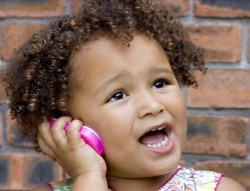
young-black-baby-girl-talking-on-a-toy-cell-phone-shutterstock
Talkin’ Hard!

Spirit – Use fair, age-appropriate consequences for harmful behaviors so Toddlers begin to take responsibility for those behaviors by connecting action and consequence; Ask Toddlers to assist in daily classroom routines like clean up and table setting so they begin to take responsibility for the learning environment; Encourage and appropriately praise attempts made to move, choose, and achieve skills so all learners become responsible for continuing to try; Assure that families are involved in all aspects of the program so all learners take responsibility for bonding and separating appropriately

Twos, Threes, Fours, and Fives – Each age group, from Two through Five years has basic general developmental responsibilities that accompany the vast amount of specific skills and concepts that will be acquired.

Twos need to separate from the oneness of parent/child or caregiver/child to become their own individual and unique persons.                                                                                                      

Threes need to express themselves through art, music, dance, and drama and to try to learn self-coping methods when they are upset.                                                                                                                                                                    

Fours need to gain self-control and to hone their listening skills.                                        

Fives need to relax, use humor, and build their self-esteem in preparation for kindergarten.

All of the children in these age groups can benefit from teaching techniques that grant them ownership and assign them responsibility for their learning in these ways:

Body – Require, urge, coax, encourage, or lure them into moving their bodies and using their senses on a daily basis; Move from gentle encouragement to firmer requirement to perform or try to perform hygiene and self-help skills on their own – provide time and patience here

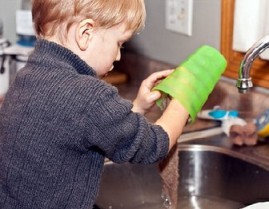
kid-working
Learnin’ Lots!

Mind – Assure that there are many appropriate attractive and interesting experiences to choose from and encourage them to work in a variety of interest centers; Require that they select, act, complete, and reflect on learning; Require that they use words rather than gestures or actions; Do not answer every question they ask, but require them to think and research first; Wait a developmentally appropriate amount of time for them to think, recall, and answer questions you may ask so they take responsibility for individual rates of response

Spirit – Use fair, age-appropriate consequences for harmful behaviors; Require that all learners take part in daily classroom routines and assure that each learner has a specific daily task to accomplish in the community; Encourage and appropriately praise attempts made to move, choose, and achieve skills ; Assure that families are involved in all aspects of the program so all learners take responsibility for bonding and separating appropriately

Next Blog: Best Jobs Ever!