 Talking About Emotional Safety Here – Let’s face it! Every class has a sticky-faced, green-nasaled child who bullies and hits, talks too much, never listens, seldom follows directions, and pesters his classmates incessantly; and every class has a beautifully dressed and coifed well-behaved little lady who brings us joy and peace on a daily basis and whose parents give us great end-of-year gift baskets of chocolate and wine.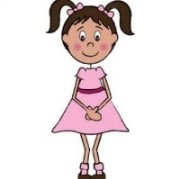
What is best for both of these children is to learn to feel good about themselves and okay about each other, and we do this by showing our unconditional respect for each child and by finding each child’s strengths so we can help him use them to meet his needs (weaknesses).
MORE – Acceptance and respect mean more than “tolerance”. The word, “tolerance” gives me the impression of one person being superior to another and allowing the other to be in his presence (like a queen granting a person of lesser nobility the right to come into her court). Acceptance means agreeing that differences are not good, bad, better, or best, but merely different. Respect means accepting those differences in a positive and open manner and honoring each child with the esteem he or she deserves. Our children deserve more than mere tolerance.
This may seem like an easy task for teachers whose nature, most often, is to be kind, loving, and protective, but granting this right does not come naturally or automatically when the desire to TEACH FACTS comes ahead of the desire to PROMOTE AND SUPPORT LEARNING or when a teacher feels the need to INSTILL HER OWN VALUES in place of the values of the child and his family. Real learning comes from within the child, and positive values are not “taught”, but offered by example.
Aretha Sings it Best – R-E-S-P-E-C-T, genuine regard for another individual is a great gift. For a teacher to unconditionally respect a child, she must fully understand child development and its facts about natural behaviors and skills appearing in patterns of growth while also accepting the fact that there are many influences on that development that make each child an individual capable of growth only at his own speed. It is human but unprofessional to compare one child to another or any child to a set of standards without this understanding and it is disrespectful to expect more or less of a child because of his race, ethnicity, or family situation.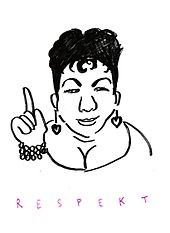
It Happens – Over the years I have listened to well-meaning seemingly intelligent teachers make statements like, “I had his brother two years ago. I don’t think he’ll make it to kindergarten” or “You know his dad’s in trouble with the law. I don’t expect him to do very well,”, or even “THOSE PEOPLE just don’t have good values.” Give each child the respect and acceptance he deserves simply because he exists.
Next Blog: Acceptance and Respect 2 – More on More than Tolerance
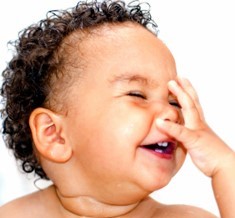
 There is little that is more important than the creation of a warm, welcoming, and positive atmosphere for learning by laughing, smiling, and relaxing, and encouraging this in the children. Appropriate laughter feels good, causes the body to relax, and the brain to work more smoothly.
 Giggles is Good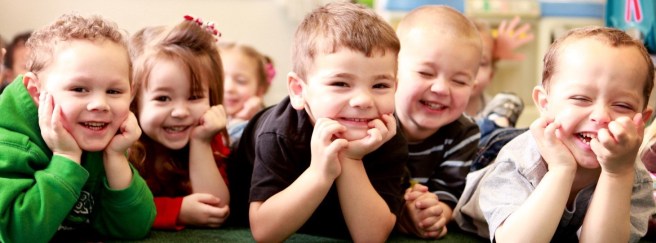

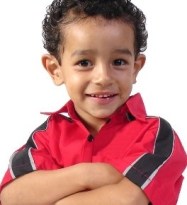 Me and We – Emotional Safety is created by understanding the aspects of self-esteem (Me) and community (We). The affirmation of individual realistic self-esteem and the development of a ‘Whole Child’ is done by the provision of warmth and humor, acceptance and respect, protection of rights, assignment of responsibilities, celebration of events and milestones and strong connections with families. Community is the creation of a close-knit ‘family’ of learners in who have a common mission of learning success that takes place in comfort, peace, cooperation, wonder, and joy.
 Questionable Word Choice
 Sassiness – Sometimes called ‘talking back’. Treat this by saying sadly, calmly, and matter-of-factly, “Oh Childname. I am so sorry to hear you speak to me that way. It makes me sad (or hurts my ears, or hurts my feelings, or hurts my heart). I will not listen to you when you talk that way. Say what you want to say nicely and I will listen to you.” Then the trick – AND THIS IS THE TRICK ON ALL BEHAVIORS – turn physically away from the child until he speaks in a respectful way, then give full active attention and thank him for speaking correctly when he does.
  say it so I can understand you, I will be able to listen.” Then attend quickly when the whine or the pacifier is gone. (Be developmental on that pacifier!! Parents and dentists make that decision – not you.)
 BULLIES!
 Behavior Management – Advice from Me (Mrs. B.)
 The goal of discipline is not to have control over the community of learners, but to engender self-control and self-regulation in each member of the community for the good of the continuation of the learning process. Here are some positive things to do that will reduce the number of negative behaviors in your learning community:
 Infants
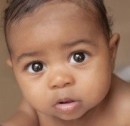 or reaching for unsafe objects. This is handled by creation of a physically safe environment and by redirection that may be accompanied by a verbal “warning” like, “No, Baby. Yuck. No Dirt.” Babies do occasionally bite each other out of curiosity and frustration or out of a need to communicate. This can be a harmful behavior, but is very natural and not a “bad” behavior. There are no ‘bad’ babies. Baby biting needs to be handled by the teacher assuring that there is adequate space for all babies and adequate numbers of toys so that space is not ‘invaded’ and possessions are not taken.
 Toddlers
 Teach 'Em the Way They Learn