Reacting to Unwanted Behaviors 1

I’ve been talking about the Big “D” – Discipline. When dealing with annoying distracting, and harmful behaviors we should always follow specific guidelines concerning our overall principles and philosophy about children, how we feel about behaviors (tolerance and zero tolerance) and as always, the basic nature of child development.

Start with Your Principles & Philosophy – The best programs for young children share a philosophy that includes the basic facts that each child is good simply by the act of existing and as such, deserves the opportunity to grow, develop, and reach his and her optimal natural strength potential in an environment of safety; and every family deserves to be treated with dignity and respect and with great regard for its integral role in each child’s education.

baby-sleepingTake it Nice and NAEYC* – Follow the NAEYC Code of Ethics, which asks us to:

  • Appreciate childhood as a unique and valuable stage of the human life cycle
  • Base our work on knowledge of how children develop and learn
  • Appreciate and support the bond between the child and family
  • Recognize that children are best understood and supported in the context of family, culture, community, and society
  • Respect the dignity, worth, and uniqueness of each individual (child, family member, and colleague)
  • Respect diversity in children, families, and colleagues
  • Recognize that children and adults achieve their full potential in the context of relationships that are based on trust and respect

Adopting this philosophy and this set of ethics should guide us in determining how to react to unwanted behaviors.

*National Association for the Education of Young Children

http://www.naeyc.org/about/mission
old-teacherZero Tolerance – At the installation of Loretta Lynch as US Attorney General, President Obama said, it is not just being tough on crime, but being smart about crime, that matters”. Teachers need to be smart about discipline by using a behavior management system that motivates each child to behave well, not out of fear, but out of a desire to do what is right for himself and his community.

The most important part of the process of dealing with disruptive or damaging behavior is to remember that the object of the process of behavior management is to eliminate the behavior from the child, not the child from the classroom.

While there is zero tolerance for the behaviors, there is never zero tolerance for any child.

Child Development – We need to match our reactions to behaviors to the age/developmental level of the child and always treat children individually but consistently. The ‘rules’ apply to everyone, but the reactions to breaking the rules may not always be identical. This sounds, according to every five year old at some point in time, NOT FAIR!” but as I say to those fives, “I’m sorry it seems that way to you, but that’s the way it is.”

Next Blog: Reacting to Unwanted Behaviors 2 – Developmental Guidelines


Examples of Reacting to Behaviors

Try These On For Size

One Year Old Bites Teacher. Teacher looks into One’s face with a stern or injured expression and says, “NO, ONE. You wanted me to look at you, but YOU MAY NOT BITE! Touch me like this (teacher gently caresses One’s face). If you bite, I will not hold you.” Follow through with consequence and when One behaves appropriately, give positive attention by communicating, holding, or interacting.

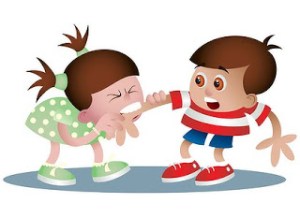
biting arm cratoonTwo Year Old Bites Friend. Teacher goes to bitten child FIRST & assures he is alright, gives attention and expresses empathy. Teacher goes to biter, gets on his eye level, makes eye contact, and says, “NO, TWO. You wanted him to get away from you, but YOU MAY NOT BITE! Here are some words to say: ‘No’! ‘Get Away’! If you bite your friends again, you may not play for three minutes”. Follow Through. When the three minutes is up, remind Two of the appropriate behavior and give him positive attention by word, gesture, or hug when he plays nicely.

Three Year Old Throws Heavy Blocks in the Air. Teacher goes to Three, gets on eye level, makes eye contact, and says, “NO, THREE. You wanted to see how high the block would go, but YOU MAY NOT THROW THINGS! That block might hurt someone. We use our blocks for building. If you throw again, no more blocks for you today. Follow Through. Later in the day, give Three some paper towels or tissues or pieces of cloth to throw so he can learn about the properties of ‘light’ and ‘heavy’ and have some positive attention for appropriate behavior.

Four Year Old Runs From Classroom Unattended. Teacher catches him and says, “NO, FOUR! You wanted to go to the playground, but YOU MAY NOT GO ANYWHERE ALONE. That is not safe. How else could you have told me you wanted to play on the swings? If you run away from the room again, you will miss some playground time”. Follow Through. When Four walks with the class safely to the playground, give him a thumb’s up or high five. Give him the job of Line Leader or Door Closer to let him know he is trusted.

Five Year Old Ruins Classmate’s Work. Teacher attends to needs of “victim” first, assuring him time to start his work over if he wants to do so and empathizing with his loss. Teacher turns to Five, gets on eye level, makes eye contact and says, “NO, FIVE. You were upset because she finished her work first, but YOU MAY NOT TEAR UP OTHER PEOPLE’S WORK! You need to tell her you are sorry. Do you want to talk to her or write her a note? If you ruin someone else’s work again, you will sit by yourself and think about things while we play in the water table.” Follow Through. When Five apologizes, thank him. If Five tries to atone by repairing the damage he has done or being particularly kind at a later time, give him positive attention and verbally express your appreciation.teacher money

Sounds Good on Paper, but Will This Work? – Not every time, no. Let’s be honest, if we had the answers for 100% elimination of ugly behaviors in our classrooms, WE WOULDN’T BE TRYING TO PAY OUR BILLS WITH PRESCHOOL TEACHER SALARIES, WOULD WE? There are no systems of behavior management with magical ways of solving the natural but often unattractive behaviors of young children, but next blog let’s talk about some elements of discipline that do make it easier to earn those big paychecks.

Next Blog: Keeping Reactions Realistic and Reasonable

More Than Nose-Picking

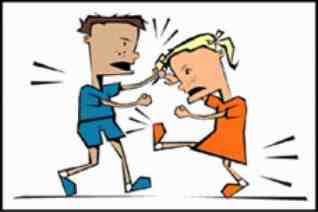
kid hitting kidWhat About the Big Stuff? – When reacting to behaviors that are harmful or threatening to a child himself, another child or children, another person, materials and equipment, or the learning process itself, you will want to use a different method because you want to eliminate the behavior on a permanent (or at least safe) level.

Try this for harmful behaviors:

Confront – Go to the child or children. Do not communicate long distance from across the room or playground. If there is a ‘victim’ of the behavior, tend to his needs first. Show empathy and concern for him, apologizing for his being hurt, physically or emotionally. Establish responsibility (as this is SO important to young children who have a strong need for “fairness). When responsibility is established, remove the perp or perps from other children so you can speak without embarrassing anyone. Turn to the child or children, get on his/their physical level, make eye contact and speak clearly and firmly in a voice that matches the message. The message is “NO. THAT WAS NOT ACCEPTABLE!” so a firm NO or YOU MAY NOT ______ is a good way to start.

Verbalize – Express yourself with empathy, not sympathy. There’s no need to ask him why he did what he did. Tell him why. Asking ‘why’ usually produces the answer, “I don’t know” or a shrug of the shoulders or a complaint about the child who has been hurt. Say, “You wanted to get the ball that went over the fence so you climbed over” or “You saw your mom’s car so you ran into the parking lot” or “You wanted to taste the scissors so you put them in your mouth”. If the behavior was harmful to another child, say, “You wanted his truck” or “You were really mad at him” or “You didn’t want her to play with your best friend”. This helps the child understand that you understand he had A REASON, BUT NOT AN EXCUSE, for his action. It gives him the opportunity to retain a bit of self-esteem.

State – Firmly state the rule or limit on behavior prefaced by the word BUT in a firm strong voice with physical stance, tone, volume, and demeanor matching the message. “BUT YOU MAY NOT climb the fence, run into the parking lot, put the scissors in your mouth, take his truck, spit on him, or call her a big fat potty head!”

Promise – State the consequence for breaking the rule and assure the consequence will occur if the behavior continues or happens again.

Teach – Offer some optional appropriate behaviors the child should have used to get the result he wanted or ask him to think of some himself. “Next time, use your words” or “What else could you have done?”

follow through baseballFollow Through – Impose a negative consequence as promised if the behavior continues or recurs, and give active positive attention when behavior is appropriate. Positive and negative consequences resulting from acceptable and unacceptable behaviors build security, reinforce rules, and make a child feel safe as he knows what is expected of him.

The most meaningful consequence is the awarding or removal of your attention.

Next Blog: Some Fine Examples

So, What Do We Do Already?!?!

nose-pickerYIKES! – With these next blogs I want to help with reactions to unwanted classroom behaviors. Let’s start with recognition of the behaviors that need a reaction. Not everything a child does needs a disciplinary reaction – or even any attention at all. You will drive yourself nuts reacting to things that make no difference to the learning process at all. Do what we talked about earlier (Data About Discipline #1) and what they did on MASH and all the other TV doctor shows – TRIAGE. Save your energy for Harmful Behaviors – those that hurt or threaten to hurt a child, any child, any adult, the equipment and materials needed for learning, and the learning process itself. (Belching and nose picking do not deserve attention).

Here are Triage Systems for Annoying, Distracting, Personally Unsafe, and Harmful Behaviors From Infants Through Five Years

new-behavior-triage-0-2

new-behavior-triage-2-5

Reactions – Remember that these are natural behaviors for each age group, so when we react to them we do so with the understanding that this is what young children do to express themselves as they maneuver through life. Expect these things to happen – in times of hunger, overfullness, fear, stress, boredom, frustration, fatigue, or just for the heck of it to attract your attention.

There are a number of ways to react to behaviors that can help to reduce or eliminate them. Keeping a common sense triage system in mind and learning to distinguish between behaviors that are ‘worthy’ of a great deal of time and effort and those that are more easily handled is the best way to determine reaction. For annoying and distracting behaviors, try these:

Ignoring – Ignoring means boycotting or giving no active attention to a child exhibiting an irritating behavior until that behavior changes to an appropriate one. Ignoring is only done with behaviors that are annoying but do not cause any interruption of the learning process. Boycotting has worked since the 60’s – ask your hippie grandmothers.

Redirecting – Redirection is distracting a child from a negative behavior by calling his attention to a new toy, experience, or activity. It works best with babies and toddlers who are easily fooled distracted. It works best if there are lots of interesting things to redirect a child’s attention to, so check out your classroom for child-centered, enjoyable, action-based experiences.

Natural Consequence (“Tough Beans” Moments) – Allowing a natural consequence to occur means taking no action to stop the results of an annoying or distracting behavior after a warning or reminder has been given. Natural consequences can only be allowed to occur if they are not harmful. Examples might be telling a child, “If you cannot use your walking feet in our line, I will hold your hand”, and then taking his hand if he runs; or calling attention to the fact that there is no more sand in the sand box because a child threw it over the fence. This is a teaching moment, not an “I told you so” moment, so it should be done calmly and matter-of-factly to help the child understand cause and effect and can see that his negative action had a negative consequence. It’s kind of a “Them’s the Breaks” moment, but it is stated this way, “Oh, that’s too bad, isn’t it?” (nothing more).

Even though everything a child experiences is a learning experience, everything you experience with a child does not have to be a TEACHING experience. There is no need to belabor these opportunities to lecture, preach, and nag. Let the learning from these moments come naturally.

Next Blog: Reacting to More than Nose Picking


Couple More F Words

angry-toddlerFRUSTRATION means both boredom and overstimulation. Teachers need to know the children’s interests and needs and make sure the experiences and materials being offered are right for them as far as interest, expectation, ability, and challenge.

It’s not easy to determine the individual needs abilities, and interests of a large number of children who come from a variety of backgrounds and have a variety of preferences and experiences, but it is your job to do so. The first way to do it is to return to your knowledge of basic child development. Understand the your program’s general and specific Strength Expectations (objectives, standards, milestones) that answer the question, “What Should They Be Learning?”

Look and Listen – These are the next best ways to figure how to make your classroom learning experiences child-centered, appropriate, and both ‘doable’ and challenging at the same time. Stand back and watch as the children play. See what is attractive to them. Listen to their conversations and questions to see what kinds of things they show interest in. Don’t be afraid to be flexible. If you think a learning experience about the circus would be fun, but all your Twos run screaming from pictures of clowns, shut that big top down!

Very often, children who are not sufficiently challenged will exhibit ugly behaviors out of sheer boredom. If you have a three-year-old who needs experiences that are more suited to older children, raid the kindergarten teacher’s cabinets for more challenging materials. On the other hand, if there is a child who shows a delay in a particular area, head for the toddler or baby class for more basic equipment, because children who are frustrated by their inability to succeed at a task will also act out those feelings with inappropriate actions.pringles

Let’s lump into frustration the fact that young children have a seemingly ravenous appetite for your attention and will very often exhibit ugly behavior if they are not getting what they think is their fair share of it. A wonderful parenting teacher, Marge Nelson, taught me the Law of the Soggy Potato Chip”. If you are dying for a chip (or a Snickers or a glass of Chardonnay) and the Pringles are stale, the 7-11 is closed and the wine box is empty, you will eat a soggy potato chip! If a child cannot get you to pay attention to him, he will do anything to make you “Look At Me!”

FATIGUE means both tiredness and illness. Children who are tired get cranky and fussy and should not be expected to fully participate in the learning process. Teachers must always “give in” to fatigue and if a child needs to rest, there must always be a place in the classroom or on campus where he can lie down and sleep. Parents must be made fully aware of continuing or habitual fatigue and both parents and teachers should know how much sleep young children (and individual children) need. If a child is habitually tired, attendance should be limited.

SHHH – Every classroom should have a Quiet Space for tired (or sad) children where they may go to rest. This is NOT A TIME OUT or NAUGHTY SPOT for ‘bad’ behaving children! It is a place where there is a soft pillow, soft blanket, soft toys, soft music and/or books and a soft teacher to offer a lap or shoulder when she can.

Children who are physically sick or coming down with an illness (including cutting teeth, runny noses due to allergy, growth spurts, reactions to immunizations) or those going through emotionally upsetting events (divorce, moving, new baby, new school, new bed, loss of pet, and even inability to wear what they wanted to school that day) will act out their physical discomfort and emotional feelings by misbehaving. Teachers need to be watchful for these things and to adhere firmly to program regulations about child attendance when illness is a factor.

Very often a child who uncharacteristically misbehaves is doing so because of illness and you will find that he or she is absent within a day or so of the odd behavior. Duh!

Administrators MUST support teachers when they say a child is ill and needs to go home! There is nothing more frustrating to a teacher when she asks the ‘office’ to call a parent to pick up a sick child and there is reluctance to do so. Sick children must be removed from the classroom for the health of the other children, the teaching staff, and the administrators who must find subs for sick teachers.

So, Voila! Now that you have all four of those “F’s” taken care of, all the ugly behaviors will magically disappear, right? Nope. Sorry to say, Stuff Still Happens. The next blog may answer your obvious question. . .

Next Blog: So What Do We Do Already?!?!?

Couple of F Words You’ll Want to Know

no-profanityGoin’ to the Chapel – one day at our faith-based preschool as we walked into the sanctuary for Children’s Chapel Time, where the minister was ready at the altar to give his weekly mini-sermon, I asked a very loud four-year-old to “please use your inside voice” and his reply to me with all the children, teachers, parents, and the reverend pastor within ear range, was, “Aw, F— Off, Mrs. Bensinger!” It is one of my fondest memories, but that is not the F word we’re talking about here.

FOOD, FEAR, FRUSTRATION, and FATIGUEThese Four Fs are the main causes of misbehavior in children under eight years of age.Before reacting to unwanted or unsafe behaviors, try your best to immunize against them by remembering these things. Let’s talk about the first two – Food and Fear.

FOOD means hunger, overfullness, allergic reaction, or food sensitivity. Young children feel sensory stimuli very strongly (including itchy tags in clothes, carpet textures, tight shoes, extreme temperatures) and are more apt to whine, fuss, or be unfocused, hyperactive, or aggressive when they are physically uncomfortable.

water-faucetFor teachers this means assuring that children eat nutritious foods on appropriate schedules, having snacks and WATER available, using nutritionitchy-kid education in lesson plans, watching carefully for food related problems and behavior changes, and sharing food issues with parents. I stress WATER because children should be drinking it all day long. Yes, there will be more wet pants and trips to the potty, but water physically lubricates the brain and makes learning and behavior better.
FEAR means both overt fearfulness (loud noises, strangers, animals) and nervousness. There are ages at which the Gesell Institute says children are naturally more prone to nervousness and fear (18 months, 3 ½, and 5 years) and of course individual children may be naturally hesitant simply because of their personal nature or home environment.

When children are nervous, fearful, under pressure to perform, or going through normal developmental stages of stress they may show it by misbehaving or by refusing to participate.

With children who are hesitant to participate, teachers need to be warm and comforting and talk to parents about the nerves. Encourage but never overtly force participation and never apply excessive pressure to perform to any standards that are not developmentally correct. Do not label them ‘shy’ and never publicly call attention to their feelings.

I have seen sincerely well-meaning teachers do this in many classrooms. and I have even (gasp) seen adults USE a child’s personal fears to ‘motivate’ good behavior.         

Stop it! It’s Mean!

Next Blog: Couple More F Words


Behavior Management 2: Know How to NO

saying no to childKnow How to NO – There is nothing wrong with the word NO. Save your biggest NO!’s for issues of safety and use them FIRMLY and LOUDLY for potential incidents of extreme harm. (“Thomas, NO BITE!”)

Understand that using the word, “DON’T” is confusing for young children. They may not even hear the word itself, and often do not understand that it means, “do not”. They usually recognize the verb after the “don’t”, and often they will do the exact opposite of what the teacher intends. Saying, “Don’t Run!” often results in a stampede of two year old marathon sprinters headed for the finish line.

Know When to NO – When possible, try to say, “Yes, When. . “ or “Yes, If. . “ or “Let’s talk about it”, but use NO when it is needed. Use a firm voice when you need a child to know you mean business about a behavior. Children need to know they cannot always do, eat, have, or take what they want – it’s not the way the real world works. A simple sample: on popsicle day, when my twos were all clamoring for their favorite flavor (or color) and falling on the floor in sobbing protest when the reds were all gone, one of them (obviously echoing her mom who had four other children) “You get what you get and you don’t fuss a bit!” I couldn’t have said it better.

Be Prepared – Remember to immunize against unsafe behaviors by reminding the community of learners about the rules before they make a transition. You might say, “We are going to walk to Chapel now, using our walking feet and chapel voices. If you run, I will need to hold your hand.”

Want Good Kids? Be a Good Person – It may seem silly to ask professional teachers to model appropriate behavior, but it is important to the behavior management system because basically, what young children see, they tend to imitate and as they are exposed to certain behaviors and how those behaviors affect them, they learn to either repeat them or discard them. Even infants are not oblivious to the overall atmosphere in their environment. They can sense the mood of a classroom and they react to it. Toddlers notice the mood and imitate the actions of the adults in the environment, while twos, threes, and fours most definitely notice the mood, imitate the actions, and take those feelings and behaviors to heart through their own behavior.
 
Behavior Management/Discipline – The word ‘discipline’ comes from the same root word as ‘disciple’, which means literally, ‘one who follows’, so discipline means to behave so that the children will follow that lead and imitate appropriate and safe behavior.

With Power, Comes Responsibility (Spiderman) – Our job is to encourage self-control, not to have control or power over the children. Obviously, the teacher is in control of safety, health, creating a positive environment, and creating appropriate experiences for learning, but “teaching” a child to be aware of his behaviors and to have ownership of his actions in relation to the good of his own learning process and that of others, is one of the most vital aspects of early learning.The goal of discipline is to create the desire in each child to behave well for the good of the learning process and the good of the community of learners, in other words, to attain self-discipline.  Self-discipline happens best when children are treated well, protected from harm, and motivated to feel good about themselves.spiderman-clip-art-12

Manners – Don’t get caught up in “teaching” manners, simply use good manners yourself. Teach hygiene and nutrition by washing your hands and eating good food in the children’s presence.

Empathy – The kinds of behaviors that are hard to ‘teach’ a child to learn to use are empathy, forgiveness, and respect. These must be modeled and explained more “in the moment” than through a unit of lesson plans, but teachers need to do both. A playground incidence of meanness can lead to a great group problem-solving experience, an open discussion at the snack table, or referral to a book on the subject. Voila! Lessons learned without Lesson Plans!

If You’re Happy and You Know it, Clap Your Hands – Modeling is more important to the system of behavior management than making rules. Children are great impressionists – great at imitating our demeanor, mannerisms, language, expression, gesture, and mood. More often than not, a classroom learning community rampant with ugly behaviors on a continuing basis is the result of the creation of an inappropriate emotional and educational environment or of children imitating the behaviors of adults with unfortunate attitudes of a negative nature. If you’re not happy, your face may surely show it so follow these rules yourself – be here, be healthy, and be happy.

Next Blog: Some F words You’ll Want to Remember

Behavior Management 1: NO HITTING!

There’s No Crying in Baseball and There’s No Hitting in Preschool!!! – The basic values of behavior management in a classroom are good health and nonviolence. As far as corporal punishment and the use of developmentally inappropriate techniques in dealing with behavior, IT IS VERY RARE, but I have seen it all – children no-cryinghit, spanked, slapped, pinched, thumped on the head, forced to sit for loooong periods of time, had their “lovies’ taken away, been bitten back when they bit or encouraged to hit back when they’ve been hit, – and I have heard all the arguments in favor of this type of discipline – “I was spanked and I turned out ok!”, or “This is how they learn” or “I am in charge of this class, not them!” and I will tell you that this is not teaching and certainly not learning.

A child who is hit on a continuing basis learns to hide his anger and resentment, to be either more aggressive or fearful and withdrawn.

A child whose behaviors are controlled only by others becomes less intelligent than a child who behaves well because he has learned and decided it is the right thing to do.

A child who is protected from harm, treated well, given rules that are meaningful and logical and given (or allowed to naturally happen) age appropriate consequences when those rules are broken, is a child who can learn to his optimal potential.

Let’s talk about Rules – Rules are not the values of your program (that’s good health and nonviolence and whatever else your program chooses – faith, academic success, artistic freedom – but the specific regulations and stated limits on harmful behaviors.

Rules should be developmentally appropriate; agreed upon by parents, teachers, and children old enough to have input; consistently enforced by all teachers whenever possible and supported by administrators; practical and useful – with rules of safety being the most strictly enforced; simple and practical and limited to common sense situations (not nitpicky regulations for imagined worries that will not occur); and they should be stated and written positively, telling the children what TO DO, not just what not to do.

So, the Rules on Rules are:

  • Keep them simple, understandable, and age-appropriate
  • Keep them positively stated and relevant to REAL problems
  • Keep them general enough to cover general issues, but specific when needed: (Pee pee in the potty; Food is NOT for spitting; Feet stay on the floor)
  • Keep Them

Post the most important general rules for all to see – even non-readers.

My absolute favorite list of school rules was from a rural elementary school in Missouri. The rules were posted not just at school, but in every store on the town square for all parents and community members to see and reinforce as partners in the community of learners. They said everything needed to be said:

Be Here. Be Healthy. Be Happy.

Establishing simple, age-appropriate rules and following through on consequences for breaking the rules is the logical way to go. Before you react to rule-breaking (NOT RULE- BREAKERS!!) the next blogs will give you helpful hints.

Next Blog: Behavior Management 2 – Know How to NO


VMAN in a Nutshell

wordpress-nutshell

V – The Values I like are these:

  • Good Health and Absolute Nonviolence
  • Developmentally Appropriate Strength/Behavior Expectations and Teaching Practice
  • Creation and Maintenance of an Environment of Physical, Emotional, and Educational Safety
  • Firm Limits on Harmful Behaviors (with an aura of Patience, Forgiveness, and Opportunity for Learning from Mistakes
  • Acceptance, Warmth, and Respect for Each Child and Each Family
  • Noticing and Celebration of Personal Milestones and Peaceful Behaviors

(Parents must be made aware of the values of the system and of the reactions and actions teachers will take when negative behaviors occur. I suggest parents be completely familiarized with the behavior management system and sign their agreement to it so that there is a partnership between home and school and there are no ‘surprises’ when issues arise).

M – Modeling means if you want good kids, be a good person. Watch your mouth, and watch your attitude. Be active, be polite, be generous, be warm and accepting, be respectful, and always have a good sense of humor!

A – Appropriateness simply means knowing what to expect and not getting bent out of shape about behaviors whether you expected them or not. If a behavior absolutely appalls you, try to find its cause without immediately judging it harshly.

N – Noticing must be realistic and not overdone. No trophies for attendance, but at least try to find something positive to notice about each child each day. (Wow, Thomas. Look how nicely you are breathing today.)

Sounds easy, right? HAH! Ask any early learning educator if keeping 5 to 15 little humans alive for three to eight hours while they interact with each other and a multitude of weapon-grade Lincoln Logs is ‘easy’. The next two or three blogs may help.

Next Blog: Behavior Management – NO HITTING!

VMAN! Hero of the Preschool!

vman-wordpressEvery early education program needs to establish and use a system of Behavior Management that is based on the evidence known about child development and learning; dedicates its mission to good health, safety, and absolute nonviolence; is developed or at least agreed upon by both parents and teachers; and is a common sense approach to limiting harmful behaviors without damaging individual self-esteem.

So – Here Comes VMAN!  VMAN stands for Values, Modeling, Appropriateness, and Noticing.

Values are not rules and regulations, but the foundation of the behavior system. The basic values that MUST be present are good health and nonviolence. A program may add other values to the system depending on parent preference or program sponsorship, (faith-based tenets, ethnic cultural mores, or others) but no matter what additions may be made, good health and nonviolence are the essentials. The values of a system are not debatable. They must be clearly communicated to all members of the learning community, and are the basis on which rules, regulations, actions, and reactions are built.

Modeling means that the adults in the program must behave well so the children will imitate them, learn from them, and learn to want to behave well for the sake of the learning process and the community.

Appropriateness means that all of the adults using the system must understand and agree to have developmentally appropriate expectations for the behaviors of young children. They must be immersed in knowledge of child development so they know what types of behaviors to expect from children during each stage of development and they must understand and recognize which behaviors must be “managed” and the best ways to do so.

Noticing is the act of seeing and affirming appropriate, peaceful, safe (“good”) behaviors on a continuing basis much more than calling attention to and punishing inappropriate ones. THIS DOES NOT MEAN TO IGNORE HARMFUL BEHAVIORS. It means to make a concerted daily effort to notice and affirm by smile, gesture, or comment, the positive behaviors which enhance the environment of safety.


Next Blog: VMAN in a Nutshell