Oh, Brother!

It is only October and a little early for individual child assessments, but let’s talk about a few assessment issues before the holiday chaos is upon us.

In our program, we use the Lakemont Learning System (it is our own ‘curriculum’, copyrighted but not yet published). Lakemont’s philosophy on child progress assessment is that there is a need to discover and document the child’s strengths and needs so the strengths can be used to continue progress, to improve areas of need, and to be used by teacher and parent to devise a written plan for that progress.

Emphasizing and using strength to meet need is the essence of positive assessment. Child Progress Assessment is also an important part of teacher and curricular accountability. It is not just an assigning of grades or number rankings but it is the answering of the questions, “where is this child?” and “where does he go from here?

We use the Lakemont system of assessment we call OCDRP (OCKDRIP – like the children’sgreen-nose noses this time of year).

OCDRP is Observation (looking at each child’s behaviors, abilities, & attitudes with complete openness and honesty); Collaboration (conferring with trusted coworkers or administrators without giving them your opinions); Documentation (keeping records of your observations and the child’s accomplishments and needs); Referral (asking parent for permission/approval to invite a professional therapist to observe the child); and Planning (you and parent creating a plan of continuing progress or meeting of need that takes the philosophy of STRENGTHS MEET NEED).

Today let’s look at the issues that may color your feelings while observing and assessing children’s strengths and needs. Talking about OTHERING, BROTHERING, and MOTHERING.

Othering is viewing or treating a person or group of people as intrinsically different from and alien to oneself. We are human and othering is a human reaction to people (including children) whom we may consider ‘foreign’ or different from our own culture. If you are describing to someone a child you are concerned may have a need in ability or skill, and the first thing you mention is the child’s ethnicity, you are othering, and human though it may be, it is a form of prejudice that sneaks into your ability and desire to be completely fair and factual in your observations. Yes, some behaviors may be culturally influenced (making eye contact, for example) but using a child’s ethnicity as a basis for assessment is not ethical.

Brothering is assuming that a child’s behavior or ability will be similar to other family members you may have taught in the past. Upon receiving the class roster for the first time, a teacher may roll her eyes and say, “Oh, no! I’ve got another Bensinger!” Brothering is also a human reaction and emotion but it is unjust and totally unprofessional. Comparing siblings, cousins, children, or grandchildren because of a past experience or association is wrong.

Mothering is looking at the children you are observing/assessing as if you are the parent and not the teacher. Sometimes we make judgements based on our own values rather than on the values, customs, and systems of the children’s parents. We may look at the food they bring for lunch and how they eat it as below our own standards of nutrition; we may feel a child should be potty trained or weaned from pacifier or ‘lovey’ before the parent is ready to do this. We are NOT the MAMAS. We must put aside our own opinions and observe, assess, (and teach) without adding our own ideas of parenting.

So –

When observing and assessing, I know it’s hard. You have my blessing

Use naked truth, please. Do not color. Never Other, Brother, or Mother.


You Say Potato and I Say Spud

mariaThe other day on Facebook I saw an ad for a “Montessori Letter Tracing Board” with recessed lower case letters for children to follow (trace) the indentations to practice printing. First of all, I’m not sure how Dr. Montessori would have actually felt about this device, but it certainly had some positive aspects IF USED BY CHILDREN READY FOR IT.

My concern came with the comments following the posted ad, many of which said things like, “It is great, but I’d like to see it have a green dot and a red dot to show the child where to begin and end printing the letters so THEY MAKE THEM THE RIGHT WAY using the top to bottom rather than the bottom to top method,” and “When are you coming out with a cursive one?”

AGH! Where is the ‘rule’ that says we must print our letters – or do anything else – the “RIGHT” way in preschool? How tedious and frustrating must the writing experiences in those commenters’ classes be? I can only imagine the angst being created in a four, five, or six year old boy trying to sit still and hold and move his fingers along those lines but being told he must do it in a certain direction as he is not doing it “right”. And CURSIVE??

Let me stop you now, as you might be saying that the device is only used for children who are interested in it and enjoy it (geeze, I hope so) or that you are a teacher who even uses it with twos and threes and they just love it (good for them) and you do not use it to assess the dexterity of your little learners so you can make them READY for Kindergarten (please tell me that’s not your ultimate goal).

It was the attitude I felt behind the comments that bothered me – early childhood educators making sure their children were gaining a skill that had to be “right” before it was acceptable. It made me sad and extremely frustrated to know there are still teachers out there who Teach with a Capital T (all their 3’s sit still in Chapel and all their 2’s are potty trained). They have forsaken developmentally appropriate practice and forgotten that the essence of quality learning lies in the child’s ownership of his/her/their work and not its value according to a set of unrealistic standards.

Each child has the right to gain skills in his/her/their own way and to have those skills honored. If you can read it, it is right. If you insist on ‘one way or the highway’, you are not encouraging quality learning, but mediocre imitation. There are French fries, American fries, home fries, mashed, baked, and sweet potatoes – let those little spuds grow in their own ways.spud


STOP TEACHING!!!

frustrationLately I’ve become frustrated with observing classrooms in which Center or Choice Time has become Free Play With Teachers Preparing Parent-Loving Crafts (ugh), Running Errands, Lesson Planning, Doing One-on-One Child Activities While the Assistant Teacher Handles Potty, Cleanup, and Supervision of All Children From a Single Central Location Time. Many teachers feel this is “TEACHING”. If so, then, please –

STOP TEACHING and START. . .

Being Present, physically, emotionally, and educationally. Your physical presence, participating fully in every part of the day, offers your children the security and safety needed for their wellbeing and high quality learning. Your emotional presence,  presenting a sense of warmth, humor, and respect for each child, builds self-esteem and the ability to intrinsically motivate interest, curiosity, and a desire to learn. Your educational presence has to do with your bringing your best child development knowledge and DAP to the learning process and environment every day.

Being Aware of what each child is doing as they learn. This means:

  • Watching – looking for learning opportunities & recognizing when learning occurs
  • Listening – with ACTIVE, eyeball to eyeball, mouth to ear, respectful attitude, and undivided attention
  • Having REAL Conversations – taking the time to communicate personally with each child every day

Being Smart about your responsibilities as an Early Educator. This calls for:

  • Acting as a Resource for facts, language, concepts, and assistance AS NEEDED ONLY
  • Asking questions (What if? How did you? How might you?)
  • Recording, Dictating, and Posting THEIR words about what & how they’re learning
  • Assessing Strengths and Needs without formal testing
  • Relinquishing the ownership of the learning to the children
  • Understanding and Believing that the best learning comes from child-centered, child-chosen purposeful play with the Human Factor

Being Present, Aware, and Smart are expecially vital at Choice Time.Choice Time is the meat of the preschool sandwich. It should be offered for a minimum of 1/3rd of the total hours of the day. It is the prime time of learning in which the teachers must be fully engaged, involved, and participating. sandwich of the day

S–T–R–E–T–C–H–E–R–S and SQUEEZERS

stretchEvery day there are opportunities to generate more learning from both the Routine (coming & going, eating, pottying) and the Curricular (Community/Circle, Purposeful Play/Center Time, Group Time) elements of the day. These opportunities should be recognized and taken advantage of as they can be instances of high quality learning and practical use of each of the Learning Methods (Movement, Manipulation, Sensory Operations, Construction, Role Play, and Expression) and more specifically in problem-solving, logic, deduction, math, science, social studies, and if used well, literacy. Their spontaneity and child-centeredness of stretchers and squeezers makes them relevant and developmentally appropriate, so they are automatically correct experiences for young children.

First, teachers must STOP, LOOK, AND LISTEN! Dont be in such a hurry to “TEACH” stuff that you forget what the children are in the progress of learning automatically and intrinsically on their own. Observe them in every part of the day as they move, manipulate, think, create, imitate, imagine, and express themselves. Listen to their conversations and have meaningful conversations with them. Watch for learning moments or make learning moments from their play.

Rather than answering all their questions and solving all their problems, ask them open-ended questions to encourage their ownership of situations. You might even formally and purposefully plan (on your Weekly/Monthly Plan) challenges, problems, concerns, and quests and spend the week solving them using the children’s Learning Methods.

Some Real Life Examples:

  • Babies: Teacher rolled a ball across the floor and said, “I wonder what else will roll?” Teacher and babies tried to roll toys of various shapes across the floor and talked about why some things roll and some do not. Comparison/contrast/shape, physics and fun.
  • Toddlers:  Child threw a ball in the air and it landed on the canopy over the sandbox. Teacher said, “Uh oh. Where did that ball go? Can you find it?” Toddlers looked on the ground and then up in the air. Teacher said, “I think it may be on the canopy. Can you see it?” Toddler climbed up the stairs of the climber so he could see the ball. “It there!”, he said. Teacher said, “How can we get it down?” Toddlers said, “Hit it off, Teacher!” Teacher could not reach it so Toddlers said, “Get the broom or a tree stick and poke it. Science, logic, perspective, deduction, invention, use of tools – and great delight when the ball came down.
  • 2-3’s: Plastic window bird feeder with suction cups kept falling off the window. Child said, “Oh, no! How will the birds eat?” Teacher said, “You will need to help me figure that out, but until we do, look out the window. Where else can the birds get the seeds?” Children discussed a hanging bird feeder, tree branches, outdoor mud kitchen bowls, and the ground as being good dining places for the birds. Community, sharing of ideas, memory, identification skills – and such relief that the birds would be fed.
  • 4-5’s: A disagreement broke out about rug space for large block constructions. When the children complained to the teacher, she said, “There doesn’t seem to be enough space for all of you. Please take care of that yourselves.” Children returned to block area to talk and after ten minutes of ‘wrangling’ had marked off sections of the room with masking tape and string, divided up the blocks and added materials from the Art area, and each team of builders had enough space. Expression, planning, problem-solving – Voila!

Each of these examples could have been stretched or squeezed more had the teachers written down a description of what occurred, some of the children’s words, or had the children talk, draw, or write about it later.pencil girl transparent


Heigh, Ho! HeighHo! It’s Off to Work We Go!

dwarfsRemember these guys and the song they sang as they marched off to the mines? Except for Grumpy, they were a happy community of responsible hard-working little fellows.

We want our communities of learners to be happy and responsible too, and one of the best ways to assure this is to give each and every member ownership of the environment, the atmosphere, their behavior, and their learning.

I’d like teachers to assure that each child has a specific job each day (see past blogs)

https://teachsinger.wordpress.com/2017/02/23/best-jobs-ever     https://teachsinger.wordpress.com/2017/02/23/more-work

But I also want teachers to try to have the children do much of the extraneous ‘busy’ work that keeps teachers from quality and quantity time interacting with the children in meaningful ways like personal conversations, listening, observing them as they work.

Here are the children’s Routine responsibilities throughout the day. Please allow them to learn to participate in them (even though you think it may be easier to do it yourself to save time). Use your knowledge of DAP to determine expectations for ability & understanding. Begin to show them how to do this in the first days of school. Guide, lead, model, and remind them until the routines become expected and natural.

  • Wear their backpacks and carry their lunch boxes by themselves
  • Place backpacks in place on arrival, sorting papers for teachers, placing snacks, lunch boxes, and water bottles in appropriate places
  • Wash hands
  • Choose a staged activity or join together for morning Community (Circle) Time
  • Listen and express ideas, opinions, memories, stories, & words
  • Sing, dance, chant, recite, or participate in Community Time activities
  • Choose an area for Purposeful Play
  • Take action in Purposeful Play
  • Make decisions for peaceful Purposeful Play
  • Reorganize environment when requested
  • Wash hands and take care of personal hygiene (developmentally)
  • Prepare for snack, eat, listen, talk, reflect on the morning’s activities, and clean up
  • Transition to other experiences
  • Participate in experiences in other locations
  • Prepare for lunch, eat, listen, talk, reflect, and clean up
  • Prepare for dismissal (gather belongings)

These are the children’s educational responsibilities during the day:

  • Use large muscles
  • Use small muscles
  • Use the senses and deduction (logic) to make decisions about the sensations
  • Plan, build, take apart, rebuild, and build something new
  • Use imitation and imagination
  • Use art, music, dance, drama, and spoken & written word as self-expression
  • Select where, what, and how to take Action in Purposeful Play
  • Take Action in Purposeful Play
  • Reflect on the Action taken
  • Apply the learning from the Action to repeated and new strengths
  • Listen and follow directions

That’s a lot to do, so don’t forget to Whistle While You Work!snow white


FIELD TRIP!!!!

groves carWe all know that young children learn best by physically interacting with materials in their environment – ACTIVE, REAL EXPERIENCES – and one of the very best active, real experiences is the field trip.

A well-planned, age-appropriate field trip introduces new concepts and skills through all the methods children use for learning – Movement, Manipulation, Sensory Operations including Deduction, Construction, Role Play, and Expression.

A field trip must be planned with the elements of SAFETY FIRST, and because we believe so completely in DAP, field trips must be planned with the developmental level and nature of the children foremost in mind. Field trips can be as simple as a stroller walk around the campus for babies; a walk through each of your program’s classrooms with toddlers; a walk to a safe spot on the grounds to watch the traffic with twos; a walk around the neighborhood to see construction sites, offices, stores, and neighbors with threes; or visiting a farm, tourist attraction, library, fire station, or factory with four and fives.

Formal field trip planning MUST include considerations of SAFETY (adult-child ratio, vehicle and driver condition, and destination safety) and PURPOSE (reason for this destination being chosen). Purposes may be the provision of NEW experiences for children – city kids going to the farm or country kids going to a factory or office; reinforcement of concepts/skills of a unit of learning; or just for fun.

To make a field trip a valuable learning experience do this:

Before:           Plan with your learners, asking questions about what they might see, hear, or experience. Even babies should be ‘prepped’ for a trip. If developmentally appropriate, record the children’s input as you plan. One class of fours took Bingo/Lotto cards with them to a local farm and crossed off the pictures as they matched them with what they saw. (COW, Mrs. B! COW!) Talk about field trip behavior expectations and be firm about safety rules.

On the Way:  Remember that the journey to (and from) the destination is a great opportunity for learning – talking about what they might see and what they are seeing as they walk or ride, stopping as they walk to look at objects, signs, plants, animals, counting cars, carrying on personal conversations, singing, etc.

During:         Use the field trip just as you use a classroom experience. Help the children listen if destination representatives are speaking or demonstrating. Call attention to objects or items they may not notice. Encourage them to safely explore. Offer language and ask open-ended questions just as you should at “Center Time”. Take pictures to use for recall and reflection.

After:              Try to save time after a field trip to developmentally reflect on and reinforce the learning from the experience. Tell the babies what they saw; ask the toddlers and twos both specific and open-ended questions (What did you see at the fire station? Did you hear a loud noise? Did you like going there?); ask threes to recall and retell what they saw (What did you like best at the farm?); ask fours and fives to draw or write about the experience. Record and post both verbal and artistic reflections so the learning can be remembered and reinforced.

Some of the best field trips DO NOT involve leaving the campus or even the classroom. Toddlers and twos love putting their chairs in a circle, putting on their finest hats, and taking a ‘bus ride’ without leaving the room. Threes will follow you anywhere if you sing, so sing your way around the block. Fours and fives feel like big shots if they create a group masterpiece or put on their community helper garb to show their learning to the younger children or the preschool office administrators.

bon voyage

Put ‘Em in a Line Up


line up 1I’ve written about this before, but here are some more ways to use the routine element of making transitions that call for moving a group of children to another location into learning experiences.
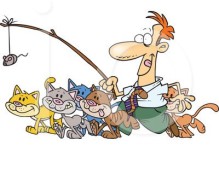
Developmentally speaking, Infants and Babies do not line up, but are transported in strollers. Toddlers can travel for short distances in a “cat-herding” group with adults in front and behind and can go for longer walks with EXTREME supervision or the use of a ribbon, scarf, or knotted rope line moving only as fast as the slowest walker. Twos can move in a line, but must be allowed to pause when distracted (great learning moments). Threes will follow you anywhere if you sing, march, or walk like animals. Fours and Fives need to practice walking in a line for “Big School”.

Before lining up to travel, children need to be told where and why they are going to a different location and what the teacher expects behaviorally on the way. If you use a Line Learning technique, keep it developmentally appropriate in skill and time. Lining up can be one of the most valuable teaching tools of your day. Personalize these:

“Please line up if/when you:”

Body:  Gross Motor & Health – skip, tiptoe, gallop, slide, walk backward; catch the beanbag and toss it back to a friend; tell me what you ate for breakfast that was healthy; show me how you brushed your teeth; have washed your hands.

Fine Motor – show me how you can stack 3/5/10 blocks on the table; pick up 3 cotton balls with your hand/pincers/tweezers

Mind:   Intelligence – point to/tell me where you worked this morning; recognize this picture; go to the Nature Table and bring back a pine cone; are wearing (color, pattern, article of clothing).

Language-Literacy – hear me whisper/say out loud/say the first letter/make the sound of the first letter/spell your name; say your name/say the first letter/spell your own name; hear me say a word that rhymes with your name; recognize the first letter/full name in print; tell me the name of your favorite book or character; read this sight word.

Math – can make a line by tallest to shortest; can tell me how many people are in the line when you are added; can count to 5/10/20, etc.; can tell me which of these animals is bigger/smaller; can put your hands up/down/on tummy, etc.; can make a pattern in the line by color or clothes; can show us a shape.

Science – can show us a leaf (animal, bird, etc.,); name an animal or plant you saw on the way to school today; tell us what the weather is like today; can line up like animal; can show us something soft/hard.

Social Studies – can tell us the names of your family/friends; tell the work your mom or dad do; recognize this community helper; tell the name of this famous person; tell us who you played with today; tell us what you did to make our classroom better today.

Spirit: can tell us your name; tell us your teacher’s name; tell us a friend’s name; tell us what you like about school today; tell us a good thing about the friend next to you.

cat herding


Once Again – Assessing Without Testing

test takingIf we are being true to the philosophy & tenets of Developmentally Appropriate Practice (DAP), there is no reason for early childhood educators to use a formal standardized test to determine individual progress toward stated goals.

Assessment can be done during the daily experiences of the day – both routine (arrival, separation from parent, meals, transitions, hygiene) and curricular (circle time, center time, teacher-led small or whole group activities, and enrichment classes).

Use a system (I call it OCDRP) that includes Observation, Collaboration, Documentation, Referral, & Planning. Let’s just deal with Observation. It means careful looking and listening while the children engage in purposeful play. Add to that, your personal, full-on attention and encouragement and knowledge of child development and assessment becomes a natural part of the day.

If a teacher is fully engaged with her children during all aspects of the day – watching, listening, carrying on personal conversations, and asking questions that spark interest and scaffold learning – almost every item on a program’s list of goals can be assessedsandwich of the day without a sit-down-formal-paper & pencil-standardized test. This is not always easy, but MUST be done as often as possible – especially during those times when the children are specifically engaged in child-chosen purposeful play. (No paperwork, errand-running, diapering (if possible) or potty breaks during Center Time – it is the meat in the sandwich of the day!!!)

The best assessments are made by observing and listening to the children as they play and engaging them in conversation by asking open-ended questions.  These assessment moments must be recognized as learning by knowing your program’s stated developmental expectations and matching them to your observations. Ex: I had a conversation with a three-year-old while comparing ‘owies’ on our arms. I said, “My owie happened a time ago” and the child replied, “Oh, it is healing now.” This tells me that this child had a sense of past, present, and future; an idea of the scientific/health concept of injury and healing; a vocabulary that was above average; and the ability to express his learning. No sit-down testing needed.

Last week a two-year-old handed me a book to read to him. I read it twice and then asked him to read it to me. He turned the pages beautifully, pointed to the pictures and repeated the story to me (in two-ese) four times. Fine motor, page-turning, picture recognition, retelling, and attention span assessed – BOOM!

Document these moments by taking mental or physical notes and transcribing them to the child’s portfolio or video assessment system. Take and post dictation & quotes on the walls of your classroom and share them with both children and parents. Use your program’s standardized checklist or formal assessment forms to document, but not to conduct a formal one-on-one testing situation for children under the age of five.

check


Best in the Business

I work as an early childhood education coordinator/consultant and have been in the business of early ed for (GASP!) 49 years. When I visit preschool, day care, or Head Start classrooms,  I try, as we should with our children, to look, for, and find strengths and needs (weaknesses, mistakes) and then try to help teachers use their strengths to make improvements in performance. Last month I visited all the classes in a faith-based preschool program and found amazing learning and teaching in every room. Here’s what I saw:

  • A middle-aged man as a permanent volunteer in a class of four/fives. Intergenerational and rare male influence in the preschool environment.
  • A teacher who set up a “knock down zone” (empty space on the carpet which no bodies could occupy but the deconstructor) so children could see what happened to their block creations when they fell. Safety + ACTIVE LEARNING!
  • A classroom of 3’s celebrating the Teacher’s birthday and discussing how old she might be with all answers accepted. Emotional environment of community, love, humor, and learning about estimating, counting, comparing, and respecting opinions.
  • A Teacher who was assigned to afternoon extended hours duty who took the time to alter her classroom and materials developmentally so her classroom for 3’s might be used for children of various needs and ages. DAP Excellence.
  • A Teacher who holds “Mystery Reader Tuesdays” with a secret guest who comes after lunch to read to the class. Anticipation, guessing, easy transition/clean up, and instilling the joy of literacy.
  • Tables angled to create a snack/lunch/table work experience in which all children can see each other and have meaningful conversations while eating and working. A trick of the trade not just to make the space more usable, but a way to encourage language and sharing of ideas.
  • A bulletin board for parents in an infant room listing the schemas of child development and an actual learning plan with developmental objectives. Creating a partnership with parents, offering information to parents new to the game, and a teacher who understands the importance of early early education.
  • A classroom full of seat belted young toddlers at a semicircular table painting with brushes and tools and not being pestered by teachers saying, ‘no, no – not in your hair, face, friend’s arm’. Free expression and ownership of the learning.
  • A Teacher who read a “Pete the Cat” book only on the days a child frightened of Pete was absent. Personalized learning and great emotional environment system.
  • Teachers in a 2/3 class smoothly, calmly, and safely handling a diaper-changing, easel-painting, truck play on the floor and puzzles on the table “Center Time” in which there were no tears, a wonderful conversational tone, and both adults practicing ACTIVE LISTENING techniques. DAP at its finest.
  • A class of 4/5’s using lunch time to listen to a recording of their own voices practicing for a holiday program and talking with the Teacher and each other about it – without having to go through any more actual rehearsals. Developing listening and language skills without having to corral active 4’s or forcing them to ‘perform’.
  • Teachers in a 2/3 class separating the group by gender with the boys inside the room working on a holiday craft and the girls outside in the nature center digging in the dirt. Excellent organizational technique and a wonderful way to lessen the stereotypical choices we (and sometimes the children) make.


Pencil Pushing and Potty Shaming!

pencil kidOne of the most important aspects of teaching in an early childhood program is that of creating and maintaining an environment of physical, educational, and emotional safety.

The Physical Environment is basic and obvious and the Educational Environment has to do with the staff, the setting, and the system of planning and organization. This blog deals with the Emotional Environment – the creation and maintenance of a place that builds realistic self-esteem and offers a sense of community to each child.

As teachers, we do this by using warmth and humor, acceptance and respect, protection of rights, assignment of responsibilities, celebration of events and milestones, and making strong connections with families.  Some of us, however, have difficulty in using the most encouraging methods of assisting children toward the goals & skills involved with the areas of academics and personal care. 

Children – in fact, humans of all ages – learn easiest and best when they are READY for a skill and when they are motivated toward accomplishing it by another human who is AWARE OF SIGNS OF READINESS, PATIENT, KIND, KNOWS WHEN TO ASSIST and WHEN TO STEP ASIDE, and USES LANGUAGE AND GESTURE THAT IS ALWAYS POSITIVE.

Let’s look at the preschool academic skills. In my opinion (based on fact, knowledge, study, and experience) these skills must be restricted to readiness to read, write, and do math and must be learned through activities that call for movement, sensory operations, manipulation, construction, role play, and expression. This leaves the use of worksheets as learning tools ONLY for those children who have learned all they can from using the normal methods and need busy work or preparation for first grade.

Unfortunately, I see preschool programs that call for children to accomplish academic skills at three and four rather than five and six, and this type of curriculum often encourages teachers to introduce developmentally inappropriate experiences before a child is ready (before he is through moving, sensing, manipulating, constructing, role playing, and enjoying free expression through art, music, rhythm, rhyme, gestures, words, laughter, and tears). It causes well-meaning and intelligent teachers to use attitudes and language that are not positive, and to look more for what a child CANNOT do than what he can – and will. Recently I observed a teacher ‘overseeing’ a child trying desperately to print his name. She was so in his face and so full of “NO. That’s not right” in words and attitude, I felt sure the child was going to cry or stab her with the skinny pencil he was wielding in his wobbly left hand. He was a mess and so was she.

As for toilet training, my other pet peeve in the category of NO PUSHING skills, I see programs, teachers, and parents taking on a very stressful attitude. Some programs will not move children into older classes or allow them to enroll in a class unless they are completely toilet trained. If pooping and peeing in the potty is a prerequisite for enrollment and since this is a skill that isn’t achieved by some boys until four, that means you may have big active boys of four interacting with tiny little potty-proficient toddlers. Again, this is frustrating for the child, the teacher, and the parent and causes all of us to say things like “Don’t you want to be a big boy like Peter the Pooper? Don’t you want to wear ‘big girl panties’ like all the other girls? If you use the toilet, I’ll give you candy!” and to do things like have a child wash out his underwear or roll our eyes and hold our noses if he has an accident. Not fair, not good, not right, not an efficient way for a child to be encouraged to learn.

SO. . .

  • Readiness – on an individual basisunerwear
  • Awareness of Child Development Milestones
  • Patience and Kindness
  • The Hokey Pokey – when to step in and when to step out
  • Language and Gesture that is always positive