Experiences – Purposeful Play

Purposeful Play – The link between play and learning in young children is a proven one – researched by the best in the business.  The results of all brain research and the work of all learning scientists and theorists from the early 1900’s until present day prove that the brains of young children grow and learn best (making mental connections and neural pathways) through the active movement of their bodies, the exploration of the environment through their senses, the manipulation of appropriate objects with their hands (and feet and heads), the acts of designing and building, and the creation of personal expressions of language, art, music, and role play – not by rote memorization, sitting still at desks, working expressly with paper, pencil or computer keyboard, watching television or video, or listening to adult lectures.

There is no question about it – play in a physically, emotionally, and educationally safe environment with other children and with adults who appreciate their developmental natures and vulnerabilities – is how children learn best.

Purposeful Play consists of taking part in formal and informal experiences designed to lead to the building of specific strengths. It is play suited to a specific age level and it includes very specific components.  Play is purposeful if the stage is set with purposeful activities that relate to your program’s stated learning objectives for the members of your particular class.  Play is purposeful if it includes appropriate experiences that have all the right components, and the right amount of adult participation. 

“Selling” Purposeful Play – Often early childhood educators find the need to champion the philosophy of learning through play, so to help teachers who feel the need to defend the incorrect stereotypical image of the “all they do is play” idea to parents, administrators, and some non-believers in our own ranks, here are some descriptions of how purposeful play developmentally leads to appropriate educational objectives in each of the Learning Areas (Body, Mind, and Spirit).kid play

Body Strengths Gained Through Play

Mind Strengths Gained Through Play

Strengths of the Spirit Gained Through Play

Next Blog: Experiences – Kinds of Learning

 

Experiences – Child-Centeredness

Everything a young child experiences is a Learning Experience, but learning gained through active participation in experiences that are designed with child-centered purposeful play is quality learning.

Child-Centeredness – This term does not mean self-centeredness (which is perfectly normal developmentally for young children) and it definitely does not mean selfishness. It means that each child must be the predominant author and owner of his learning in order for it to be of the best quality.  Each child must be encouraged to involve himself energetically and positively in the learning process so that the learning itself is interesting, meaningful, and relevant to him. 

There is less quality to the learning when the teacher is the only one who chooses what, where, when, and how things will be presented and when the “answers” and responses and decisions coming from the children are not respected and appreciated as creative.  When there is a “MY WAY OR THE HIGHWAY” atmosphere in a preschool classroom and when there are strict limits on both methods of teaching and methods of learning, the learning itself is of lower quality. 

This does NOT mean the teacher gives up control of the environment to the children in terms of permissiveness and unlimited acceptance of inappropriate behaviors.  It means that each child is able to make choices (from only appropriate options) and to have those choices appreciated.  It means that the teacher understands developmental phases and stages and knows that young children must be physically active, intellectually stimulated, and emotionally involved in order to learn.   It means that the teacher will offer experiences that are of interest to the children and not merely provide formal academic information using rote memory methods.  Teachers of young children cannot use a “teaching to the test” style of presentation if they expect quality learning to occur.

To Assure Child-Centeredness:

  • Create a Physical Environment that is developmentally correct. View and review it from the child’s physical point of view. Make your learning community look like the real world, with all its diversity in culture, race, gender, ethnicity and faiths, and most importantly, make sure it Is filled with the works and words of the children themselves. (Less store-bought plastic, primary-colored Walt Disney and more child-dictated, child-printed words and child-created art without adult adjustments to make it pretty or cute for adult viewing or teacher ‘appreciation’.
  • Create a Learning Environment that allows and encourages the children to design, determine, and decide. Start the day with the children’s words, ideas, thoughts, and plans and end it with reinforcement and recall of the same.  Allow each child the freedom to work in his own way and at his own speed on experiences that are meaningful and of interest to him but also purposeful to the strengths he should be gaining according to your program’s developmentally appropriate educational objectives.
  • Create a Teaching Environment in which the teachers have studied and strongly believe in the basic facts of child development and brain research so that expectations for strengths are correct and realistic. Create and follow a schedule allowing time for a child’s brain to comprehend concepts through active manipulation, discovery, and repetition. Encourage each child to actively take part in being responsible for his learning, his behavior, and his actions toward his classmates.stars of the show

Remember the Hokey Pokey! – Teachers, you are not the “star” of this show.  You are its director and stage manager, its prop master, and sometimes you are merely an “extra” or even a member of the audience. Know when to put your whole self in and your whole self out.  If you can describe to someone what happens in your classroom every day once the children – the real stars – have arrived to shine and perform, without using the pronoun “I”, then you understand child-centeredness.  Try it. 

Next Blog: Purposeful Play


Scheduling 2 – Considerations to be Made

Scheduling  Considerations  – Factors to use when creating schedules are age/developmental level, and attention span of the children; number of hours/days of  children’s attendance; and the timing of the elements of the day (Routine, Curricular, and SARA – see last few blogs).

Developmental Levels – Common sense and research tells us that above all else, we must create schedules that match the needs of the children, and modify the schedule to continue meeting those needs as they change. This is necessary in BOTH part-day preschool and full-day childcare programs.  (Personal Note: Having taught in and directed both types of programs, I assure you there is no difference in the nature and needs of the children who attend either).

Attention Span – Most children under the age of eight have average attention spans equal to one minute of attention and focus per year of age.  One year olds = one minute, two year olds = two minutes, etc.  This means that the length of time a child is asked to pay focused attention without being physically active is very short. 

(Another Personal Note: This does NOT mean that a young child cannot watch a video or movie for a much longer period of time.  That type of attention is not focused active learning! It also does not mean a child cannot work at building a block creation or pretend to be a fairy queen for a long time – so long sometimes that he doesn’t want to eat, pee pee or go to the playground when it’s time to go. That is focus leaning toward obsession – another situation entirely).

To be appropriately involved in the learning process, the child must be actively involved with the experience, the media and materials must be real, and there must be a warm loving adult to provide language and encourage the brain to work.

Young children must not be asked to remain idle for long periods of time waiting for experiences to be set up or for events to take place.  Experiences must be offered in short time spans.  Infant and Baby schedules must be dependent on the needs of the children and must change as the infants and babies change.  Schedules for Toddlers, Twos, Threes, Fours, and Fives can be designed to stretch the attention span by increments from five to twenty-five minutes providing the experiences involve a variety of physical and sensory actions.

Attendance  – Thinking developmentally, and appreciating the vulnerability of young children, it is ideal for children under the  age of six to attend a program that limits days and hours of attendance to developmentally  appropriate numbers, but this is not realistic in every instance. Some children in private preschool programs and most children in day care must be in attendance all five days from morning to mid/late afternoon, no matter what their age. 

Teachers MUST create schedules that make allowances for fatigue, illness, boredom, and unattractive behaviors as these are the symptoms of over attendance in number of days per week and number of hours per day. No matter how many days or hours a child attends, the MANDATORY key to scheduling is developmental appropriateness.

Elements of the Day – So, you take each of the elements of your day, both routine and curricular, and create a schedule that allows for all of them. Not an easy task. Here are the elements needing to be scheduled and approximate developmentally appropriate amounts of time needed for each. On Your Mark, Get Set, GO!

Scheduling ElementsFinish Line

Next Blog: Experiences 1 – Child-Centeredness


Minute by Minute – Scheduling 1

whatever clockTime is On Your Side – A carefully designed, but flexible schedule for each community of learners is extremely helpful for each child’s learning processes, for teacher organization, for parent information, and for administrator and licensing monitor supervision.    

  • For the children in every age group, a repetitive routine carried out in a calm manner, creates smoother brain wave patterns and encourages the building of skills in all learning areas – Body, Mind, and Spirit.  An organized schedule helps the children feel more at ease and decreases the chances for inappropriate behaviors to occur.                                                                                                                                                                                                    
  • For teachers, creating and consistently using a well-planned schedule simply makes the day run more smoothly, and since it reduces inappropriate behaviors caused by boredom, frustration, fatigue, or overstimulation, having a good schedule is a win-win situation.                                                                                                                                             
  • For parents, a posted schedule gives them an idea of what experiences their children are involved in at a given time during the day and allows them to relax about the separation from their children and stay informed so they can participate in the learning process.                                                                                                                                           
  • For administrators and licensing monitors, a posted schedule allows them to check for compliance with regulations and standards.  

Bend and Stretch – When you are working with young children in an atmosphere of wonder, action, and very short attention spans, it is often hard to follow a schedule with perfection – and there is no need to panic over it.  It is best to have a good overall schedule (for the reasons stated above) but it is not always possible to adhere to one. 

Some Hints from Experience:bend and stretch

  • When learning is happening, try to let it keep happening. 
  • When attention spans are increasing during an interesting and relevant experience, keep stretching! 
  • Don’t fill your day with so many “appointments” that you stop the learning process to rush the children to the next experience. 
  • A good staff communicates and works together on program-wide schedules that meet the needs of the majority of the community. 
  • Swap playground or enrichment times with other classes if your children are really involved in an activity. 
  • If you must stop learning to go to an appointment that cannot be missed, then let the children leave their materials where they are so they can continue the work when they come back. 
  • Skip planned activities if unplanned learning is happening. 
  • Use mistakes in scheduling as useful information for planning differently next time.

Next Blog: Scheduling 2 – Considerations to Keep in Mind

Application and SARA Summary

Application means assuring that children have opportunities to use what they have learned in the same way repeatedly (practice) or in new ways.  They need to be allowed and encouraged to use their new skills over and over until they are completely comfortable with them, they need to find new ways to use the learned skills, and then they need to scaffold, or build new skills on those learned skills. 

Application comes when teachers repeat valuable experiences, change them to match both individual and whole group growth, and then introduce challenges to encourage further growth.

geniusApplication is the continuous process of repeating learning and then using it in a new way – it is the Voila!; the AHA!; the Helen Keller connects sign to speech moment!  Teachers need to notice and recognize the Application moments, realize their importance in the learning process, celebrate and document them.
SARA Through the Day – Creating opportunities for Selection, Action, Reflection, and Application throughout the day is the essence of using Developmentally Appropriate Practice. Each of the Routine Elements of the day and each of the Curricular Elements of the day include some form of the SARA System.  SARA is not always something formally documented on a weekly lesson plan, but a system teachers need to keep in mind as they go through the day so that the mood of the environment, the teaching techniques, and the schedule all encourage and allow for SARA opportunities.

The Routine Elements of the day include the SARA components naturally, but are sometimes overlooked. Attention should be called to them so teachers realize their importance and make sure to recognize and make use of them in the busy routine of the day. Allowing children more freedom to select or make choices about food, hygiene, and transitions; being patient and observant while they participate (act); using routine elements (walking to the playground, chatting while waiting for the bus) for times of reflection; and NOTICING when children apply their learning in new ways during routine moments are the ways SARA is emphasized.

The Curricular Elements should include SARA on purpose. Selection may be a part of Circle or Center Time; Action is a part of all the child does; moments and activities for Reflection should be planned; and Application must be encouraged, noticed, named, and honored as real learning.

In a developmentally appropriate classroom, the components of SARA will and should happen continuously throughout the day. 

Next Blog: Minute by Minute – Devising Daily Schedules

Reflection

reflectionReflection refers to the experience of review.  At some point during the day there must be a time for each child to recall his work.  It can be a formal whole group or an individual experience.  It can be done through simple conversation or by asking each child to draw, write, or describe what he did during the day. It may seem inconsequential, but reflection is very important to the learning process as it reinforces and organizes the learning. 

Reflection is done by teachers for Infants, Babies and nonverbal Toddlers and Twos.  It can be done during or immediately following any experience or activity.  Teachers simply verbalize what is happening or has happened.  “Oh, look, Infant.  You smiled at me!” or “Bye-bye, Baby.  We had a good day.  You pulled up in your crib today!” or “Remember when you worked in the sandbox today, Toddler?” or “Wow, Two, you used the potty today!”  There is no overt praise or judgment made in these statements, just a factual statement helping the child to recall his work. 

Non-verbal Reflection – for children in the beginning stages of verbal expression, or for those who may not feel completely comfortable verbally, a teacher can request a gesture or sign of .  “Can you point to where you played today?”

Verbal Reflection – for children who can express themselves with words teachers might ask,  “What did you work with today?’ or “Who did you play with today?” or “Tell me what you did/made/sang/said today.”

Representational Reflection – for a child capable of drawing a representational picture, yu could say, “Can you draw a picture of what you did/made today?”

Dictational Reflection –  works well with verbal children:  “Tell me where you worked today and I will write the words for you to post on the wall (or take home to family).”

Journaling/Written Reflection –  for a child who can express his thoughts in written word:  “Please write a word or some letters of a word about what you did today.”

Active Reflection – I like the use of Home Connection assignments in which parents and child take part in an  activity that reinforces unit concepts and encourages parents to take part in active experiences that help the child recall, reflect, and reinforce learning.

Reflection helps the child by practicing recall and brain organization, and helps the teacher with further assessment of child need and of the value of the experiences offered. 

Never skip any opportunity to let your children review, recall, and reflect on their learning.

THIS IS BIG, TEACHERS – VERY BIG!

Next Blog: Application and SARA Summary

Selection and Action

The first two pieces of the SARA system are Selection and Action.

Selection is decision-making and is one of the most foundational and crucial elements of intelligence.  It is the act of using discernment, personal preference, comparison, logic, and self-expression. The teacher sets the stage with only appropriate experiences from which to choose and then gives the responsibility to the child for making a selection from them.  Each child’s choices must be accepted and respected. 

selectionSelection is the Infant reaching for the rattle, the Baby crawling toward the big blue ball, the Toddler deciding between the shovel and the spade in the sandbox, the Two or Three picking the green crayon for her art, and the Four or Five deciding which block will make the best base for his tower.

Selection does not just happen at the end of Circle Time when the children choose their plan for Center Time. Planning, decision-making, and choosing are important skills of intelligence that occur over and over during the day in all Routine and Curricular elements of the day. 

Selection builds skills children will rely on for years to come as they make decisions based first on personal preference, and then on logic and reasoning. Giving each child the opportunity to choose creates ownership of the learning.  Respecting those choices increases self-esteem. 

A day without Selection is a day without Learning.

Action includes everything a child does, from arrival to dismissal.  High Scope and I stress Action as a vital part of the system to remind teachers that all the best learning in young children comes from the combination of physical and sensory action with language in an atmosphere of warmth, humor, and respect.  This ‘marriage’ of action and language is one of the key components of the philosophies of all of the most noted and sensible learning theorists of the past and continues to be rediscovered and reinforced by modern brain and learning research today. 

Children under the age of eight learn best – and with the highest quality – when they are actively involved in appropriate and physical learning experiences.

Next Blog: Reflection

SARA!

Remember – Each day is divided into Routine Elements – the experiences of simply moving through the day with the children; Curricular Elements – those experiences planned by teachers to develop  specific Strength Expectations; and an element I call SARA which means opportunities for Selection, Action, Reflection, and Application. The final Element is SARA.

thiefOK, I Admit, I Stole Part of This – I adapted this element based on the High Scope Curriculum’s “Plan, Do, and Review”, developed by David Weikart at the University of Michigan. I love High Scope, but feel strongly that planning, doing, and reviewing is not quite enough to make a child’s learning both as complete and as measurable as it needs to be. I think there is a step following the review stage and that is the application of the learning to repeated or new or personally original use. To me (and to Lev Vygotsky) the addition of Application makes the learning REAL and makes it easier to assess.

SARA is the process of allowing children, by using their strengths of Body, Mind, and Spirit, to make decisions about where and how they will work; to act, using the Learning Methods of Movement, Sensory Exploration, Manipulation of Materials, Construction, Role Play, and Expression (and assuring them enough time, materials and equipment to do so); to reflect on the work after it is completed to encourage the development of memory, organization of thought, and reinforcement of the learning; and then to apply, or find ways to put their learning to use.

In the simplest of terms SARA means: 

  • Selection         CHOOSE IT                                                
  • Action              DO IT                                                                                     
  • Reflection       TALK, DRAW, READ, WRITE, SING, and DANCE ABOUT IT       
  • Application    USE IT AGAIN and USE IT NEW

Offering opportunities for SARA helps teachers organize the day, assures that the environment is child-centered, and makes assessment of child progress and need more efficient.  If a child can complete each step in the process, teachers have proof of his having acquired a skill or comprehended a concept without the use of a formal testing situation being created.

Assuring SARA means assuring optimal learning rather than mere memorization. If a child is free to make choices about his learning, take an active role in his learning, reflect on his learning through the many means of expression available (what Loris Malaguzzi called “the 100 languages of children), and then apply those learned skills and knowledge to new use, optimal learning has occurred.

Next Blog: Selection and Action

Curricular Elements – Home Connection

The final Curricular Element I suggest is the Home Connection.

There’s No Place Like Home – There is little more important in education than the partnership between school and home. Parents must be made to feel comfortable and respected. This partnership makes the learning better, and although it may be difficult on occasion, when it is done well, it makes the teacher’s job easier. A good Early Education program begins with the philosophy that parents cherish their children and that children learn more from parents and family (positively and negatively) than from the school experience.

Mutual esteem for each chid’s parents and family (with complete acceptance and total respect for the ethnicity, culture, faith, gender, or makeup of each child’s family) and parent involvement at every level from Board membership to volunteering to bring paper plates to the class picnic are the key to success with this partnership. Teachers need to make the most of this partnership and ‘assigning’ ACTIVE enjoyable Home Connections on a weekly basis is an easy way to assure the partnership takes place.

Home Sweet Home Connections – The Home Connection is a weekly activity designed for parent and child to do together as a family.  It should be purposeful to the unit of study being presented, it must be developmentally appropriate, it should be enjoyable, and it should be simple. 

Home Connection experiences should not include “homework” assignments that require ditto, worksheet, or academic readiness skill building. Homework will be assigned in ‘big school’. 

Home Connections are activities like going outside at night with a flashlight, taking a walk with Grandma, gathering up things at home that start with the same letter a child’s name starts with, going to Mommy’s office, visiting the local library with Daddy and bringing some books to school.

I urge all teachers to make these connections on an ongoing basis to create a partnership with parents and to continuously and rigorously reinforce key concepts and strengths being gained in your learning community.home possible

Next Blog: SARA


Small Group & Individual Work Times

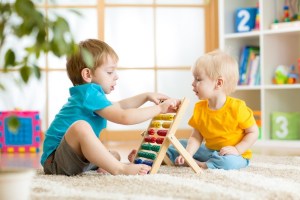
buddies playingSmall Group Time – There should be opportunities for Small Group work experiences, Individual work experiences, and what I call Strength Time, during which a teacher works directly with an individual child or a group of two or three children on a specific skill building exercise needed to encourage the building of a particular task. These may be moments for assessment of progress and need or moments of opportunity for one-on-one teaching (helping a child who hasn’t yet gained an important strength or skill) or they may simply be more convenient and practical ways to work with a small group on an art, math, cooking, or science project that the whole class will take part in ‘shifts’.

Pre-K and VPK teachers often use Strength Time opportunities during Center Time to assist individual children to work on pre-academic skills, but I hope most of this is done WITHOUT DITTOS AND WORKSHEETS, or is done with age appropriate worksheets that call for ACTIVE, SENSORY, MANIPULATIVE, HANDS-ON LEARNING TECHNIQUES USING ACTUAL REAL 3-DIMENSIONAL OBJECTS – NOT JUST PAPER AND PENCIL!!!!!

Children need opportunities for working with smaller groups of classmates or with just one other child for purposes of building skills of communication, cooperation, and partnership. Teacher-led experiences offered to half of the community or a small group of children at a time are usually arranged this way because of space limitations.

During Center Time, Babies and some Toddlers and Twos prefer ‘parallel play’ rather than group play, but older children most often naturally play in small groups or partnerships. Some children simply prefer working alone.

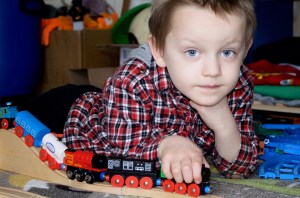
Individual PlaySome children prefer to play by themselves because of discomfort with the over stimulation of group play, a delay in social skills, or simply a personal preference for concentrating on the work of play without distraction.playing alone 

Unless there is a strong overt or physical reaction from a child, a complete ‘meltdown’ when asked to take part in cooperative play, or other signs of delay in social skills, or difference (diagnosed or not) in sensory assimilation with symptoms such as aggression, there is no need to force this issue. Cooperative play is an important skill, but personal preferences should be honored unless they interfere with development.

Next Blog: Home Connection